
Overview
Cholecystitis (ko-luh-sis-TIE-tis) is swelling and irritation, called inflammation, of the gallbladder. The gallbladder is a small, pear-shaped organ on the right side of the belly under the liver. The gallbladder holds fluid that digests food. This fluid is called bile. The gallbladder releases bile into the small intestine.
Most often, gallstones that block the tube leading out of the gallbladder cause cholecystitis. This results in a bile buildup that can cause inflammation. Other causes of cholecystitis include bile duct changes, tumors, serious illness and certain infections.
If not treated, cholecystitis can lead to serious complications, such as gallbladder rupture. These can be life-threatening. Treatment for cholecystitis often involves surgery to remove the gallbladder.
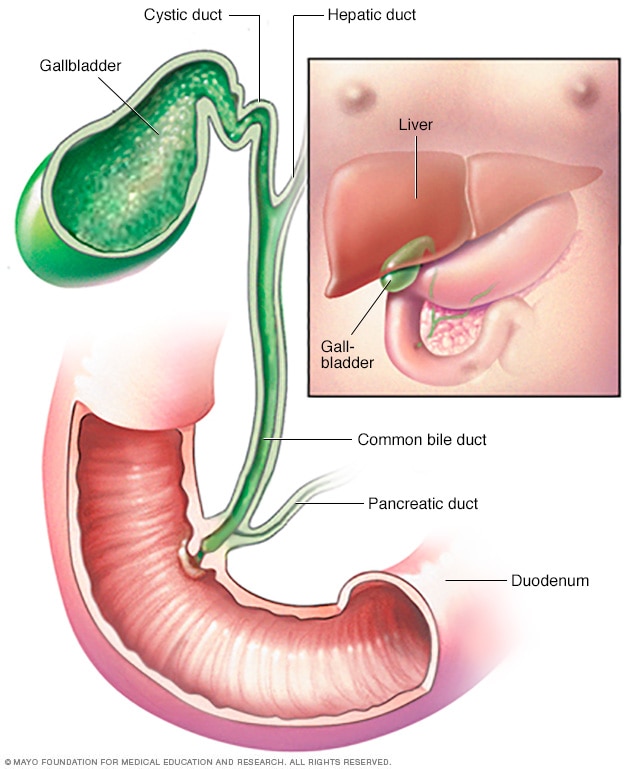
Gallbladder and bile duct
The gallbladder holds a yellow-green fluid called bile. Bile is made in the liver and flows into the gallbladder. It stays in the gallbladder until it's needed to help digest food. While eating, the gallbladder releases bile into the bile duct. The duct carries the bile to the upper part of the small intestine, called the duodenum, to help break down fat in food.
Symptoms
Symptoms of cholecystitis may include:
- Severe pain in the upper right or center belly area.
- Pain that spreads to the right shoulder or back.
- Tenderness over the belly area when it's touched.
- Nausea.
- Vomiting.
- Fever.
Cholecystitis symptoms often come on after a meal. A large or fatty meal is most likely to cause symptoms.
When to see a doctor
Make an appointment with your healthcare professional if you have symptoms that worry you. If your belly pain is so bad that you can't sit still or get comfortable, have someone drive you to the emergency room.
Causes
Cholecystitis is when your gallbladder is inflamed. Gallbladder inflammation can be caused by:
- Gallstones. Most often, cholecystitis is the result of hard particles of bile that can form in the gallbladder, called gallstones. Gallstones can block the tube that carries bile when it leaves the gallbladder. The tube is called the cystic duct. Bile builds up in the gallbladder, causing swelling and irritation.
- Tumor. A tumor may keep bile from draining out of the gallbladder as it should. This causes bile buildup that can lead to cholecystitis.
- Bile duct blockage. Stones or thickened bile and tiny particles called sludge can block the bile duct and lead to cholecystitis. Kinking or scarring of the bile ducts also can cause blockage.
- Infection. AIDS and other infections caused by viruses can cause gallbladder swelling and irritation.
- Serious illness. Very serious illness can damage blood vessels and lessen blood flow to the gallbladder. This can lead to cholecystitis.

Gallstones
Gallstones are hard pieces of bile that can form in the gallbladder. Bile is a fluid that digests food. The liver makes it. It's stored in the gallbladder. During eating, the gallbladder contracts and empties bile into the part of the small intestine called the duodenum.
Risk factors
Having gallstones is the main risk factor for getting cholecystitis.
Complications
If not treated, cholecystitis can lead to serious complications, including:
- Infection within the gallbladder. If bile builds up in the gallbladder, the bile may get infected.
- Death of gallbladder tissue. Cholecystitis that isn't treated can cause tissue in the gallbladder to die. This is called gangrene. This most common complication mainly affects older people, those who wait to get treatment and those with diabetes. Gangrene can lead to a tear in the gallbladder. Or it may cause the gallbladder to burst.
- Torn gallbladder. A tear, called a perforation, in the gallbladder may result from gallbladder swelling or infection or the death of gallbladder tissue.
Prevention
You can reduce your risk of cholecystitis by taking the following steps to prevent gallstones:
- Lose weight slowly. Fast weight loss can raise the risk of gallstones.
- Be at a healthy weight. Being overweight makes you more likely to get gallstones. To get to a healthy weight, cut calories and increase your physical activity. Stay at a healthy weight through healthy eating and exercise.
- Choose a healthy-eating plan. Eating foods high in fat and low in fiber may raise the risk of gallstones. To lower your risk, eat a lot of fruits, vegetables and whole grains.