Brain lesions
Definition
A brain lesion is an abnormality seen on a brain-imaging test, such as magnetic resonance imaging (MRI) or computerized tomography (CT). On CT or MRI scans, brain lesions appear as dark or light spots that don't look like normal brain tissue.
Usually, a brain lesion is an incidental finding unrelated to the condition or symptom that led to the imaging test in the first place.
A brain lesion may involve small to large areas of your brain, and the severity of the underlying condition may range from relatively minor to life-threatening.
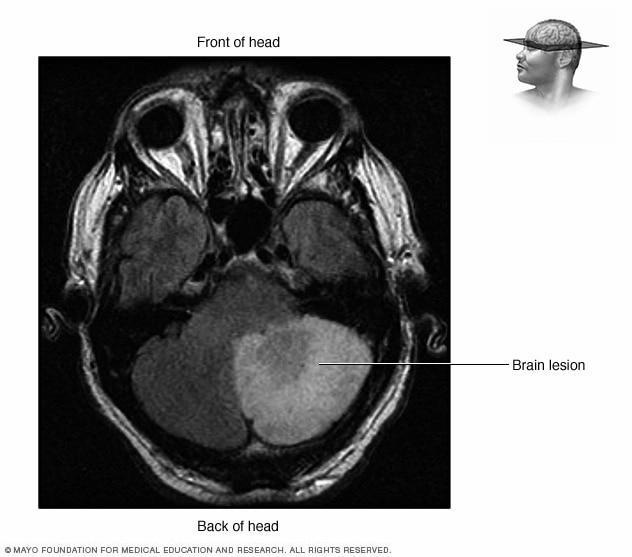
Brain lesion on MRI
Brain lesions seen on MRI may indicate any number of possible conditions. Here the brain lesion depicts tissue damage from an ischemic stroke — a state of severely reduced blood flow to the brain, which deprives brain cells of vital oxygen and nutrients.
Causes
Often, a brain lesion has a characteristic appearance that will help your doctor determine its cause. Sometimes the cause of the abnormal-appearing area cannot be diagnosed by the image alone, and additional or follow-up tests may be necessary.
Among the known possible causes of brain lesions are:
- Brain aneurysm
- Brain AVM (arteriovenous malformation) — abnormal connections between blood vessels in the brain
- Brain tumor (both cancerous and noncancerous)
- Encephalitis
- Epilepsy
- Hydrocephalus (a congenital brain abnormality)
- Multiple sclerosis
- Stroke
- Traumatic brain injury
While brain trauma of any sort may result in a concussion as well as a brain lesion, concussions and brain lesions are not the same thing. Concussions more often occur without ever causing any changes on the CT or MRI and are diagnosed by symptoms rather than imaging tests.

Causes shown here are commonly associated with this symptom. Work with your doctor or other health care professional for an accurate diagnosis.
When to see a doctor
If a brain lesion discovered during a brain-imaging test doesn't appear to be from a benign or resolved condition, your doctor will likely seek more information from additional testing or consulting a specialist.
Your doctor may recommend that you see a neurologist for a specialized examination and, possibly, further tests. Even if a neurological work-up doesn't result in a diagnosis, your doctor may recommend continued testing to reach a diagnosis or follow-up imaging tests at regular intervals to monitor the lesion.
From Mayo Clinic to your inbox
Sign up for free and stay up to date on research advancements, health tips, current health topics, and expertise on managing health. Click here for an email preview.
SYM-20050692
Mayo Clinic does not endorse companies or products. Advertising revenue supports our not-for-profit mission.
Advertising & Sponsorship
Mayo Clinic Press
Check out these best-sellers and special offers on books and newsletters from Mayo Clinic Press.
