Frontotemporal dementia Symptoms and causes
Overview
Frontotemporal dementia (FTD), also known as frontotemporal lobar degeneration (FTLD), is an umbrella term for a group of brain diseases that mainly affect the frontal and temporal lobes of the brain. These areas of the brain are associated with personality, behavior and language.
In frontotemporal dementia, parts of these lobes shrink, known as atrophy. Symptoms of frontotemporal dementia depend on which part of the brain is affected. Some people with frontotemporal dementia have changes in their personalities. They may act in ways that seem socially inappropriate and may be impulsive or show less response to other people's feelings. Others lose the ability to use or understand language.
Frontotemporal dementia can be misdiagnosed as a mental health condition or as Alzheimer's disease. But FTD tends to occur at a younger age than does Alzheimer's disease. It often begins between the ages of 40 and 65, although it can occur later in life as well. FTD is the cause of dementia about 10% to 20% of the time.
Mayo Clinic Health Letter & Books
Join thousands of readers who trust Mayo Clinic Health Letter for reliable health tips and insights. Start your journey to better health today.
Symptoms
Symptoms of frontotemporal dementia vary from person to person and usually get worse over time, often over years.
People with frontotemporal dementia often have groups of symptoms that occur together. They also may have more than one group of symptoms.
Early symptoms of frontotemporal dementia
These often involve changes in behavior, personality or language rather than memory. These symptoms may be mistaken for a mental health condition at first.
Early symptoms may include:
- Changes in personality or behavior, such as acting in ways that seem out of character.
- Reduced ability to understand or respond to other people's feelings.
- Trouble planning, organizing or making decisions.
- Repeating words or actions.
- Changes in speech or language, such as trouble finding the right word.
- Lack of interest, also called apathy.
Behavioral changes in frontotemporal dementia
The most common symptoms of frontotemporal dementia involve extreme changes in behavior and personality. These include:
- Behavior that seems socially inappropriate or out of character.
- Reduced ability to understand or respond to other people's feelings, a lack of empathy.
- Lack of judgment.
- Loss of inhibition.
- Lack of interest, also known as apathy. Apathy can be mistaken for depression.
- Compulsive behaviors such as tapping, clapping, or smacking lips over and over.
- Changes in eating habits. People with FTD may overeat or prefer sweets and carbohydrates.
- Eating things that are not food.
- Repeatedly placing objects in the mouth.
Speech and language symptoms
Some subtypes of frontotemporal dementia lead to changes in language ability or loss of speech. Subtypes include primary progressive aphasia (PPA), including the semantic variant and the nonfluent or agrammatic variant.
These conditions can cause:
- Increasing trouble using and understanding written and spoken language. People with FTD may not be able to find the right word to use in speech.
- Trouble naming things. People with FTD may replace a specific word with a more general word, such as using "it" for pen.
- Not understanding the meaning of words.
- Hesitant speech that may use short, simple sentences.
- Making mistakes in sentence building.
Primary progressive apraxia of speech is a brain condition that mainly affects how speech is produced, which is distinct from an aphasia. People with the condition know exactly what they want to say, but the brain has increasing difficulty planning and coordinating the movements of the lips, tongue and jaw needed to speak. As a result, speech may sound slow, effortful, choppy or distorted, even though understanding, reading and thinking may not be affected early on.
Movement symptoms
Rare subtypes of frontotemporal dementia cause movements similar to those seen in Parkinson's disease or amyotrophic lateral sclerosis (ALS).
Movement symptoms may include:
- Tremor.
- Rigidity.
- Muscle spasms or twitches.
- Poor coordination.
- Trouble swallowing.
- Muscle weakness.
- Laughing or crying at times that don't match the situation.
- Falls or trouble walking.
Frontotemporal dementia versus Alzheimer's disease dementia
Frontotemporal dementia and Alzheimer's disease are both types of dementia, but they affect the brain in different ways.
Frontotemporal dementia often begins at a younger age, usually between ages 40 and 65. Alzheimer's disease is more common in older adults.
Memory loss may not be an early symptom. In Alzheimer's disease, memory loss is often one of the first symptoms.
Frontotemporal dementia is sometimes mistaken for a mental health condition or Alzheimer's disease, especially in early stages.
Sometimes the clinical features of frontotemporal dementia and Alzheimer's disease overlap and can lead to a hard time diagnosing the condition.
Causes
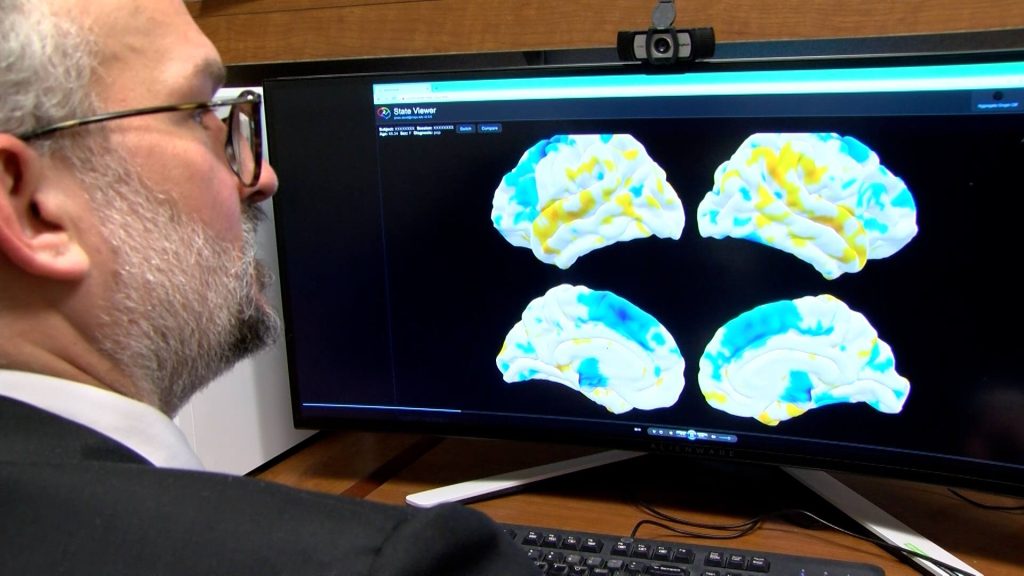
In frontotemporal dementia, the frontal and temporal lobes of the brain shrink and certain substances build up. What causes these changes is usually not known. In some types of frontotemporal dementia, proteins such as tau or TDP-43 build up in the brain and damage nerve cells.
Is frontotemporal dementia hereditary?
Frontotemporal dementia can run in families. Some inherited gene changes are linked to certain types of the condition.
But many people with frontotemporal dementia have no known family history of the disease.
Researchers have confirmed that some of the same gene changes also are seen in amyotrophic lateral sclerosis (ALS). More research is being done to understand the connection between the conditions.
Risk factors
Your risk of developing frontotemporal dementia is higher if you have a family history of dementia. Some inherited gene changes are linked to frontotemporal dementia. In many people, the exact cause isn't known.
From Mayo Clinic to your inbox
Sign up for free and stay up to date on research advancements, health tips, current health topics, and expertise on managing health. Click here for an email preview.




CON-20209444
Mayo Clinic does not endorse companies or products. Advertising revenue supports our not-for-profit mission.
Advertising & Sponsorship
Mayo Clinic Press
Check out these best-sellers and special offers on books and newsletters from Mayo Clinic Press.
