Benign paroxysmal positional vertigo (BPPV) Symptoms and causes
Overview
Benign paroxysmal positional vertigo, also called BPPV, is one of the most common causes of vertigo. Vertigo is the sudden feeling of spinning or moving.
BPPV causes brief periods of mild to intense dizziness. Certain changes in the head's position most often set them off. This might happen from tipping the head up or down, lying down, or turning over or sitting up in bed.
Although BPPV can be a bother, it's rarely serious. But it can raise the chance of falling. A healthcare professional can treat BPPV during an office visit.
Symptoms
The symptoms of benign paroxysmal positional vertigo, also called BPPV, may include:
- Dizziness.
- A sense of spinning or moving or that the area around you is spinning or moving. This is called vertigo.
- A loss of balance or not being steady.
- Stomach upset and vomiting.
The symptoms of BPPV can come and go. Symptoms most often last less than a minute. Bouts of BPPV can go away for some time and then come back.
What type of head movement brings on BPPV varies from person to person. But a change in head position almost always is what brings on the symptoms. Some people also feel off balance when standing or walking.
Atypical rhythmic eye movements, called nystagmus, most often go with the symptoms of benign paroxysmal positional vertigo.
When to see a doctor
See your healthcare professional if you have dizziness or vertigo that is sudden, intense, lasts long or keeps coming back.
Seek emergency care
It's not common for BPPV to signal a serious illness. But see your healthcare professional right away if you have dizziness or vertigo with any of the following:
- A new, different or bad headache.
- A fever.
- Seeing double or not being able to see well.
- Hearing loss.
- Trouble talking.
- Weakness in the leg or arm.
- Passing out.
- Falling or trouble walking.
- Numbness or tingling.
Causes
Often, there's no known cause for BPPV. This is called idiopathic BPPV.
When there is a known cause, BPPV may be linked with a blow to the head. Less common causes of BPPV include conditions that damage the inner ear.
Rarely, the cause can be damage that happens during ear surgery. Or the symptoms can result from being on your back for a time, such as during surgery or bed rest.
The ear's role
Inside the ear is a tiny organ called the vestibular labyrinth. It includes three loop-shaped structures called semicircular canals. They have fluid and fine, hairlike sensors that detect the head's movement.
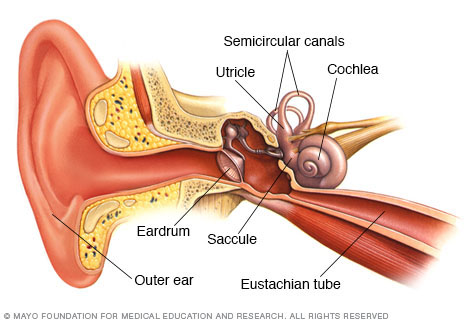
Inner ear and balance
Semicircular canals and otolith organs — called the utricle and saccule — in the inner ear contain fluid and fine, hairlike sensors. These sensory hair cells help you keep your eyes focused on a target when your head is in motion. They also help you keep your balance.
Other structures in the ear, called otolith organs, detect the head's movements up and down, right and left, back and forth. The otolith organs hold crystals that respond to gravity.
For many reasons, these crystals can move out of place. When the crystals move, they can go into one of the semicircular canals. Certain head movements can cause the crystals to move.
When the crystals move, they cause the semicircular canal to become sensitive to certain head position changes. This is what causes the dizziness.
Risk factors
The risk of benign paroxysmal positional vertigo is higher in people age 50 and older. But it can happen at any age. The condition is more common in people assigned female at birth.
A head injury or any other condition of the balance organs of the ear may raise the risk of BPPV. The bone-thinning condition osteoporosis also might be a risk factor.
From Mayo Clinic to your inbox
Sign up for free and stay up to date on research advancements, health tips, current health topics, and expertise on managing health. Click here for an email preview.
Complications
BPPV rarely causes complications. The dizziness of BPPV can make you unsteady, which may raise your risk of falling and injury from falls.
CON-20370039
Mayo Clinic does not endorse companies or products. Advertising revenue supports our not-for-profit mission.
Advertising & Sponsorship
Mayo Clinic Press
Check out these best-sellers and special offers on books and newsletters from Mayo Clinic Press.
