Overview
Brain aneurysm
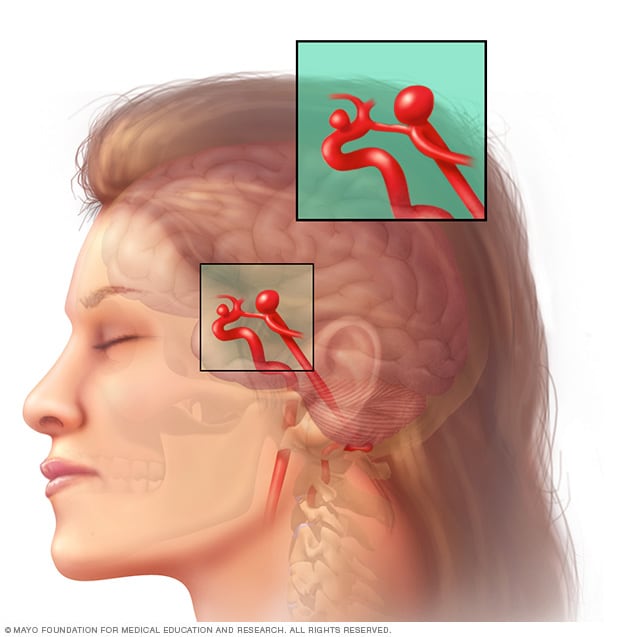
Brain aneurysm
An aneurysm is a ballooning at a weak spot in an artery wall. An aneurysm's walls can be thin enough to rupture. The illustration shows an individual with an unruptured aneurysm.
A brain aneurysm (AN-yoo-riz-um) is a bulge or ballooning in a blood vessel in the brain. It's also known as a cerebral aneurysm or intracranial aneurysm. One type of aneurysm called a berry or saccular aneurysm looks like a berry hanging on a stem.
Experts think brain aneurysms form and grow because blood flowing through the blood vessel puts pressure on a weak area of the vessel wall. This can increase the size of the brain aneurysm. If the brain aneurysm leaks or ruptures, it causes bleeding in the brain, known as a hemorrhagic stroke.
Most often, a ruptured brain aneurysm happens in the space between the brain and the thin tissues covering the brain. This type of hemorrhagic stroke is called a subarachnoid hemorrhage.
Brain aneurysms are common. But most brain aneurysms aren't serious, especially if they're small. Most brain aneurysms don't rupture. They usually don't cause symptoms or cause health problems. In many people, brain aneurysms are found during tests for other conditions.
However, if an aneurysm ruptures it can quickly become life-threatening and requires emergency treatment.
If a brain aneurysm hasn't ruptured, treatment may be right for some people. There are many factors to be considered. If it is felt that the treatment risk is lower than the future risk of aneurysm rupture, then treatment of an unruptured brain aneurysm may be recommended. Talk about your treatment options with your healthcare professional.
Types
Saccular and fusiform cerebral aneurysms
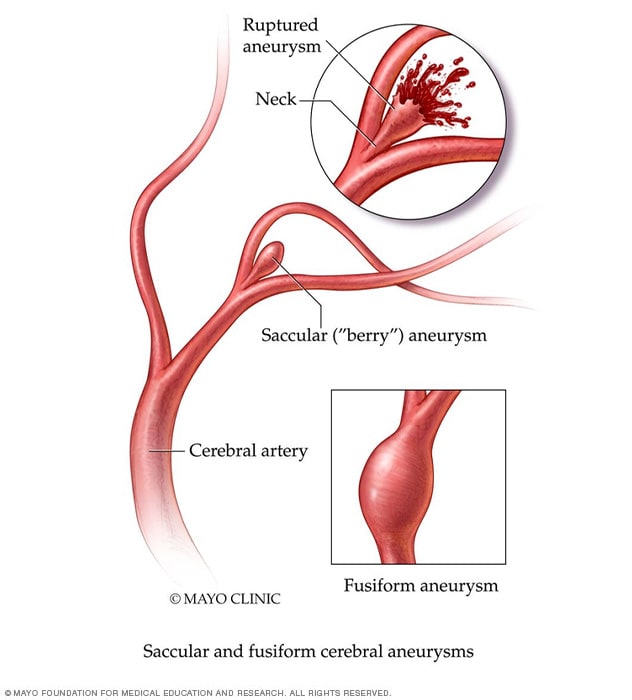
Saccular and fusiform cerebral aneurysms
A saccular aneurysm is known as a berry aneurysm. It's the most common type of brain aneurysm. It looks like a berry hanging from a vine. Another type of aneurysm is a fusiform aneurysm. It causes ballooning or bulging of the artery.
- Saccular aneurysm. Also known as a berry aneurysm, this type of aneurysm looks like a berry hanging from a vine. It's a round, blood-filled sac that protrudes from the main artery or one of its branches. It usually forms on arteries at the base of the brain. A berry aneurysm is the most common type of aneurysm.
- Fusiform aneurysm. This type of aneurysm causes bulging on all sides of the artery.
- Mycotic aneurysm. This type of aneurysm is caused by an infection. When an infection affects the arteries in the brain, it can weaken the artery wall. This can cause an aneurysm to form.
Products & Services
Symptoms
Most brain aneurysms that haven't ruptured don't cause symptoms, especially if they're small. Brain aneurysms may be found during imaging tests that are done for other conditions.
If an aneurysm ruptures, this is a very serious condition, typically causing a severe headache. And if an unruptured aneurysm presses against brain tissue or nerves, it may cause pain and other symptoms.
Ruptured aneurysm symptoms
A sudden, severe headache is the key symptom of a ruptured aneurysm. This headache is often described by people as the worst headache they've ever experienced.
In addition to a severe headache, symptoms of a ruptured aneurysm can include:
- Nausea and vomiting.
- Stiff neck.
- Blurred or double vision.
- Sensitivity to light.
- Seizure.
- Loss of consciousness.
- Confusion.
'Leaking' aneurysm symptoms
In some cases, an aneurysm may leak a small amount of blood. When this happens, a more severe rupture often follows. Leaks may happen days or weeks before a more severe rupture.
Leaking brain aneurysm symptoms may include a sudden, extremely severe headache that may last several days and up to two weeks.
Unruptured aneurysm symptoms
An unruptured brain aneurysm may not have any symptoms, especially if it's small. However, a larger unruptured aneurysm may press on brain tissues and nerves.
Symptoms of an unruptured brain aneurysm may include:
- Pain above and behind one eye.
- A dilated pupil.
- A change in vision or double vision.
- Numbness of one side of the face.
- Seizures.
When to see a doctor
Seek medical attention right away if you develop a sudden, extremely severe headache. If you're with someone who complains of a sudden, severe headache or who loses consciousness or has a seizure, call 911 or your local emergency number.
Mayo Clinic Minute: What is an aneurysm?
Vivien Williams: An aneurysm is an abnormal bulge or ballooning in the wall of a blood vessel.
Bernard Bendok, M.D., Neurosurgery, Mayo Clinic: A portion of these patients will go on to have a rupture. And the challenge with rupture is that it's unpredictable.
Vivien Williams: Dr. Bernard Bendok says a ruptured aneurysm is a medical emergency that can cause life-threatening bleeding in the brain.
Dr. Bendok: The typical presentation is somebody who has the worst headache of their life.
Vivien Williams: Fast treatment is essential. It includes open surgery or less-invasive options, such as sealing the ruptured artery from within the blood vessel with metal coils and/or stents.
Dr. Bendok says 1 to 2 percent of the population have aneurysms and only a small percentage of that group will experience a rupture. People who have a family history of aneurysms, have polycystic kidney disease, connective tissue disease, and people who smoke are at increased risk of rupture and should consider screening. If a rupture happens, fast treatment can save lives.
For the Mayo Clinic News Network, I'm Vivien Williams.
Causes
Brain aneurysms are caused by thinning artery walls. Aneurysms often form at forks or branches in arteries because those areas of the vessels are weaker. Although aneurysms can happen anywhere in the brain, they're most common in arteries at the base of the brain.
Risk factors
Several factors can cause weakness in an artery wall. These factors may increase the risk of a brain aneurysm or aneurysm rupture. Some of these risk factors develop over time while others are present at birth.
Risk factors include:
- Age. Brain aneurysms can happen at any age. However, they're more common in adults between ages 30 and 60.
- Being female. Brain aneurysms are more common in women than in men.
- Cigarette smoking. Smoking is a risk factor for brain aneurysms to form and for brain aneurysms to rupture.
- High blood pressure. This condition can weaken arteries. Aneurysms are more likely to form and to rupture in weakened arteries.
- Drug use, particularly using cocaine. Drug use raises blood pressure. If illicit drugs are used in a vein, it can lead to an infection, which may cause an aneurysm.
- Heavy alcohol use. This also can increase blood pressure.
- Inherited connective tissue conditions, such as Ehlers-Danlos syndrome. These conditions weaken blood vessels.
- Polycystic kidney disease. This inherited condition results in fluid-filled sacs in the kidneys. It also may increase blood pressure.
- A narrow aorta, also called coarctation of the aorta. The aorta is the large blood vessel that delivers oxygen-rich blood from the heart to the body.
- Brain arteriovenous malformation, also called brain AVM. In this condition, arteries and veins in the brain are tangled. This affects blood flow.
- A family history of brain aneurysm. The risk is higher if you have family members who have had a brain aneurysm. This is particularly true if two or more first-degree relatives — such as a parent, sibling or child — have had a brain aneurysm. If you have a family history, ask your healthcare professional about getting screened for a brain aneurysm.
Some types of aneurysms may happen after a head injury or from certain blood infections.
Risk factors for a ruptured aneurysm
There are some factors that make it more likely an aneurysm will rupture. They include:
- Having a large aneurysm.
- Having aneurysms in certain locations.
- Having an irregular shape of the aneurysm or having an outpouching on the aneurysm, called a daughter sac.
- Smoking cigarettes.
- Having untreated high blood pressure.
Complications
When a brain aneurysm ruptures, the bleeding usually lasts only a few seconds. However, the blood can cause direct damage to surrounding cells and can kill brain cells. It also increases pressure inside the skull.
If the pressure becomes too high, it may disrupt the blood and oxygen supply to the brain. Loss of consciousness or even death may occur.
Complications that can develop after the rupture of an aneurysm include:
- Re-bleeding. An aneurysm that has ruptured or has leaked is at risk of bleeding again. Re-bleeding can cause further damage to brain cells.
- Narrowed blood vessels in the brain. After a brain aneurysm ruptures, blood vessels in the brain may contract and narrow. This is known as vasospasm. Vasospasm can cause an ischemic stroke, in which there's limited blood flow to brain cells. This may cause more cell damage and loss.
- A buildup of fluid within the brain, known as hydrocephalus. Most often, a ruptured brain aneurysm happens in the space between the brain and the thin tissues covering the brain. The blood can block the movement of the spinal fluid that surrounds the brain and spinal cord. As a result, a buildup of fluid puts pressure on the brain and can damage tissues.
- Change in sodium level. Bleeding in the brain can disrupt the balance of sodium in the blood. A drop in blood sodium levels can lead to swelling of brain cells and permanent damage.
Prevention
In many cases, brain aneurysms can't be prevented. But there are some changes you can make to lower your risk. They include quitting smoking if you smoke. Also work with your healthcare professional to lower your blood pressure if it's high. Don't drink large amounts of alcohol or use drugs such as cocaine.
Aug. 19, 2026