Cholangiocarcinoma (bile duct cancer) Symptoms and causes
Overview
Cholangiocarcinoma is a type of cancer that forms in the slender tubes (bile ducts) that carry the digestive fluid bile. Bile ducts connect your liver to your gallbladder and to your small intestine.
Cholangiocarcinoma, also known as bile duct cancer, occurs mostly in people older than age 50, though it can occur at any age.
Doctors divide cholangiocarcinoma into different types based on where the cancer occurs in the bile ducts:
- Intrahepatic cholangiocarcinoma occurs in the parts of the bile ducts within the liver and is sometimes classified as a type of liver cancer.
- Hilar cholangiocarcinoma occurs in the bile ducts just outside of the liver. This type is also called perihilar cholangiocarcinoma.
- Distal cholangiocarcinoma occurs in the portion of the bile duct nearest the small intestine. This type is also called extrahepatic cholangiocarcinoma.
Cholangiocarcinoma is often diagnosed when it's advanced, making successful treatment difficult to achieve.
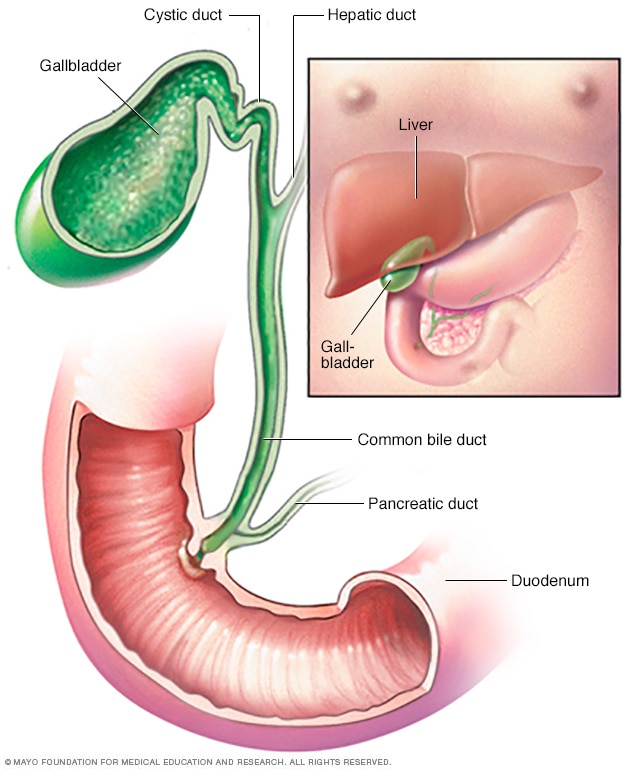
Gallbladder and bile duct
The gallbladder holds a yellow-green fluid called bile. Bile is made in the liver and flows into the gallbladder. It stays in the gallbladder until it's needed to help digest food. While eating, the gallbladder releases bile into the bile duct. The duct carries the bile to the upper part of the small intestine, called the duodenum, to help break down fat in food.
Types
Symptoms
Signs and symptoms of cholangiocarcinoma include:
- Yellowing of your skin and the whites of your eyes (jaundice).
- Intensely itchy skin.
- White-colored stools.
- Fatigue.
- Abdominal pain on the right side, just below the ribs.
- Losing weight without trying.
- Fever.
- Night sweats.
- Dark urine.
When to see a doctor
See your doctor if you have persistent fatigue, abdominal pain, jaundice, or other signs and symptoms that bother you. He or she may refer you to a specialist in digestive diseases (gastroenterologist).
Causes
Cholangiocarcinoma happens when cells in the bile ducts develop changes in their DNA. A cell's DNA contains the instructions that tell a cell what to do. The changes tell the cells to multiply out of control and form a mass of cells (tumor) that can invade and destroy healthy body tissue. It's not clear what causes the changes that lead to cholangiocarcinoma.
Risk factors
Factors that may increase your risk of cholangiocarcinoma include:
- Primary sclerosing cholangitis. This disease causes hardening and scarring of the bile ducts.
- Chronic liver disease. Scarring of the liver caused by a history of chronic liver disease increases the risk of cholangiocarcinoma.
- Bile duct problems present at birth. People born with a choledochal cyst, which causes dilated and irregular bile ducts, have an increased risk of cholangiocarcinoma.
- A liver parasite. In areas of Southeast Asia, cholangiocarcinoma is associated with liver fluke infection, which can occur from eating raw or undercooked fish.
- Older age. Cholangiocarcinoma occurs most often in adults over age 50.
- Smoking. Smoking is associated with an increased risk of cholangiocarcinoma.
- Diabetes. People who have type 1 or 2 diabetes may have an increased risk of cholangiocarcinoma.
- Certain inherited conditions. Some DNA changes passed from parents to children cause conditions that increase the risk of cholangiocarcinoma. Examples of these conditions include cystic fibrosis and Lynch syndrome.
Get Mayo Clinic cancer expertise delivered to your inbox.
Prevention
To reduce your risk of cholangiocarcinoma, you can:
- Stop smoking. Smoking is linked to an increased risk of cholangiocarcinoma. If you smoke, stop. If you have tried quitting in the past and haven't been successful, talk with your doctor about strategies to help you quit.
-
Reduce your risk of liver disease. Chronic liver disease is associated with an increased risk of cholangiocarcinoma. Some causes of liver disease can't be prevented, but others can. Do what you can to take care of your liver.
For instance, to reduce your risk of liver inflammation (cirrhosis), drink alcohol in moderation, if you choose to drink. For healthy adults, that means up to one drink a day for women and up to two drinks a day for men. Maintain a healthy weight. When working with chemicals, follow the safety instructions.







CON-20167626
Mayo Clinic does not endorse companies or products. Advertising revenue supports our not-for-profit mission.
Advertising & Sponsorship
Mayo Clinic Press
Check out these best-sellers and special offers on books and newsletters from Mayo Clinic Press.
