Acoustic neuroma (vestibular schwannoma) Care at Mayo Clinic
Acoustic neuroma care at Mayo Clinic
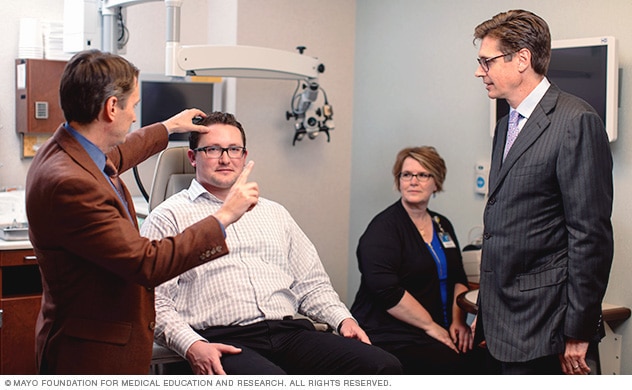
Multidisciplinary acoustic neuroma exam at Mayo Clinic
Each year, Mayo Clinic's multidisciplinary team of acoustic neuroma specialists cares for about 1,400 people with acoustic neuromas.
Your Mayo Clinic care team
Mayo Clinic ear, nose and throat and hearing surgeons (neuro-otologists), neurologists, and neurosurgeons work with doctors trained in brain and nervous system tumor treatment (neuro-oncologists), radiation therapy (radiation oncologists), imaging (radiologists), and other areas to evaluate and treat your condition. Hearing specialists (audiologists), physical therapists and other specialists also may be involved in your care.
People with an acoustic neuroma at Mayo Clinic benefit from:
- An individualized experience. Mayo Clinic specialists work together, taking the time to listen and respond to each person's symptoms and experiences. This allows for a more accurate diagnosis and detailed itinerary for each person.
- Advanced imaging studies. MRIs and other types of imaging are crucial for effective treatment. Mayo Clinic neuroradiologists devote their careers to evaluating nervous system conditions. This deep experience provides you with more accurate imaging and interpretation.
-
Expert treatment. Mayo Clinic experts treat acoustic neuromas with several approaches, including observation, stereotactic radiosurgery, hearing preservation surgery and nonhearing preservation surgery. Nonhearing preservation surgery is performed when the tumor has already permanently damaged most of the hearing in the affected ear.
Mayo Clinic specialists have pioneered many surgical techniques for acoustic neuromas and other types of peripheral nerve tumors and offer highly specialized care.
-
Research. Mayo Clinic researchers are constantly looking for ways to improve diagnosis and treatment of acoustic neuromas and other neurological conditions. You may have the opportunity to participate in a clinical trial as part of your treatment at Mayo Clinic.
Mayo Clinic's researchers study the genetic causes of acoustic neuromas and their growth. They have also conducted a long-term study examining quality of life among people with acoustic neuromas.
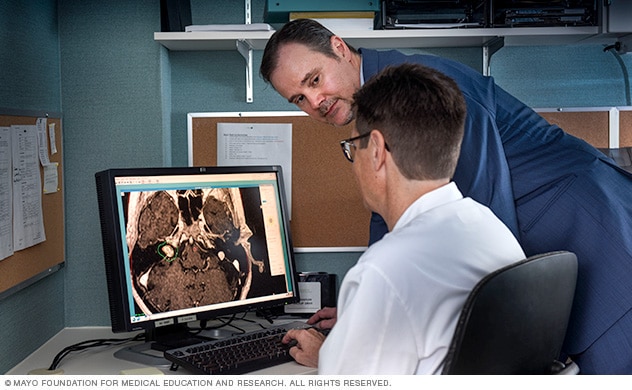
Stereotactic radiosurgery planning session for an acoustic neuroma
Mayo Clinic experts offer a variety of treatment approaches for acoustic neuromas, including stereotactic radiosurgery, such as Gamma Knife.
Expertise and rankings
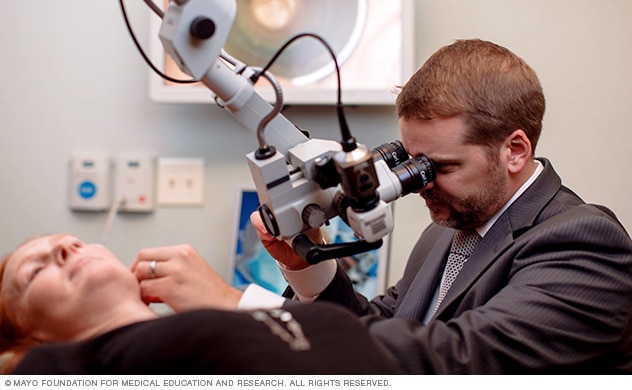
Acoustic neuroma exam at Mayo Clinic
Mayo Clinic researchers are constantly looking for ways to improve diagnosis and treatment of acoustic neuromas and other neurological conditions.
Experience
Mayo Clinic specialists have extensive expertise diagnosing and treating acoustic neuromas. They care for about 1,400 people a year with acoustic neuromas.
Advanced technology
Mayo Clinic doctors use the latest tools and techniques to treat acoustic neuromas, including stereotactic radiosurgery and other innovative technologies.
An advanced form of brain tumor imaging called magnetic resonance elastography (MRE) was invented at Mayo Clinic. Mayo Clinic neurosurgeons were among the first to use it with related slip interface imaging. The combination provided a clearer picture of the firmness and degree of attachment of brain tumors to the surrounding healthy tissues. This helped surgical planning and reduced uncertainty before going into surgery.
Research
With access to state-of-the-art laboratory and clinical facilities, Mayo Clinic researchers are innovators in the care of acoustic neuromas and other types of peripheral nerve tumors.
Current research topics include investigating the genetic causes of acoustic neuromas and their growth as well as a long-term study of quality-of-life issues affecting people with acoustic neuromas.
Nationally recognized expertise
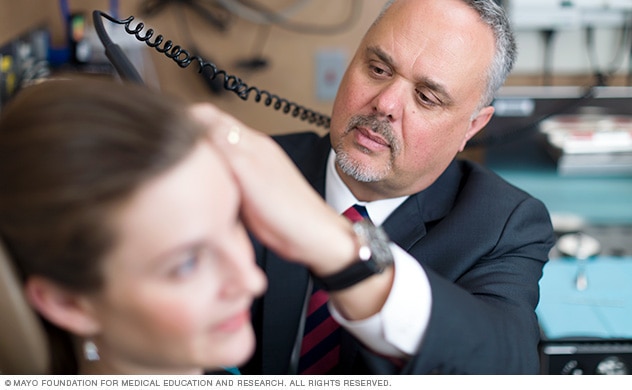
Acoustic neuroma care at Mayo Clinic
Mayo Clinic researchers are actively engaged in studies to improve the diagnosis and treatment of acoustic neuromas.
Mayo Clinic in Rochester, Minnesota, is ranked among the Best Hospitals for neurology & neurosurgery and as high performing for ear, nose and throat by U.S. News & World Report. In U.S. News & World Report’s regional analysis, Mayo Clinic Children’s is ranked No. 1 in Minnesota and No. 1 in the five-state Upper Midwest region, which includes Minnesota, Wisconsin, Iowa, North Dakota and South Dakota.
Learn more about Mayo Clinic's expertise and rankings in neurosurgery and neurology.
Locations, travel and lodging
Mayo Clinic has major campuses in Phoenix and Scottsdale, Arizona; Jacksonville, Florida; and Rochester, Minnesota. The Mayo Clinic Health System has dozens of locations in several states.
For more information on visiting Mayo Clinic, choose your location below:


Costs and insurance
Mayo Clinic works with hundreds of insurance companies and is an in-network provider for millions of people.
In most cases, Mayo Clinic doesn't require a physician referral. Some insurers require referrals or may have additional requirements for certain medical care. All appointments are prioritized on the basis of medical need.
Learn more about appointments at Mayo Clinic.
Please contact your insurance company to verify medical coverage and to obtain any needed authorization prior to your visit. Often, your insurer's customer service number is printed on the back of your insurance card.
More information about billing and insurance:
CON-20301693
