
Overview
An incompetent cervix happens when weak cervical tissue causes or plays a part in a premature birth or the loss of a healthy pregnancy. An incompetent cervix also is called cervical insufficiency.
The cervix is the lower part of the uterus that opens to the vagina. Before pregnancy, it's usually closed and firm. As pregnancy goes on and you get ready to give birth, the cervix slowly changes. It softens, gets shorter and opens. If you have an incompetent cervix, it might begin to open too soon causing you to give birth too early.
An incompetent cervix can be a hard problem to diagnose and treat. If your cervix begins to open early, or if you've had cervical insufficiency in the past, you might benefit from treatment. This might include having a procedure done to close the cervix with strong sutures, called a cervical cerclage. You also may take medicine to help the incompetent cervix and have ultrasound exams to check how things are going.
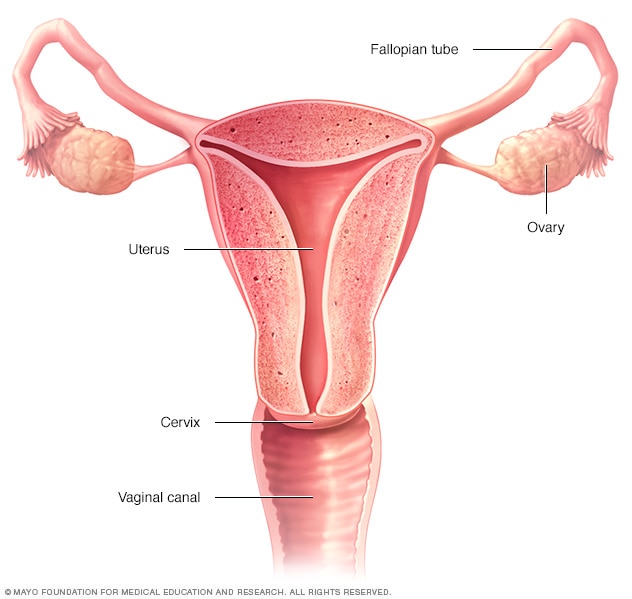
Female reproductive system
The ovaries, fallopian tubes, uterus, cervix and vagina, also called the vaginal canal, make up the female reproductive system.
Symptoms
With an incompetent cervix, there may be no signs or symptoms during early pregnancy. Some women have mild discomfort or spotting before the diagnosis. Often, this occurs before 24 weeks of pregnancy.
Be on the lookout for:
- A feeling of pelvic pressure.
- A new backache.
- Mild stomach cramps.
- A change in vaginal discharge.
- Light vaginal bleeding.
Risk factors
Many women don't have a known risk factor. Risk factors for an incompetent cervix include:
- Cervical trauma. A previous procedure or surgery on the cervix could lead to an incompetent cervix. This includes surgery to treat a cervical problem found during a Pap test. A procedure called a dilation and curettage (D&C) also could be associated with an incompetent cervix. Rarely, a cervical tear during a previous labor and delivery could be a risk factor for an incompetent cervix.
- A condition you're born with. This is called a congenital condition. Certain uterine conditions might cause an incompetent cervix. Genetic problems affecting a type of protein that makes up your body's connective tissues, called collagen, might cause an incompetent cervix.
Complications
An incompetent cervix may be risky for your pregnancy. Possible complications include:
- Premature birth.
- Pregnancy loss.
Prevention
You can't prevent an incompetent cervix. But there's a lot you can do to have a healthy, full-term pregnancy. For example:
- Seek regular prenatal care. Regular checkups during pregnancy can help your care team monitor your health and your baby's health. Tell your doctor about any signs or problems that worry you, even if they seem silly or not important.
- Eat a healthy diet. During pregnancy, you'll need more folic acid, calcium, iron and other essential nutrients. Taking a daily prenatal vitamin can help if you're not eating enough healthy foods. Prenatal vitamins can be started a few months before conception and continued throughout your pregnancy.
- Gain weight wisely. Gaining the right amount of weight can support your baby's health. A weight gain of 25 to 35 pounds, or about 11 to 16 kilograms, is often the target if you are at a healthy weight before pregnancy.
- Avoid risky substances. If you smoke, quit. Alcohol and illegal drugs are off-limits too. Get your doctor's OK before taking any medicines or supplements, even those available without a prescription.
If you've had an incompetent cervix during one pregnancy, you're at risk of premature birth or pregnancy loss in later pregnancies. If you're considering getting pregnant again, talk with your doctor to understand the risks and what you can do to promote a healthy pregnancy.