
Kegel exercises can strengthen the pelvic floor muscles. These muscles support the bladder and bowel, and they affect sexual function. With practice, you can do Kegels just about anytime.
Before you start doing Kegel exercises, learn how to find the correct muscles and understand the proper technique.
Benefits of Kegel exercises for men
Many factors can weaken your pelvic floor muscles. These include:
- Surgery to remove the prostate, also called radical prostatectomy.
- Overactive bladder.
- Aging.
- Being overweight.
- Straining from constipation or lots of coughing.
You might benefit from doing Kegel exercises if you:
- Dribble after urination, usually after you've left the toilet.
- Leak urine, also called urinary incontinence.
- Leak urine after having a strong, sudden urge to urinate. This is called urge incontinence.
- Leak stool, also called fecal incontinence.
Kegels help some people stop these leaks. Kegels also may improve sexual function. But talk with your healthcare professional before you start doing these exercises. Ask if Kegels are right for you.
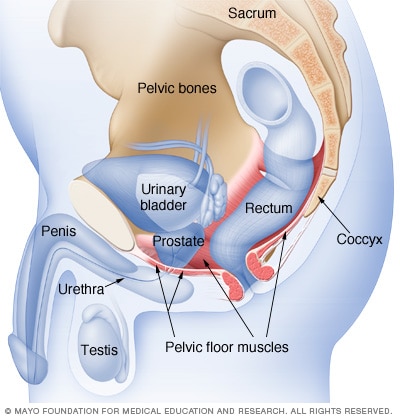
Male pelvic floor muscles
The male pelvic floor muscles support the bladder and bowel and affect sexual function. Kegel exercises can help strengthen these muscles.
How to do Kegel exercises for men
To get started:
- Find the right muscles. To find your pelvic floor muscles, tighten the muscles that you use to keep from passing gas or to stop urinating midstream. These actions use your pelvic floor muscles. You also can place your finger into your anus and squeeze as if trying to hold in urine. A feeling of tightness on your finger means you're squeezing the pelvic floor muscles. Once you've found the right muscles, you can do Kegel exercises in any position. At first, you might find them most easy to do while lying down.
- Perfect your technique. Tighten your pelvic floor muscles. Squeeze them for three seconds, and then relax for three seconds. Try it a few times in a row. When your muscles get stronger, you can do Kegel exercises while sitting, standing or walking.
- Keep your focus. For best results, focus on tightening only your pelvic floor muscles. Try not to flex the muscles in your stomach area, thighs or buttocks. And don't hold your breath. Instead, breathe freely during the exercises.
- Repeat three times a day. Aim for at least three sets a day. Work up to doing 10 to 15 Kegels in each set. You could aim to do these sets in different positions. For example, you could do one set lying down, one set seated and one set standing. You also can ask your healthcare professional to make a Kegel exercise plan that's tailored just for you.
When to do your Kegels
Make Kegel exercises part of your daily routine. Some ways to do that include:
- Fit in a set of Kegels every time you do a routine task, such as brushing your teeth or making breakfast.
- Do another set after you urinate, to get rid of the last few drops of urine.
- Squeeze your pelvic floor muscles just before and during any activity that puts pressure on your stomach area. Examples are sneezing, coughing, laughing or heavy lifting.
Don't do Kegels while you urinate. Stopping your bladder from emptying could raise your risk of a bladder infection.
When you're having trouble
If you're having trouble doing Kegel exercises, ask your healthcare professional for help. Your healthcare professional can show you how to strengthen the correct muscles. So can a physical therapist who has experience teaching pelvic floor exercises.
Your healthcare professional may suggest other techniques to try along with Kegels. One technique is called biofeedback. A small pressure sensor placed in the rectum measures pelvic floor activity as you relax and squeeze your pelvic floor muscles.
Another technique that may help is called electrical stimulation. A device releases a mild electric current that causes you to squeeze your pelvic muscles as you would during Kegels.
When to expect results
If you do Kegel exercises regularly, you can expect results within a few weeks to a few months. For example, you may leak urine less often. To keep getting benefits from Kegels, make these exercises a lasting part of your daily routine.
ART-20045074