
Overview
A varicocele (VAR-ih-koe-seel) is an enlargement of the veins within the loose bag of skin that holds the testicles (scrotum). These veins transport oxygen-depleted blood from the testicles. A varicocele occurs when blood pools in the veins rather than circulating efficiently out of the scrotum.
Varicoceles usually form during puberty and develop over time. They may cause some discomfort or pain, but they often result in no symptoms or complications.
A varicocele may cause poor development of a testicle, low sperm production or other problems that may lead to infertility. Surgery to treat varicocele may be recommended to address these complications.
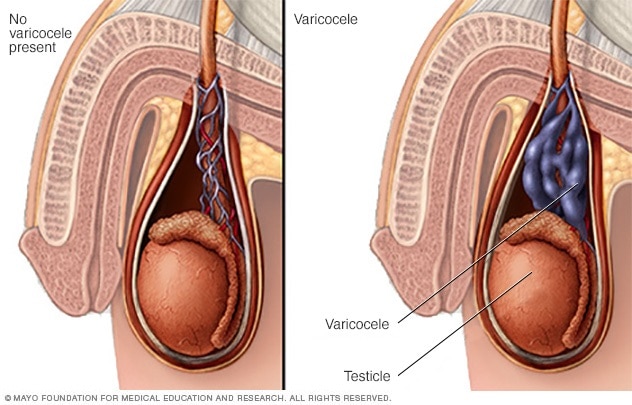
Varicocele
A varicocele is enlargement of the veins that transport oxygen-depleted blood away from the testicle.
Symptoms
A varicocele usually occurs on the left side of the scrotum and often produces no signs or symptoms. Possible signs and symptoms may include:
- Pain. A dull, aching pain or discomfort is more likely when standing or late in the day. Lying down often relieves pain.
- A mass in the scrotum. If a varicocele is large enough, a mass like a "bag of worms" may be visible above the testicle. A smaller varicocele may be too small to see but noticeable by touch.
- Differently sized testicles. The affected testicle may be noticeably smaller than the other testicle.
- Infertility. A varicocele may lead to difficulty fathering a child, but not all varicoceles cause infertility.
When to see a doctor
Annual wellness visits for boys are important for monitoring the development and health of testicles. It's important to schedule and keep these appointments.
A number of conditions could contribute to pain, swelling or a mass in the scrotum. If you experience any of these, see your health care provider to get a timely and accurate diagnosis.
Causes
The testicles receive oxygen-rich blood from two testicular arteries — one artery for each side of the scrotum. Similarly, there are also two testicular veins that transport oxygen-depleted blood back toward the heart. Within each side of the scrotum, a network of small veins (pampiniform plexus) transport the oxygen-depleted blood from the testicle to the main testicular vein. A varicocele is the enlargement of the pampiniform plexus.
The exact cause of a varicocele is unknown. One contributing factor may be the malfunction of valves inside the veins that are intended to keep blood moving in the right direction. Also, the left testicular vein follows a slightly different path than the right vein — a path that makes a problem with blood flow more likely on the left.
When the oxygen-depleted blood gets backed up in the network of veins, they widen (dilate), creating the varicocele.
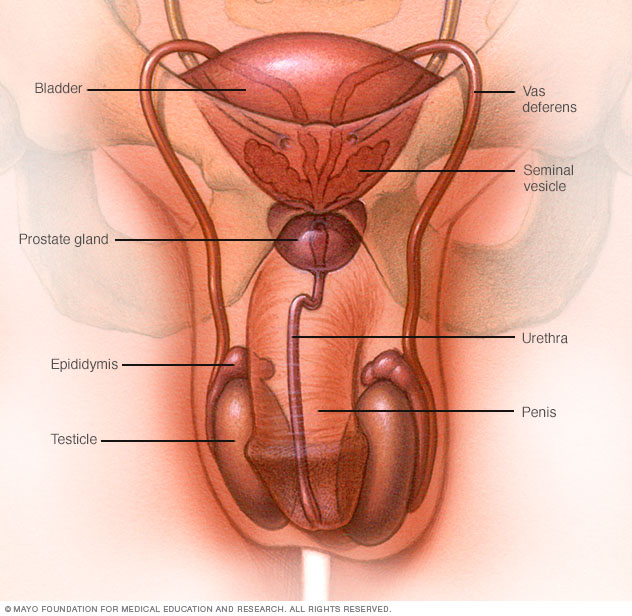
Male reproductive system
The male reproductive system makes, stores and moves sperm. Testicles produce sperm. Fluid from the seminal vesicles and prostate gland mixes with sperm to make semen. The penis ejaculates semen during sexual activity.
Risk factors
There don't appear to be any significant risk factors for developing a varicocele.
Complications
Having a varicocele can make it difficult for your body to regulate the temperature of the testicles. Oxidative stress and the buildup of toxins can result. These factors may contribute to the following complications:
- Poor testicular health. For boys going through puberty, a varicocele may inhibit testicle growth, hormone production, and other factors related to the health and function of the testicle. For men, a varicocele may result in gradual shrinkage due to tissue loss.
- Infertility. A varicocele doesn't necessarily cause infertility. An estimated 10% to 20% of men diagnosed with a varicocele experience difficulty fathering a child. Among men with fertility problems, about 40% have a varicocele.