
Overview
A urinary tract infection (UTI) is an infection in any part of the urinary system. The urinary system includes the kidneys, ureters, bladder and urethra. Most infections involve the lower urinary tract — the bladder and the urethra.
Women have a higher risk of getting UTIs than men. A urinary tract infection that affects the bladder can be painful and annoying. But if the infection spreads to the kidneys, the condition can be serious.
Healthcare professionals often treat urinary tract infections with antibiotics. You also can take steps to lower the chance of getting a UTI in the first place or prevent a repeat infection after being treated for a UTI.
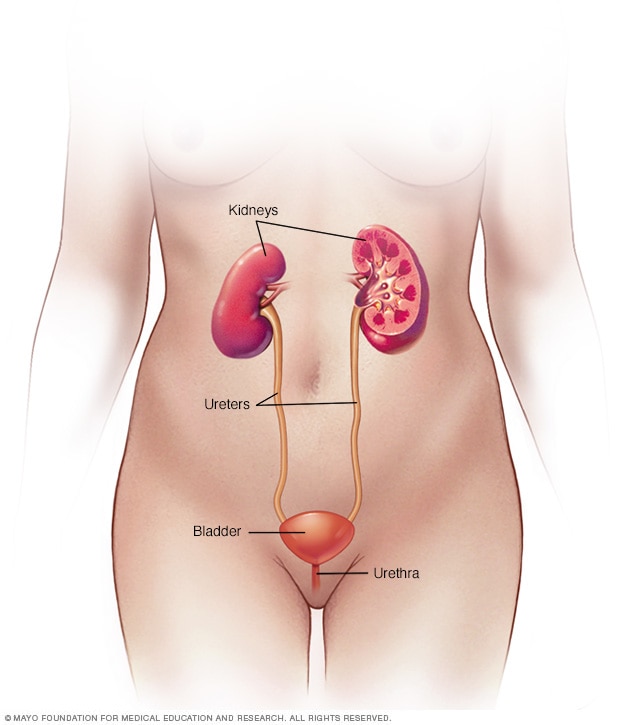
Female urinary system
The urinary system includes the kidneys, ureters, bladder and urethra. The urinary system removes waste from the body through urine. The kidneys sit toward the back of the upper belly. They filter waste and fluid from the blood and make urine. Urine moves from the kidneys to the bladder through narrow tubes called the ureters. The bladder stores urine until it's time to urinate. Urine leaves the body through a small tube called the urethra.
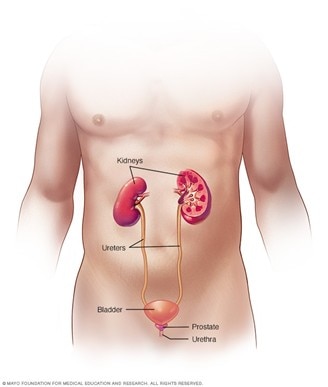
Male urinary system
Your urinary system includes the kidneys, ureters, bladder and urethra. The urinary system removes waste from the body through urine. The kidneys are located toward the back of the upper abdomen. They filter waste and fluid from the blood and produce urine. Urine moves from the kidneys through narrow tubes to the bladder. These tubes are called the ureters. The bladder stores urine until it's time to urinate. Urine leaves the body through another small tube called the urethra.
Symptoms
Common symptoms of urinary tract infection include:
- A burning feeling when urinating.
- A strong urge to urinate that doesn't go away.
- Urinating often and passing small amounts of urine.
- Urine that looks red, bright pink or cola-colored. This can be a sign of blood in the urine.
- Pelvic pain. This pain occurs mostly in the center of the pelvis and around the area of the pubic bone.
In older adults, UTIs may be missed or mistaken for other conditions.
Types of urinary tract infections
Signs and symptoms of a UTI may depend on which part of the urinary tract it affects.
| Part of urinary tract affected | Signs and symptoms |
|---|---|
| Kidneys | Back or side pain High fever Shaking and chills Nausea Vomiting |
| Bladder | Pelvic pressure Lower belly discomfort Frequent, painful urination Blood in urine |
| Urethra | Burning with urination Discharge |
When to see a doctor
Contact a doctor or other healthcare professional if you have symptoms of a UTI.
Causes
UTIs occur when bacteria enter the urinary tract through the urethra and begin to spread in the bladder. The urinary system is designed to keep out bacteria. But sometimes the defenses fail. When that happens, bacteria may take hold and grow into a full-blown infection in the urinary tract.
The most common UTIs affect the bladder and urethra.
- Infection of the bladder. Bacteria called E. coli often causes this type of UTI. This type of bacteria commonly lives in the gastrointestinal (GI) tract. But sometimes other bacteria are the cause.
- Infection of the urethra. This type of UTI can happen when GI bacteria spread from the bowel to the urinary tract. An infection of the urethra also can be caused by sexually transmitted infections, such as herpes, gonorrhea, chlamydia and mycoplasma.
Some people have repeated, also called recurrent, infections. This means having two or more UTIs within six months or three or more within a year. Repeated infections are more common in women.
Risk factors
UTIs are common in women. Many women have more than one UTI during their lifetimes.
Risk factors for UTIs that are specific to women include:
- Perimenopause and menopause. The amount of circulating estrogen drops during perimenopause and menopause. This leads to changes in the bacteria that are typically found in the vagina. These changes can raise the risk of UTIs.
- Female anatomy. Women have a shorter urethra than men do. As a result, there's less distance for bacteria to travel to reach the bladder.
- Certain types of birth control. Using diaphragms for birth control may raise the risk of UTIs. So can using spermicidal agents.
Other risk factors for UTIs include:
- Low fluid intake. Drinking plenty of fluids helps wash out the bladder, ridding it of bacteria and nutrients that bacteria need to grow.
- Constipation. Preventing constipation can help prevent UTIs.
- Incomplete bladder emptying. Not fully emptying the bladder allows bacteria to persist and grow.
- Urinary tract conditions present at birth. Some babies are born with a condition called vesicoureteral reflux. This condition causes urine to back up into the ureters, the tubes that carry urine from the kidneys to the bladder. When urine backs up like this, it can bring germs from the bladder up to the kidneys. This raises the risk of a UTI in the bladder leading to a more serious infection.
- Blockages in the urinary tract. Kidney stones or an enlarged prostate can trap urine above it, in the bladder. This raises the risk of UTIs.
- A suppressed immune system. Immunosuppressant medicines, diabetes and other diseases can weaken the immune system — the body's defense against germs. This can raise the risk of UTIs.
- Catheter use. People who can't urinate on their own often must use a tube, called a catheter, to remove urine from the bladder. Using a catheter raises the risk of UTIs. Catheters may be used by people who are in the hospital. Catheters also are used by people with certain physical or neurological conditions that make it hard to control urination.
- A recent urinary procedure. Urinary surgery can raise the risk of getting a UTI. So can having a urinary tract exam that uses medical tools.
Complications
When treated promptly, urinary tract infections rarely lead to complications. But left untreated, UTIs can cause serious health issues.
Complications of a UTI may include:
- Lasting kidney damage. Without treatment, UTIs can spread to the kidneys and damage them. The damage doesn't go away.
- Delivering a low birthweight infant. UTIs during pregnancy can affect the weight of the baby. A UTI also may cause a baby to be born early.
- Narrowing of the urethra in men. Repeated infections can scar the urethra. The scar tissue can make it harder to pass urine.
- Sepsis. This complication of urinary tract infection can be life-threatening. The risk of sepsis is higher if the infection travels up the urinary tract to the kidneys.
Prevention
You may be able to lower the risk of getting UTIs, especially recurrent urinary tract infections, if you:
- Drink plenty of fluids, especially water, to flush bacteria out of the bladder and urethra.
- Try cranberry juice or other cranberry products, if your healthcare team says it's OK.
- Stop using deodorant sprays, powders or other feminine products that can irritate the urethra.
- Change your birth control method, if you use a diaphragm, spermicide or unlubricated condoms.