
Overview
Urinary incontinence — the loss of bladder control — is a common and often embarrassing problem. The severity ranges from occasionally leaking urine when you cough or sneeze to having an urge to urinate that's so sudden and strong you don't get to a toilet in time.
Though it occurs more often as people get older, urinary incontinence isn't an inevitable consequence of aging. If urinary incontinence affects your daily activities, don't hesitate to see your doctor. For most people, simple lifestyle and dietary changes or medical care can treat symptoms of urinary incontinence.
Symptoms
Many people experience occasional, minor leaks of urine. Others may lose small to moderate amounts of urine more frequently.
Types of urinary incontinence include:
- Stress incontinence. Urine leaks when you exert pressure on your bladder by coughing, sneezing, laughing, exercising or lifting something heavy.
- Urge incontinence. You have a sudden, intense urge to urinate followed by an involuntary loss of urine. You may need to urinate often, including throughout the night. Urge incontinence may be caused by a minor condition, such as infection, or a more severe condition such as a neurological disorder or diabetes.
- Overflow incontinence. You experience frequent or constant dribbling of urine due to a bladder that doesn't empty completely.
- Functional incontinence. A physical or mental impairment keeps you from making it to the toilet in time. For example, if you have severe arthritis, you may not be able to unbutton your pants quickly enough.
- Mixed incontinence. You experience more than one type of urinary incontinence — most often this refers to a combination of stress incontinence and urge incontinence.
When to see a doctor
You may feel uncomfortable discussing incontinence with your doctor. But if incontinence is frequent or is affecting your quality of life, it's important to seek medical advice because urinary incontinence may:
- Cause you to restrict your activities and limit your social interactions
- Negatively impact your quality of life
- Increase the risk of falls in older adults as they rush to the toilet
- Indicate a more serious underlying condition
Causes
Urinary incontinence can be caused by everyday habits, underlying medical conditions or physical problems. A thorough evaluation by your doctor can help determine what's behind your incontinence.
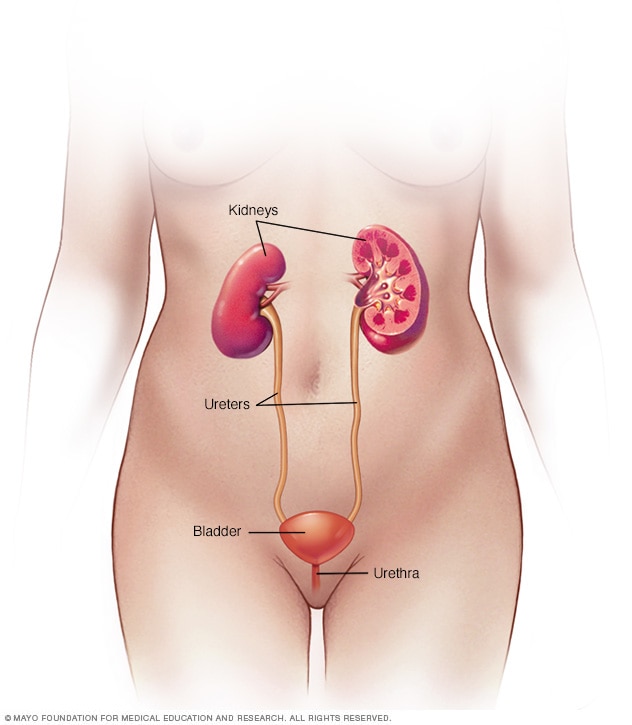
Female urinary system
The urinary system includes the kidneys, ureters, bladder and urethra. The urinary system removes waste from the body through urine. The kidneys sit toward the back of the upper belly. They filter waste and fluid from the blood and make urine. Urine moves from the kidneys to the bladder through narrow tubes called the ureters. The bladder stores urine until it's time to urinate. Urine leaves the body through a small tube called the urethra.
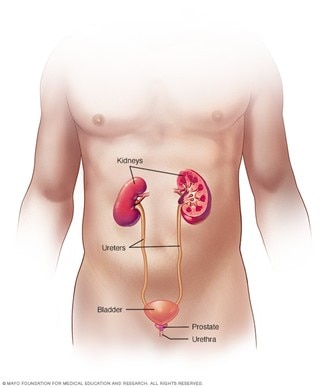
Male urinary system
Your urinary system includes the kidneys, ureters, bladder and urethra. The urinary system removes waste from the body through urine. The kidneys are located toward the back of the upper abdomen. They filter waste and fluid from the blood and produce urine. Urine moves from the kidneys through narrow tubes to the bladder. These tubes are called the ureters. The bladder stores urine until it's time to urinate. Urine leaves the body through another small tube called the urethra.
Temporary urinary incontinence
Certain drinks, foods and medications may act as diuretics — stimulating your bladder and increasing your volume of urine. They include:
- Alcohol
- Caffeine
- Carbonated drinks and sparkling water
- Artificial sweeteners
- Chocolate
- Chili peppers
- Foods that are high in spice, sugar or acid, especially citrus fruits
- Heart and blood pressure medications, sedatives, and muscle relaxants
- Large doses of vitamin C
Urinary incontinence may also be caused by an easily treatable medical condition, such as:
- Urinary tract infection. Infections can irritate your bladder, causing you to have strong urges to urinate and, sometimes, incontinence.
- Constipation. The rectum is located near the bladder and shares many of the same nerves. Hard, compacted stool in your rectum causes these nerves to be overactive and increase urinary frequency.
Persistent urinary incontinence
Urinary incontinence can also be a persistent condition caused by underlying physical problems or changes, including:
- Pregnancy. Hormonal changes and the increased weight of the fetus can lead to stress incontinence.
- Childbirth. Vaginal delivery can weaken muscles needed for bladder control and damage bladder nerves and supportive tissue, leading to a dropped (prolapsed) pelvic floor. With prolapse, the bladder, uterus, rectum or small intestine can get pushed down from the usual position and protrude into the vagina. Such protrusions may be associated with incontinence.
- Changes with age. Aging of the bladder muscle can decrease the bladder's capacity to store urine. Also, involuntary bladder contractions become more frequent as you get older.
- Menopause. After menopause, women produce less estrogen, a hormone that helps keep the lining of the bladder and urethra healthy. Deterioration of these tissues can aggravate incontinence.
- Enlarged prostate. Especially in older men, incontinence often stems from enlargement of the prostate gland, a condition known as benign prostatic hyperplasia.
- Prostate cancer. In men, stress incontinence or urge incontinence can be associated with untreated prostate cancer. But more often, incontinence is a side effect of treatments for prostate cancer.
- Obstruction. A tumor anywhere along your urinary tract can block the normal flow of urine, leading to overflow incontinence. Urinary stones — hard, stonelike masses that form in the bladder — sometimes cause urine leakage.
- Neurological disorders. Multiple sclerosis, Parkinson's disease, a stroke, a brain tumor or a spinal injury can interfere with nerve signals involved in bladder control, causing urinary incontinence.
Risk factors
Factors that increase your risk of developing urinary incontinence include:
- Gender. Women are more likely to have stress incontinence. Pregnancy, childbirth, menopause and normal female anatomy account for this difference. However, men who have prostate gland problems are at increased risk of urge and overflow incontinence.
- Age. As you get older, the muscles in your bladder and urethra lose some of their strength. Changes with age reduce how much your bladder can hold and increase the chances of involuntary urine release.
- Being overweight. Extra weight increases pressure on your bladder and surrounding muscles, which weakens them and allows urine to leak out when you cough or sneeze.
- Smoking. Tobacco use may increase your risk of urinary incontinence.
- Family history. If a close family member has urinary incontinence, especially urge incontinence, your risk of developing the condition is higher.
- Some diseases. Neurological disease or diabetes may increase your risk of incontinence.
Complications
Complications of chronic urinary incontinence include:
- Skin problems. Rashes, skin infections and sores can develop from constantly wet skin.
- Urinary tract infections. Incontinence increases your risk of repeated urinary tract infections.
- Impacts on your personal life. Urinary incontinence can affect your social, work and personal relationships.
Prevention
Urinary incontinence isn't always preventable. However, to help decrease your risk:
- Maintain a healthy weight
- Practice pelvic floor exercises
- Avoid bladder irritants, such as caffeine, alcohol and acidic foods
- Eat more fiber, which can prevent constipation, a cause of urinary incontinence
- Don't smoke, or seek help to quit if you're a smoker