
Overview
Thoracic outlet syndrome (TOS) is a group of conditions caused by pressure on blood vessels or nerves in the area between the neck and shoulder. This space is known as the thoracic outlet. Pressure on the blood vessels and nerves can cause shoulder and neck pain. Also, it can cause the fingers to feel numb.
There are three types of thoracic outlet syndrome:
- Neurogenic thoracic outlet syndrome. About 95% of people who have TOS have this type. In neurogenic TOS, nerves around the shoulder are pinched. These nerves form the brachial plexus. They come from the spinal cord and control movements and feeling in the arms, shoulders and hands. When the nerves are pinched, pain or numbness may happen in these areas. When the condition is severe, nerves can be damaged and muscle strength or tissue can be lost.
- Venous thoracic outlet syndrome. About 4% of people with TOS have this type. In venous TOS, a vein under the collarbone called the subclavian vein is squeezed and damaged. This can cause swelling, pain and changes in skin color in the shoulder, arm or hand. When the condition is severe, blood clots may form.
- Arterial thoracic outlet syndrome. This least common type happens in about 1% of people with TOS. In this type, an artery under the collarbone called the subclavian artery is pressed. This can cause pain, coldness, and changes to the pulse or skin color in the arm or hand. When the condition is severe, the pressure can damage the artery. This can lead to a bulge in the vessel, also known as an aneurysm. An aneurysm is a life-threatening condition that can cause blood clots to form more easily.
Common causes of thoracic outlet syndrome include differences in the body, such as having an extra rib or one that is shaped differently. Trauma, repeated movements, or strain in the area between the neck and shoulders also can cause TOS. Sometimes the cause of thoracic outlet syndrome is not known.
TOS isn't common, but that may be because it's hard to diagnose. When it is diagnosed, people ages 20 to 50 tend to have the highest risk, especially women. One exception is venous TOS, which tends to affect younger men.
Treatment often involves physical therapy and pain relief. Most people get better with these treatments. For some, surgery may be needed.
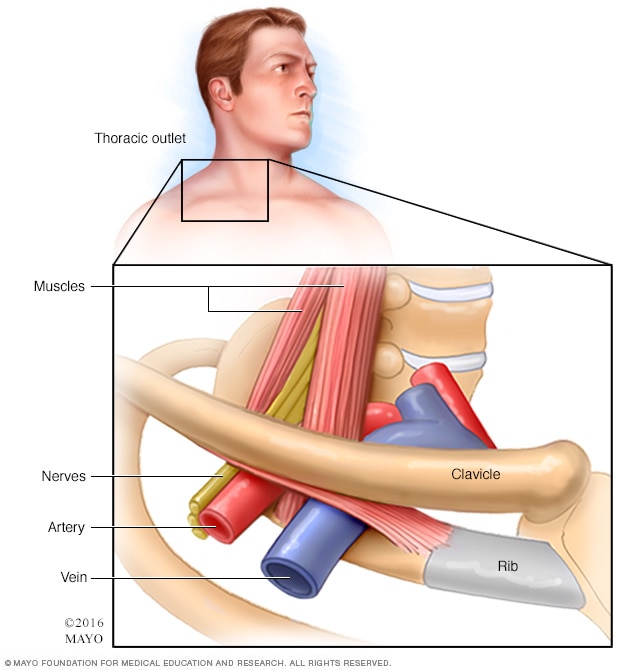
Thoracic outlet
The thoracic outlet is the space between the collarbone, known as the clavicle, and the first rib. This narrow passageway is crowded with blood vessels, nerves and muscles.
Symptoms
Symptoms of thoracic outlet syndrome (TOS) vary based on type. They may become worse when you lift your arms overhead or put pressure on this area.
Neurogenic TOS symptoms
- Numbness or tingling. This may happen in the arm or fingers – often the ring finger and little finger.
- Aches and pain. These may happen in the head, face, neck, shoulder, arm or hand.
- Muscle changes. Muscles may feel weaker or look smaller — especially in the hand. The ring finger or little finger may curl in toward the hand and look like a claw.
Venous TOS symptoms
- Changes in skin color. Skin on the arm, hand or shoulder may become blue, gray or purple depending on your skin color.
- Pain and swelling. Your hand, arm or shoulder may ache, appear swollen and feel heavy. Also, the hand may tingle or feel numb.
- Popping veins. You may see large veins surface around the shoulder.
Arterial TOS symptoms
- Pulsing lump under the skin. You may feel this near the collarbone.
- Cold skin with a drop in pulse and change in color. Skin of the fingers, hands or arms may feel cold and appear to be drained of color. Also, the pulse may feel weak or absent. When the condition is severe, skin on the fingertips may darken in color or develop sores. This is called gangrene.
- Pain, tingling and weakness. Your hand, fingers or arm may ache, tingle or tire easily, especially during use.
When to see a doctor
See your healthcare team if you often have any of the symptoms of thoracic outlet syndrome.
When to seek immediate medical care
- Sudden arm swelling with a change in skin color. Skin may appear blue, gray or purple depending on your skin color. This may signal damage to a vein.
- Sudden severe hand pain or change in the fingers. Hand swelling may signal damage to a vein. Painful fingertips that appear purple or black or develop sores may be a sign of gangrene. Gangrene is a serious condition that can develop when the flow of blood is blocked to a certain area.
- Weak pulse with cold skin that appears to be drained of color. This may signal damage to an artery.
- Weak or visibly smaller hand or arm muscles. This may signal damage to the nerves.
Causes
Thoracic outlet syndrome often is caused by pressure on the nerves or blood vessels in the thoracic outlet. This is the area between the neck and shoulder. The cause of the pressure varies and can include:
- Differences in the body. Some people are born with an extra rib in the neck, above the first rib. The extra rib, known as a cervical rib, can press on nerves or blood vessels. Also, there may be a tight, thick band of tissue connecting the spine to the rib that causes pressure.
- Posture. How you hold your body can affect how much pressure is on the thoracic outlet. Drooping your shoulders or holding your head too far forward can put pressure on this area. Also, changes in posture that happen during pregnancy or when carrying a heavy bag over the shoulder can increase pressure on the nerves and vessels in the thoracic outlet.
- Repeating movements. Repeating the same arm movements for a job, sport or other daily activity can cause strain. Over time, this strain can damage the nerves and blood vessels of the thoracic outlet.
- Trauma. A traumatic event, such as a car accident, can cause changes inside the body that compress the thoracic outlet. As the body responds, injured tissues may swell or thicken. This process can put pressure on the nerves and vessels in this area and cause TOS.
Risk factors
Several factors can raise the risk of thoracic outlet syndrome, including:
- Sex assigned at birth. Women are more than three times as likely to be diagnosed with thoracic outlet syndrome than are men.
- Age. Thoracic outlet syndrome may occur at any age. But it is most commonly diagnosed in adults between ages 20 and 50.
Complications
Complications are health issues that can develop as a result of thoracic outlet syndrome. The type of thoracic outlet syndrome you have can affect what complications develop:
- Blood clots or aneurysms. These are a complication of arterial or venous TOS. When blood vessels are pinched, the arm may become swollen and painful and show a change in skin color. If this happens, seek medical care right away. You may need urgent treatment.
- Chronic pain or disability. This is a complication of neurogenic TOS. When the nerves are pinched over time, long-term damage can happen. Neurogenic TOS can be confused with other joint or muscle injuries. If symptoms don't get better, see your healthcare professional for testing.
Prevention
Here are some tips to prevent TOS.
In general:
- Don't carry heavy bags over your shoulder. This can put pressure on the thoracic outlet.
- Exercise. Stretch daily, and do movements that keep your chest, neck and shoulders strong and flexible.
- Maintain a healthy weight. If you're been told to lose weight, doing so may help prevent or relieve symptoms of TOS.
If you're at risk of TOS:
- Avoid lifting heavy objects. This puts more strain on the thoracic outlet.
- Avoid repeating movements that cause strain. These movements can stress and possibly damage the nerves and blood vessels of the neck and shoulders.