
Overview
Takayasu arteritis (tah-kah-YAH-soo ahr-tuh-RIE-tis) is a rare type of vasculitis. Vasculitis is a group of conditions that causes blood vessel swelling, called inflammation. In Takayasu arteritis, the swelling damages the large artery that carries blood from the heart to the rest of the body, called the aorta, and its main branches.
The condition can narrow or block arteries. The artery walls may bulge and tear, called an aneurysm. It also can cause arm or chest pain and high blood pressure. In time, Takayasu arteritis can cause heart failure or stroke.
People who don't have symptoms may not need treatment. But most people with the condition need medicines to control inflammation in the arteries and prevent complications. Even with treatment, the condition often comes back. And symptoms may come and go.

Large arteries
Takayasu arteritis is a form of vasculitis. Vasculitis is swelling, called inflammation, of the blood vessels. Takayasu arteritis harms the large arteries, mainly the aorta.
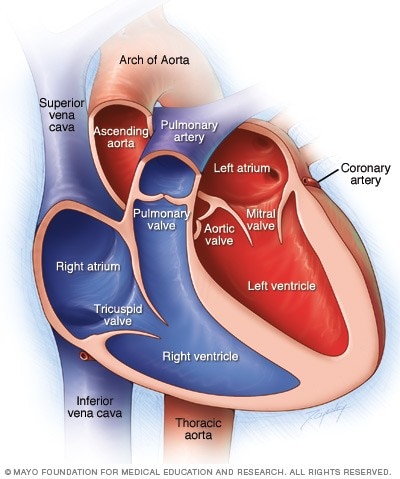
Chambers and valves of the heart
A typical heart has two upper and two lower chambers. The upper chambers, the right and left atria, receive incoming blood. The lower chambers, the more muscular right and left ventricles, pump blood out of the heart. The heart valves, which keep blood flowing in the right direction, are gates at the chamber openings.
Symptoms
The symptoms of Takayasu arteritis often come in two stages.
Stage 1
In the first stage, you're likely to feel not well. Symptoms may include:
- Tiredness.
- Weight loss.
- Muscle and joint aches and pains.
- Mild fever, sometimes with night sweats.
Not everyone has these early symptoms. Inflammation can harm arteries for years before symptoms begin.
Stage 2
During the second stage, the swelling causes arteries to narrow. Less blood and oxygen reach the organs and tissues. Stage 2 symptoms may include:
- Weakness or pain in the limbs with use.
- A weak pulse, trouble getting a blood pressure reading or having a different blood pressure in each arm.
- Lightheadedness, dizziness or fainting.
- Headaches or changes in vision.
- Issues with memory or thinking.
- Chest pain or shortness of breath.
- High blood pressure.
- Diarrhea or blood in stool.
- Too few red blood cells, called anemia.
When to see a doctor
Seek medical help right away for shortness of breath, chest or arm pain, or signs of a stroke. Signs of a stroke include face drooping, arm weakness or having trouble speaking.
Make an appointment with your healthcare professional if you have symptoms that worry you. Finding Takayasu arteritis early is key to treating it.
If you've been diagnosed with Takayasu arteritis, your symptoms may come and go even with treatment. Watch for symptoms you had at the start of the condition or any new ones. Tell your healthcare professional right away about any changes.
Causes
No one knows exactly what causes the first swelling, called inflammation, in Takayasu arteritis. It's likely an autoimmune condition. This means the immune system attacks the arteries by mistake. A virus or other infection may set off the condition.
Risk factors
Takayasu arteritis mainly affects people assigned female at birth who are younger than 40. The condition happens around the world. But it's most common in Asia.
Sometimes the condition runs in families. Researchers have found certain genes that are linked with Takayasu arteritis.
Complications
With Takayasu arteritis, cycles of swelling and healing in the arteries might lead to one or more of these complications:
- Hard and narrow blood vessels. This can lower blood flow to organs and tissues.
- High blood pressure. This most often is due to less blood flow to the kidneys.
- Inflammation of the heart. This may harm the heart muscle or the heart valves.
- Heart failure. This may be caused by high blood pressure, inflammation of the heart, an aortic valve that allows blood to leak back into the heart or a mix of these.
- Stroke. Lower or blocked blood flow in the arteries to the brain can cause this.
- Transient ischemic attack. Also called a TIA or ministroke, a transient ischemic attack is a warning. It causes symptoms like those of a stroke. But it doesn't cause long-term damage.
- A bulge in the aorta, called an aneurysm. This happens when the walls of the blood vessel weaken and stretch. This forms a bulge that can be life-threatening if it breaks.
- Heart attack. This may happen as a result of less blood flow to the heart.

Aortic aneurysm and aortic dissection
An aortic aneurysm happens when a weak spot in the wall of the aorta begins to bulge (left). This can happen anywhere in the aorta. Having an aneurysm raises the risk of a tear in the lining of the aorta, shown in the image on the right.
Pregnancy
People with Takayasu arteritis can have a healthy pregnancy. But the condition and medicines that treat it can affect being able to get pregnant and the pregnancy.
If you have Takayasu arteritis and plan to get pregnant, work with your healthcare professional before you get pregnant to make a plan to limit complications of pregnancy. See your healthcare team regularly during your pregnancy.