
Overview
Skin cancer is cancer that starts as a growth of cells on the skin. The cells can invade and destroy healthy body tissue. Sometimes the cells break away and spread to other parts of the body.
Many kinds of skin cancer exist. The most common skin cancers are basal cell carcinoma and squamous cell carcinoma. While these are the most common, they often can be cured. The most dangerous form of skin cancer is melanoma. It is more likely to spread, making it harder to cure.
Most skin cancers happen on skin that gets a lot of sunlight. The light that comes from the sun is thought to cause most skin cancers. You can reduce your risk of skin cancer by covering your skin with clothes or sunscreen to protect it from the sun.
Some skin cancers happen on skin that doesn't typically get sun. This likely means that something else is causing these cancers. To reduce your risk of these kinds of skin cancers, check your skin regularly for any changes. Report these changes to your healthcare professional.
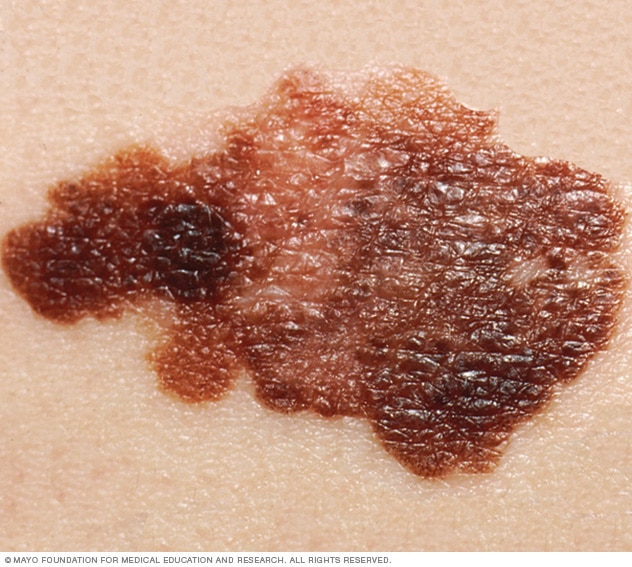
Melanoma
The first sign of melanoma is often a mole that changes size, shape or color. This melanoma shows color variations and an irregular border, both of which are melanoma warning signs.
Symptoms
What skin cancer looks like
Signs and symptoms of skin cancer include:
- A new growth on the skin that might look like a mole, a bump or a scab.
- A rough patch on the skin.
- A sore on the skin that won't heal.
- Changes to a mole or freckle, such as getting bigger or changing color.
- Itchy skin around a skin growth.
- Pain around a skin growth.
Where skin cancer happens
Most skin cancers happen on parts of the body that get a lot of sun. This includes the scalp, face, lips and ears. Other parts of the body that might get sun include the arms, backs of the hands, back and legs.
Skin cancer also can happen on skin that typically doesn't get sun. This includes the palms of the hands, the genitals, and under the fingernails and toenails. When skin cancer happens in people with Black or brown skin, it tends to happen in these places that don't typically get sun.
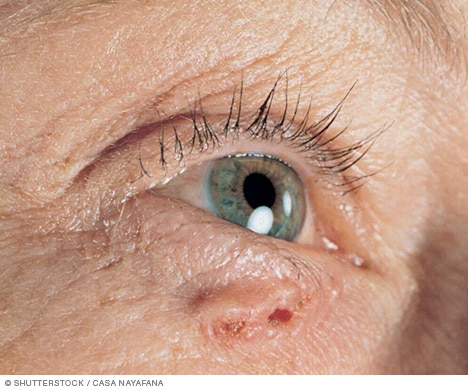
Basal cell carcinoma on white skin
Basal cell carcinoma is a type of skin cancer that most often develops on areas of skin exposed to the sun, such as the face. On white skin, basal cell carcinoma often looks like a bump that's skin-colored or pink.
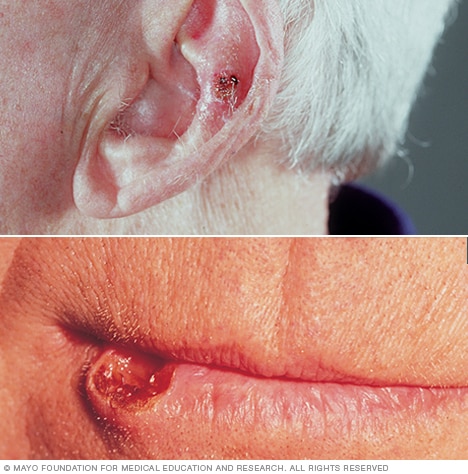
Squamous cell carcinoma of the skin
Sun-exposed areas such as the lips and ears are especially likely to develop squamous cell carcinoma of the skin.
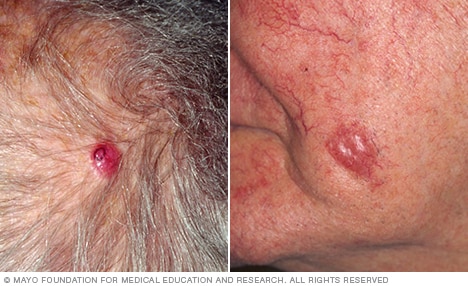
Merkel cell carcinoma
Merkel cell carcinoma is a rare type of skin cancer. It most often appears as a bump on the face, heard or neck.
When to see a doctor
Make an appointment with a doctor or other healthcare professional if you notice any changes to your skin that worry you.
Causes
Most skin cancers are caused by exposure to light from the sun. The light that comes from the sun is a kind of ultraviolet light. That kind of light also can come from tanning beds and tanning lamps. Ultraviolet light contains radiation that changes the DNA inside skin cells and leads to skin cancer.
Not all skin cancers happen on skin that typically gets a lot of sun. This means something else also causes skin cancer. It's not always clear what causes skin cancer. But healthcare professionals have found some things that increase the risk. These include having a weakened immune system and having a family history of skin cancer.
Skin cancer starts when skin cells develop changes in their DNA. A cell's DNA holds the instructions that tell the cell what to do. In healthy cells, the DNA tells the cells to grow and multiply at a set rate. The DNA also tells the cells to die at a set time.
In cancer cells, the DNA changes give different instructions. The changes tell the cancer cells to grow and multiply quickly. Cancer cells can keep living when healthy cells would die. This causes too many cells.
The cancer cells can invade and destroy healthy body tissue. In time, cancer cells can break away and spread to other parts of the body. When cancer spreads, it's called metastatic cancer.
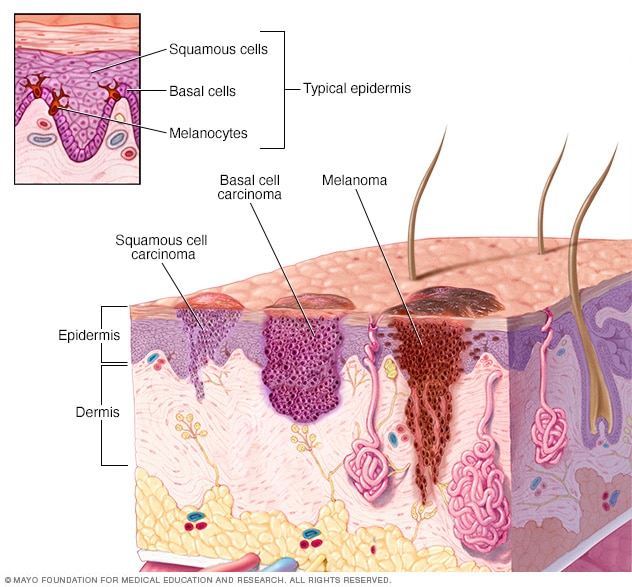
Where skin cancer develops
Skin cancer begins in the cells that make up the outer layer of the skin, called the epidermis. One type of skin cancer called basal cell carcinoma begins in the basal cells. Basal cells make skin cells that keep pushing older cells toward the surface. As new cells move up, they become squamous cells. Skin cancer that starts in the squamous cells is called squamous cell carcinoma of the skin. Melanoma, another type of skin cancer, comes from the pigment cells, called melanocytes.
Risk factors
Factors that may increase the risk of skin cancer include:
- Skin that sunburns easily. Anyone of any skin color can get skin cancer. But the risk is higher in people with skin that sunburns easily. The risk of skin cancer also is higher in people who have blond or red hair, light-colored eyes or freckles.
- Light from the sun. Ultraviolet light from the sun increases the risk of skin cancer. Covering the skin with clothes or sunblock can help lower the risk.
- Light from tanning beds. People who use indoor tanning beds have an increased risk of skin cancer. The lights used in tanning beds give off harmful ultraviolet light.
- A history of sunburns. Having had one or more sunburns that raised blisters increases the risk of developing skin cancer. If the sunburns happened during childhood, they increase the risk of getting skin cancer as an adult even more.
- A history of skin cancer. People who've had skin cancer once are much more likely to get it again.
- A family history of skin cancer. If a blood relative, such as a parent or sibling, had skin cancer, you may be more likely to get skin cancer.
- A weakened immune system. If the body's germ-fighting immune system is weakened by medicine or disease, there might be a higher risk of skin cancer. People with weakened immune systems include those taking medicine to control the immune system, such as after an organ transplant. Some health conditions, such as HIV infection, also can weaken the immune system.
Prevention
Most skin cancers can be prevented by protecting yourself from the sun. To lower the risk of skin cancer you can:
- Stay out of the sun during the middle of the day. For much of North America, the sun's rays are strongest between about 10 a.m. and 3 p.m. Plan outdoor activities at other times of the day. When outside, stay in shade as much as possible.
- Wear sunscreen year-round. Use a broad-spectrum sunscreen with an SPF of at least 30, even on cloudy days. Apply sunscreen generously. Apply again every two hours, or more often if you're swimming or sweating.
- Wear protective clothing. Wear dark, tightly woven clothes that cover your arms and legs. Wear a wide-brimmed hat that shades your face and ears. Don't forget sunglasses.
- Don't use tanning beds. The lights in tanning beds give off ultraviolet light. Using tanning beds increases the risk of skin cancer.
-
Check your skin often and report changes to your healthcare team. Look at your skin often for new growths. Look for changes in moles, freckles, bumps and birthmarks. Use mirrors to check your face, neck, ears and scalp.
Look at your chest and trunk and the tops and undersides of your arms and hands. Look at the front and back of your legs and your feet. Look at the bottom of the feet and the spaces between your toes. Also check your genital area and between your buttocks.