
Overview
Primary biliary cholangitis (PBC) is an uncommon, long-term disease of the liver in which the body's immune system mistakenly attacks bile ducts within the liver. This gradually decreases the flow of bile from the liver to the small intestine. A buildup of bile damages and destroys liver tissues.
Primary biliary (BIL-ee-air-ee) cholangitis (koh-lan-JIE-tis) destroys the lining of the small- and medium-sized bile ducts that transport the digestive fluid bile from the liver. Leaking bile and related disease activity damage liver tissues. If left untreated, PBC can lead to scarring of tissues in the liver and liver failure. PBC most often affects middle-aged and older women.
Treatments for PBC include medicines to delay progression of the disease and to treat symptoms such as itching, extreme tiredness, and dry eyes and mouth. Advanced disease may require a liver transplant.
PBC was formerly called primary biliary cirrhosis.
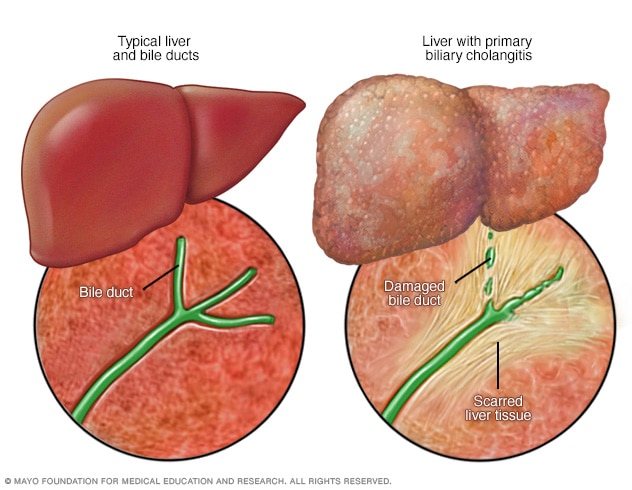
Liver with primary biliary cholangitis
In primary biliary cholangitis, the immune system attacks the lining of bile ducts in the liver. Damaged bile ducts leak bile and trigger inflammation that causes scarring of liver tissues, also called fibrosis.
Symptoms
More than 50% of people with primary biliary cholangitis do not have symptoms when they get a diagnosis. But symptoms appear at some point as damage to the liver worsens.
Symptoms often include:
- Fatigue.
- Itchy skin.
- Dry eyes and mouth.
- Difficulty with memory and concentration.
Other signs and symptoms may include:
- Pain in the upper right belly.
- Fatty deposits, called xanthomas, on the skin around the eyes or the creases of joints.
- Yellowing of the whites of the eyes or skin, called jaundice.
- Darkening of the skin that's not related to sun exposure.
- Oily or greasy stools.
When to see a doctor
Make an appointment with your healthcare professional if you have severe, persistent itching on much of your body with no obvious cause. Also, see your health professional if you feel extremely tired all the time, no matter how much rest you get.
Causes
Primary biliary cholangitis (PBC) is an autoimmune disease. This means the body's immune system attacks its own tissues as if it were fighting a disease.
Usually, certain types of white blood cells, called lymphocytes, find and attack germs or other foreign substances. In PBC, lymphocytes mistakenly target healthy cells lining the small- and medium-sized bile ducts in the liver. The immune system also makes disease-fighting proteins, called antibodies, that attack these healthy cells.
Bile ducts in the liver are gradually damaged and destroyed, causing bile to build up in the liver. This buildup is called cholestasis.
Leaking bile, inflammation and other immune system activity causes damage and scarring of liver tissues. This scarring, called fibrosis, leads to poor liver function. Eventually, fibrosis can lead to severe, permanent scarring, called cirrhosis.
It's not clear what triggers this autoimmune disease. Research suggests several potential triggers that may lead to PBC in people with a genetic risk of the disease. These triggers may include:
- Infections of the urinary tract or digestive tract.
- Cigarette smoking.
- Chemicals, including chemicals in some cosmetics.
- Environmental pollution.
Coexisting conditions
People with PBC often have another autoimmune disease. These may include:
- Thyroid disease.
- Rheumatoid arthritis.
- Sjogren syndrome, which causes dry eyes and mouth.
- Inflammatory bowel disease.
Risk factors
The following factors may increase your risk of primary biliary cholangitis:
- Sex assigned at birth. Most people with the disease are women.
- Age. It most often affects middle-aged and older adults.
- Genetics. You're more likely to get the condition if you have a family member who has or had it.
- Geography. It's most common among people in North America and Northern Europe.
Complications
As liver damage worsens, primary biliary cholangitis (PBC) can cause serious health problems, including:
- Liver scarring. Permanent liver scarring, also called cirrhosis, makes it difficult for your liver to work and may lead to liver failure. It occurs in later stages of primary biliary cholangitis.
- Portal hypertension. The portal vein is the major route for blood flowing into the liver. High blood pressure in this vein is called portal hypertension. This complication can cause pressure on blood vessels throughout the digestive system that can lead to life-threatening internal bleeding. Portal hypertension can cause enlargement of the liver and spleen and cause these organs to leak.
- Liver cancer. PBC increases the risk of liver cancer, particularly in people with cirrhosis of the liver.
- Thinning bones. People with PBC may experience thinning and weakened bones. This is called osteoporosis. Bones are brittle and can break easily.
- Vitamin deficiencies. Bile helps the intestines absorb vitamins A, D, E and K. PBC may result if the body does not get enough of these vitamins. This condition is called vitamin deficiency.
- High cholesterol. Up to 80% of people with PBC have high cholesterol.