
Want to stop smoking? Many quit-smoking products that are approved by government health agencies can help you stop for good.
Using quit-smoking products can greatly boost your chance of success. They may more than double your odds of quitting smoked tobacco.
Your chance of quitting for the long term is even better when you combine counseling with one or more quit-smoking products.
Types of quit-smoking products
Quit-smoking products can help ease cravings for nicotine, the chemical in smoked tobacco that makes it hard to quit. These products also can help relieve nicotine withdrawal symptoms that may happen once you stop smoking. Quit-smoking products fall into two main groups:
- Nicotine replacement products. These products have nicotine in them, but not as much as tobacco products have. Short-acting options include gum, lozenges and spray. Some are available without a prescription, but it's best to talk with your healthcare professional before trying them.
- Long-acting medicines. These medicines can give you ongoing relief from nicotine cravings and from nicotine withdrawal symptoms. One type of long-acting medicine is a nicotine patch that's worn on the skin. Other options include two prescription medicines that don't have nicotine in them.
Many people benefit from a combination of quit-smoking products. Talk with your healthcare professional to find out what combination is right for you. In the United States, the Food and Drug Administration, also called FDA, hasn't approved these products for children. But healthcare professionals sometimes prescribe nicotine-replacement products for teenagers who have serious trouble quitting smoked tobacco.
Electronic cigarettes, also called e-cigarettes, have gotten attention as another way to quit smoking. These devices heat a liquid that usually has nicotine in it, and the user breathes in vapor. The FDA hasn't approved e-cigarettes as a quit-smoking product. They aren't as safe as nicotine-replacement products. Furthermore, many people who use e-cigarettes to stop smoking end up using both products rather than quitting. But if approved treatments don't help a person stop smoking after many tries, some healthcare professionals recommend use of e-cigarettes to help with quitting.
Nicotine patch
Overview
The nicotine patch is a small, sticky patch that releases a slow, steady amount of nicotine into your body through your skin. You apply a new nicotine patch every day. Place it on a hairless area of skin between your waist and neck, such as your upper arm or chest. Don't use lotion or soap with moisturizer on the area before you put on the patch.
Pros
The nicotine patch:
- Is available in various doses without a prescription.
- Is easy to use.
- Can control nicotine cravings and withdrawal symptoms for 24 hours at a time.
- Can be used along with other quit-smoking aids.
Cons
The nicotine patch:
- Can't quickly adjust the amount of nicotine you receive if you have sudden cravings or withdrawal symptoms.
- May cause skin itching, rash or irritation where it's applied.
- May cause upset stomach, insomnia or vivid dreams.
- Must be replaced every 24 hours.

Nicotine patch
Nicotine patches are small, sticky patches that release a slow, steady amount of nicotine into the body.
Nicotine gum
Overview
Nicotine gum has a small amount of nicotine in it. The nicotine enters your body as it's absorbed through the lining of the mouth. Follow directions on how to use the gum properly to get the best results.
Most people use 1 to 2 pieces every 1 to 2 hours as needed.
You must follow a specific biting technique for nicotine gum to work well:
- To release nicotine from the gum, bite a piece until it has a peppery taste or you notice a tingly sensation in your mouth.
- Chew the gum briefly. Then let the nicotine absorb by holding the gum between your gumline and cheek until the taste or tingly feeling stops.
- To release more nicotine, chew and hold again.
- Repeat the cycle for about 30 minutes. Then spit out the gum because all the nicotine in it has been used.
To get the best results, don't eat or drink 15 minutes before you start to chew the gum.
Pros
Nicotine gum:
- Is available without a prescription in two strengths.
- Can control sudden nicotine cravings and withdrawal symptoms.
- Can be used in combination with other quit-smoking aids.
Cons
Nicotine gum:
- Must be used repeatedly throughout the day to control cravings or withdrawal symptoms.
- May cause mouth irritation, jaw soreness, heartburn, hiccups or upset stomach.
- May stick to or damage dental appliances.

Nicotine gum
Nicotine gum contains a small amount of nicotine. The nicotine is absorbed through the lining of the mouth.
Nicotine lozenge
Overview
Nicotine lozenges are tablets that have a small amount of nicotine in them. You place a lozenge in your mouth and move it from side to side. The lozenge dissolves over 20 to 30 minutes. The nicotine enters your bloodstream as it's absorbed through the lining of your mouth. Follow the product's directions on how often to take the lozenges.
Pros
Nicotine lozenges:
- Are available without a prescription.
- Can control sudden nicotine cravings and withdrawal symptoms.
- Are available as mini-lozenges that deliver nicotine faster.
- Don't need to be chewed and don't stick to dental appliances.
- Can be used along with other quit-smoking aids.
Cons
Nicotine lozenges:
- Must be used repeatedly throughout the day to control cravings or withdrawal symptoms.
- May cause mouth irritation, hiccups, heartburn and upset stomach.

Nicotine lozenge
Nicotine lozenges are tablets that contain a small amount of nicotine. The nicotine is absorbed through the lining of the mouth.
Nicotine nasal spray
Overview
The nicotine nasal spray delivers a solution into your nostrils that contains a small dose of nicotine. The nicotine enters your body by being absorbed through the lining of your nose. The recommended dose is 1 to 2 sprays in each nostril once an hour. Read the package's instructions closely before you use the spray.
Pros
Nicotine nasal spray:
- Can control sudden nicotine cravings and withdrawal symptoms.
- Works faster than other nicotine-replacement products.
- Lets you control the dose by using the spray as needed throughout the day.
- Can be used along with other quit-smoking aids.
Cons
Nicotine nasal spray:
- Is available only by prescription.
- Must be used repeatedly throughout the day to control cravings or withdrawal symptoms.
- May cause an irritated throat, watery eyes, runny nose, a burning feeling in the nose, sneezing and coughing.
- May not be a good choice if you have a nasal or sinus condition.
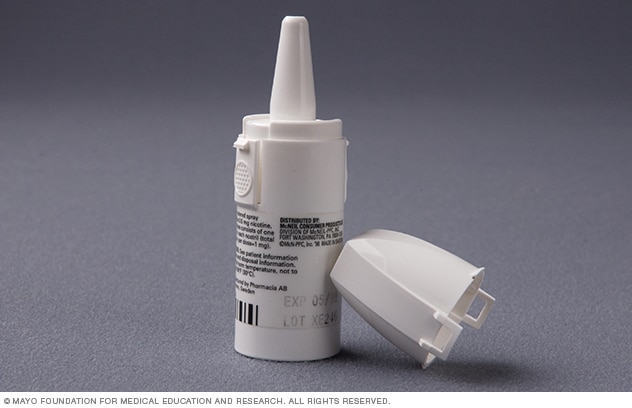
Nicotine nasal spray
Bupropion (Wellbutrin SR)
Overview
Bupropion is a prescription medicine. It also is a treatment for depression. A sustained-release form of bupropion is approved to help people stop smoking.
Experts think that bupropion lessens tobacco cravings and withdrawal symptoms by boosting the levels of certain brain chemicals.
It takes days for bupropion to build up in the blood and start working. You typically start taking bupropion a week or two before you quit smoking.
Pros
Bupropion:
- Is a pill, so it can be easy to use.
- Can be used along with other quit-smoking aids.
- May lessen the weight gain that many people have after they quit smoking tobacco.
Cons
Bupropion:
- Is available only by prescription.
- Must be taken twice a day.
- May cause side effects including dry mouth, headache, upset stomach, dizziness or trouble sleeping.
- May cause changes in mood or behavior. If you have these, call your healthcare professional right away.
- Is not recommended if you have seizures or an eating disorder.
Varenicline
Overview
Varenicline is a prescription medicine that can help reduce cravings for tobacco and control nicotine withdrawal symptoms. It also has effects on the brain that lessen the pleasurable feelings of smoking.
It takes days for varenicline to build up in the blood and start working. You typically start taking varenicline a week or two before you quit smoking.
Pros
Varenicline:
- Is a pill, so it can be easy to use.
- Can be used along with other stop-smoking aids.
Cons
Varenicline:
- Is available only by prescription.
- Must be taken twice a day
- May cause upset stomach, vomiting, headache, a change in taste, trouble sleeping, and vivid or strange dreams.
- May cause changes in mood or behavior. If you have these, call your healthcare professional right away.
Need more help to quit smoking?
The best way to quit smoking for good is to use more than one type of treatment. Combine a quit-smoking product with a program that includes support from professionals trained to treat nicotine dependence. Nicotine dependence happens when you need nicotine and can't stop using it. Also think about joining a community stop-smoking group or starting in-person or telephone counseling.
ART-20045599