
Overview
Ingrown hair occurs when a hair that's been removed starts to grow back and curves into the skin. Shaving, tweezing or waxing can cause this to happen. An ingrown hair can cause tiny, swollen bumps on the skin that may hurt. The condition most often affects Black people with curly hair who shave.
Most instances of ingrown hair get better without treatment. You can avoid this condition by not removing hair or not shaving very close to the skin. If that's not an option, you might try other hair removal methods that lessen the risk of developing ingrown hair.
Symptoms
Signs and symptoms of ingrown hair include:
- Tiny, swollen bumps where you shave, tweeze or wax
- Small bumps that look like blisters or are filled with pus
- Small bumps that are darker than surrounding skin (hyperpigmentation)
- Burning or stinging
- Itching
- Hair in the shape of a loop because the tip of the hair curves and grows into the skin
When to see a doctor
An occasional ingrown hair isn't cause for alarm. Seek medical care if your condition doesn't clear up or if it causes problems regularly.
Causes
Ingrown hair occurs when a hair that's been removed starts to grow back and curves into the skin. This usually happens after shaving, tweezing or waxing.
Hair structure and direction of growth play a role in ingrown hair. A curved hair follicle, which produces tightly curled hair, is believed to encourage the hair to reenter the skin once the hair is cut and starts to grow back. Shaving creates a sharp edge on hair, making it easier to pierce the skin.
Ingrown hair might also be caused by:
- Pulling your skin when you shave. This action causes hair to draw back into the skin.
- Tweezing.
When a hair penetrates your skin, your skin reacts as it would to a foreign body — it becomes irritated.
Risk factors
The main risk factor for ingrown hair is having tightly curled hair.
Complications
Ingrown hair that doesn't clear up can lead to:
- Bacterial infection (from scratching)
- Patches of skin that are darker than usual (postinflammatory hyperpigmentation)
- Raised scars that are darker than surrounding skin (keloids)
- Pseudofolliculitis barbae, also known as razor bumps
- Fine depressed scars (grooves)
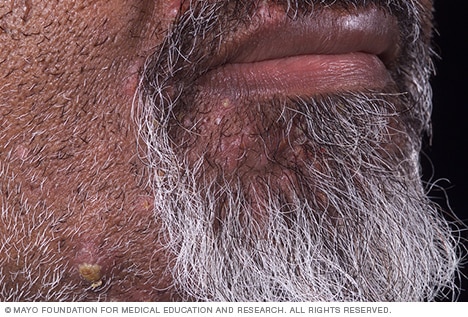
Pseudofolliculitis barbae
Razor bumps affect people with curly beards. The condition is also called pseudofolliculitis barbae. It develops when shaved hairs curve back into the skin, leading to inflammation.
Prevention
To help prevent ingrown hair, avoid shaving, tweezing and waxing. If that's not an option, use these tips to make ingrown hair less likely:
- Before shaving wash your skin with warm water and a mild facial cleanser.
- Apply lubricating shaving cream or gel a few minutes before shaving to soften the hair. Or apply a warm, damp cloth.
- Apply shaving cream and use a sharp, single-blade razor. This helps avoid a too-close shave.
- Don't pull your skin while shaving.
- Shave in the direction of hair growth.
- Rinse the blade after each stroke.
- Rinse your skin and apply a cool, wet cloth for about five minutes. Then use a soothing after-shave product or a glycolic acid lotion to help remove dead skin cells (exfoliate).
The following hair removal methods also may help prevent ingrown hair:
- Electric razor or clippers. With the razor, avoid the closest shave setting. Hold the razor or clippers slightly away from your skin.
- Chemical hair remover (depilatory). The chemicals in hair removal products may irritate your skin, so test on a small patch of hair first.