
Overview
Hypothyroidism happens when the thyroid gland doesn't make enough thyroid hormone. This condition also is called underactive thyroid. Hypothyroidism may not cause noticeable symptoms in its early stages. Over time, hypothyroidism that isn't treated can lead to other health concerns, such as high cholesterol and heart conditions.
Blood tests are used to diagnose hypothyroidism. Treatment with thyroid hormone medicine usually is simple, safe and effective once you and your healthcare professional find the right dosage for you.
Symptoms
The symptoms of hypothyroidism depend on the severity of the condition. Symptoms tend to develop slowly, often over several years.
At first, you may barely notice the symptoms of hypothyroidism, such as fatigue and weight gain. Or you may think they are just part of getting older. But as your metabolism continues to slow, you may develop more-obvious problems.
Hypothyroidism symptoms may include:
- Tiredness.
- More sensitivity to cold.
- Constipation.
- Dry skin.
- Weight gain.
- Puffy face.
- Hoarse voice.
- Coarse hair and skin.
- Muscle weakness.
- Muscle aches, tenderness and stiffness.
- Menstrual cycles that are heavier than usual or irregular.
- Thinning hair.
- Slowed heart rate, also called bradycardia.
- Depression.
- Memory problems.
Hypothyroidism in infants
Anyone can get hypothyroidism, including infants. Most babies born without a thyroid gland or with a gland that doesn't work correctly don't have symptoms right away. But if hypothyroidism isn't diagnosed and treated, symptoms start to appear. They may include:
- Feeding problems.
- Poor growth.
- Poor weight gain.
- Yellowing of the skin and the whites of the eyes, a condition called jaundice.
- Constipation.
- Poor muscle tone.
- Dry skin.
- Hoarse crying.
- Enlarged tongue.
- A soft swelling or bulge near the belly button, a condition called umbilical hernia.
When hypothyroidism in infants isn't treated, even mild cases can lead to severe physical and mental development issues.
Hypothyroidism in children and teens
In general, children and teens with hypothyroidism have symptoms similar to those in adults. But they also may have:
- Poor growth that leads to short stature.
- Delayed development of permanent teeth.
- Delayed puberty.
- Delays in thinking and learning skills, especially with severe hypothyroidism that begins early in life.
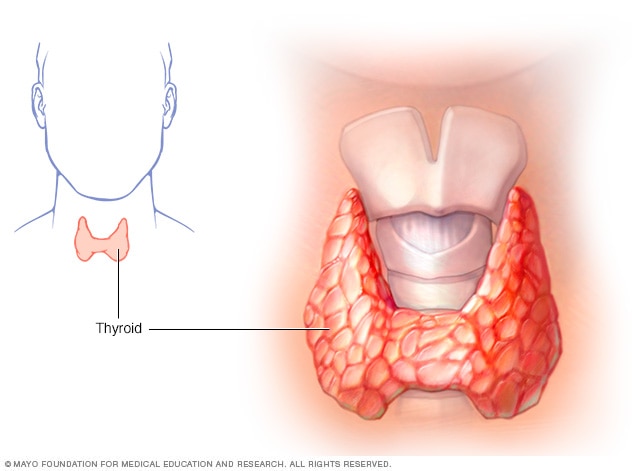
Thyroid gland
The thyroid gland is found at the base of the neck, just below the Adam's apple.
When to see a doctor
See your healthcare professional if you're feeling tired for no reason or if you have other symptoms of hypothyroidism.
If you're taking thyroid hormone medicine for hypothyroidism, follow your healthcare professional's advice on how often you need medical appointments. At first, you may need regular appointments to make sure you're receiving the right dose of medicine. Over time, you may need checkups so that your health professional can monitor your condition and medicine.
Causes
The thyroid is a small, butterfly-shaped gland located at the base of the neck, just below the Adam's apple. The thyroid gland makes two main hormones: thyroxine (T-4) and triiodothyronine (T-3). These hormones affect every cell in the body. They support the rate at which the body uses fats and carbohydrates. They help control body temperature. They have an effect on heart rate. And they help control how much protein the body makes.
Hypothyroidism happens when the thyroid gland doesn't make enough of these hormones. Conditions or treatments that can lead to hypothyroidism include:
- Autoimmune disease. The most common cause of hypothyroidism is an autoimmune disease called Hashimoto's disease. Autoimmune diseases happen when the immune system makes antibodies that attack healthy tissues. Sometimes that process involves the thyroid gland and affects its ability to make hormones.
- Thyroid surgery. Surgery to remove all or part of the thyroid gland can lower the gland's ability to make thyroid hormones or stop it completely.
- Radiation therapy. Radiation used to treat cancers of the head and neck can affect the thyroid gland and lead to hypothyroidism.
- Thyroiditis. Thyroiditis happens when the thyroid gland becomes inflamed. This may be due to an infection. Or it can result from an autoimmune disease or another medical condition affecting the thyroid. Thyroiditis can trigger the thyroid to release all of its stored thyroid hormone at once. That causes a spike in thyroid activity, a condition called hyperthyroidism. Afterward, the thyroid becomes underactive.
- Medicine. Many medicines may lead to hypothyroidism. One such medicine is lithium, which is used to treat some psychiatric conditions. Another is amiodarone. If you're taking medicine, ask your heathcare professional about its effect on the thyroid gland.
Less often, hypothyroidism may be caused by:
- Problems present at birth. Some babies are born with a thyroid gland that doesn't work correctly. Others are born with no thyroid gland. In most cases, the reason the thyroid gland didn't develop properly is not clear. But some children have an inherited form of a thyroid condition. Often, infants born with hypothyroidism don't have noticeable symptoms at first. That's one reason most states require newborn thyroid screening.
- Pituitary condition. A relatively rare cause of hypothyroidism is the failure of the pituitary gland to make enough thyroid-stimulating hormone (TSH). This is usually because of a noncancerous tumor of the pituitary gland.
- Pregnancy. Some people develop hypothyroidism during or after pregnancy. If hypothyroidism happens during pregnancy and isn't treated, it raises the risk of pregnancy loss, premature delivery and preeclampsia. Preeclampsia causes a significant rise in blood pressure during the last three months of pregnancy. Hypothyroidism also can seriously affect the developing fetus.
- Not enough iodine. The thyroid gland needs the mineral iodine to make thyroid hormones. Iodine is found mainly in seafood, seaweed, plants grown in iodine-rich soil and iodized salt. Too little iodine can lead to hypothyroidism. Too much iodine can make hypothyroidism worse in people who already have the condition. In some parts of the world, it's common for people not to get enough iodine in their diets. The addition of iodine to table salt has almost eliminated this problem in the United States.
Risk factors
Although anyone can develop hypothyroidism, you're at increased risk if you:
- Are assigned female at birth.
- Have a family history of thyroid disease.
- Have an autoimmune disease, such as type 1 diabetes or celiac disease.
- Have received treatment for hyperthyroidism.
- Received radiation to your neck or upper chest.
- Have had thyroid surgery.
Complications
Hypothyroidism that isn't treated can lead to other health concerns, including:
- Goiter. Hypothyroidism may cause the thyroid gland to become larger. This condition is called a goiter. A large goiter may cause problems with swallowing or breathing.
- Heart conditions. Hypothyroidism can lead to a higher risk of heart disease and heart failure. That's mainly because people with an underactive thyroid tend to develop high levels of low-density lipoprotein (LDL) cholesterol — the "bad" cholesterol.
- Peripheral neuropathy. Hypothyroidism that goes without treatment for a long time can damage the peripheral nerves. These are the nerves that carry information from the brain and spinal cord to the rest of the body. Peripheral neuropathy may cause pain, numbness and tingling in the arms and legs.
- Infertility. Low levels of thyroid hormone can interfere with ovulation, which can limit fertility. Some of the causes of hypothyroidism, such as autoimmune diseases, also can harm fertility.
-
Birth defects. Babies born to people with untreated thyroid disease may have a higher risk of birth defects compared with babies born to mothers who do not have thyroid disease.
Infants with hypothyroidism present at birth that goes untreated are at risk of serious physical and mental development issues. But if the condition is diagnosed within the first few months of life, the chances of typical development are excellent.
- Myxedema coma. This rare, life-threatening condition can happen when hypothyroidism goes without treatment for a long time. A myxedema coma may be triggered by sedatives, infection or other stress on the body. Its symptoms include intense cold intolerance and drowsiness, followed by an extreme lack of energy and then unconsciousness. Myxedema coma requires emergency medical treatment.