
Overview
Hyperthyroidism happens when the thyroid gland makes too much thyroid hormone. This condition also is called overactive thyroid. Hyperthyroidism speeds up the body's metabolism. That can cause many symptoms, such as weight loss, hand tremors, and rapid or irregular heartbeat.
Several treatments are available for hyperthyroidism. Anti-thyroid medicines and radioiodine can be used to slow the amount of hormones the thyroid gland makes. Sometimes, hyperthyroidism treatment includes surgery to remove all or part of the thyroid gland. In some cases, depending on what's causing it, hyperthyroidism may improve without medicines or other treatment.
Symptoms
Hyperthyroidism sometimes looks like other health conditions. That can make it hard to diagnose. It can cause many symptoms, including:
- Losing weight without trying.
- Fast heartbeat, a condition called tachycardia.
- Irregular heartbeat, also called arrhythmia.
- Pounding of the heart, sometimes called heart palpitations.
- Increased hunger.
- Nervousness, anxiety and irritability.
- Tremor, usually a small trembling in the hands and fingers.
- Sweating.
- Changes in menstrual cycles.
- Increased sensitivity to heat.
- Changes in bowel patterns, especially more-frequent bowel movements.
- Enlarged thyroid gland, sometimes called a goiter, which may appear as a swelling at the base of the neck.
- Tiredness.
- Muscle weakness.
- Sleep issues.
- Warm, moist skin.
- Thinning skin.
- Fine, brittle hair.
Older adults are more likely to have symptoms of hyperthyroidism that are hard to notice. These symptoms may include an irregular heartbeat, weight loss, depression, and feeling weak or tired during ordinary activities.
When to see a doctor
If you lose weight without trying, or if you notice a rapid heartbeat, unusual sweating, swelling at the base of your neck or other symptoms of hyperthyroidism, make an appointment with your healthcare professional. Tell your healthcare professional about all the symptoms you've noticed, even if they are minor.
After a diagnosis of hyperthyroidism, most people need regular follow-up visits with their healthcare professional to monitor the condition.
Causes
Hyperthyroidism can be caused by several medical conditions that affect the thyroid gland. The thyroid is a small, butterfly-shaped gland at the base of the neck. It has a big impact on the body. Every part of metabolism is controlled by hormones made by the thyroid gland.
The thyroid gland produces two main hormones: thyroxine (T-4) and triiodothyronine (T-3). These hormones affect every cell in the body. They support the rate at which the body uses fats and carbohydrates. They help control body temperature. They have an effect on heart rate. And they help control how much protein the body makes.
Hyperthyroidism happens when the thyroid gland puts too much of those thyroid hormones into the bloodstream. Conditions that can lead to hyperthyroidism include:
- Graves' disease. Graves' disease is an autoimmune condition that causes the immune system to attack the thyroid gland. That prompts the thyroid to make too much thyroid hormone. Graves' disease is the most common cause of hyperthyroidism.
- Overactive thyroid nodules. This condition also is called toxic adenoma, toxic multinodular goiter and Plummer disease. This form of hyperthyroidism happens when a thyroid adenoma makes too much thyroid hormone. An adenoma is a part of the gland that is walled off from the rest of the gland. It forms lumps that are not cancer that can make the thyroid bigger than usual.
- Thyroiditis. This condition happens when the thyroid gland becomes inflamed. In some cases, it's due to an autoimmune condition. In others, the reason for it is unclear. The inflammation can cause extra thyroid hormone stored in the thyroid gland to leak into the bloodstream and cause symptoms of hyperthyroidism.
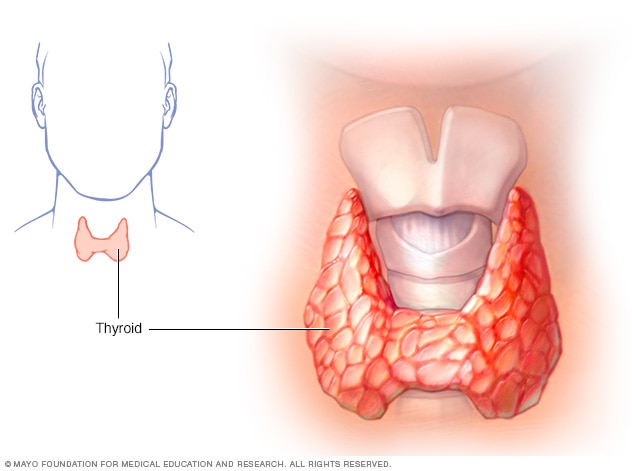
Thyroid gland
The thyroid gland is found at the base of the neck, just below the Adam's apple.
Risk factors
Risk factors for hyperthyroidism include:
- A family history of thyroid disease, particularly Graves' disease.
- A personal history of certain chronic illnesses, including pernicious anemia and primary adrenal insufficiency.
- A recent pregnancy, which raises the risk of developing thyroiditis. This can lead to hyperthyroidism.
Complications
Hyperthyroidism can lead to the following complications.
Heart conditions
Some of the most serious complications of hyperthyroidism involve the heart, including:
- A heart rhythm condition called atrial fibrillation that increases the risk of stroke.
- Congestive heart failure, a condition in which the heart can't circulate enough blood to meet the body's needs.
Brittle bones
Untreated hyperthyroidism can lead to weak, brittle bones. This condition is called osteoporosis. The strength of bones depends, in part, on the amount of calcium and other minerals in them. Too much thyroid hormone makes it hard for the body to get calcium into bones.
Vision conditions
Some people with hyperthyroidism develop a condition called thyroid eye disease. It's more common in people who smoke. This condition affects the muscles and other tissues around the eyes.
Symptoms of thyroid eye disease include:
- Bulging eyes.
- Gritty sensation in the eyes.
- Pressure or pain in the eyes.
- Puffy or retracted eyelids.
- Reddened or inflamed eyes.
- Light sensitivity.
- Double vision.
Eye problems that go untreated may cause vision loss.
Discolored, swollen skin
In rare cases, people with Graves' disease develop Graves' dermopathy. This causes the skin to change colors and swell, often on the shins and feet.
Thyrotoxic crisis
This rare condition also is called thyroid storm. Hyperthyroidism raises the risk of thyrotoxic crisis, which causes severe, sometimes life-threatening symptoms. It requires emergency medical care. Symptoms may include:
- Fever.
- Fast heartbeat.
- Nausea.
- Vomiting.
- Diarrhea.
- Dehydration.
- Confusion.
- Delirium.