
Overview
Hives — also known as urticaria (ur-tih-KAR-e-uh) — is a skin reaction that causes itchy welts that range in size from small spots to large blotches. Hives can be triggered by many situations and substances, including certain foods and medications.
Angioedema can arise with hives or alone. It causes swelling in the deeper layers of skin, often around the face and lips. Short-lived (acute) hives and angioedema are common. Most times, they are harmless, clear up within in a day and don't leave any lasting marks, even without treatment. Hives that last longer than six weeks are called chronic hives.
Hives and angioedema are usually treated with antihistamine medication. Angioedema can be life-threatening if swelling of the tongue or in the throat blocks the airway.
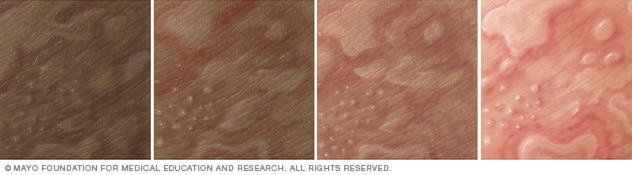
Hives
Illustration of hives on different skin colors. Hives can cause swollen, itchy welts. Hives also is called urticaria.
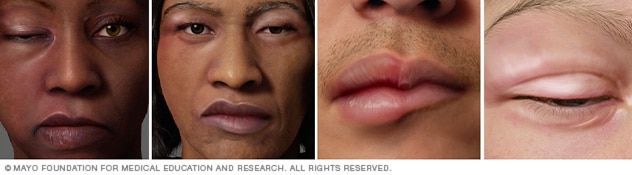
Angioedema
Illustration of angioedema on different skin colors. Angioedema causes swelling in the deeper layers of skin, often of the face and lips. It often goes away within a day.
Symptoms
Hives
The welts associated with hives can be:
- Skin-colored, reddish on white skin, or purplish on black and brown skin
- Itchy, ranging from mild to intense
- Round, oval or worm-shaped
- As small as a pea or as large as a dinner plate
Most hives appear quickly and go away within 24 hours. This is known as acute hives. Chronic hives can last for months or years.
Angioedema
Angioedema is a reaction similar to hives that affects deeper layers of the skin. It can appear with hives or alone. Signs and symptoms include:
- Welts that form in minutes to hours
- Swelling, especially around the eyes, cheeks or lips
- Mild pain and warmth in the affected areas
When to see a doctor
You can usually treat mild cases of hives or angioedema at home. See your health care provider if your symptoms continue for more than a few days.
If you think your hives or angioedema was caused by a known allergy to food or a medication, your symptoms may be an early sign of an anaphylactic reaction. Seek emergency care if you feel your tongue, lips, mouth or throat swelling or if you're having trouble breathing.
Causes
For most people who experience acute hives and angioedema, the exact cause can't be identified. The conditions are sometimes caused by:
- Foods. Many foods can trigger reactions in people with sensitivities. Shellfish, fish, peanuts, tree nuts, soy, eggs and milk are frequent offenders.
- Medications. Many medications may cause hives or angioedema, including penicillins, aspirin, ibuprofen (Advil, Motrin IB, others), naproxen sodium (Aleve) and blood pressure medications.
- Airborne allergens. Pollen and other allergens that you breathe in can trigger hives, sometimes accompanied by upper and lower respiratory tract symptoms.
- Insect bites and infections. Other causes of acute hives and angioedema are insect bites and infections.
Risk factors
Hives and angioedema are common. You may be at increased risk of hives and angioedema if you:
- Have had hives or angioedema before
- Have had other allergic reactions
- Have a family history of hives, angioedema or hereditary angioedema
Complications
Severe angioedema can be life-threatening if swelling of the tongue or in the throat blocks the airway.
Prevention
To lower your likelihood of experiencing hives or angioedema, take the following precautions:
- Avoid known triggers. If you know what has triggered your hives, try to avoid that substance.
- Bathe and change your clothes. If pollen or animal contact has triggered your hives in the past, take a bath or shower and change your clothes if you're exposed to pollen or animals.