
Overview
Hiccups are repeated spasms or sudden movements of the diaphragm that you can't control. The diaphragm is the muscle that separates your chest from your stomach area and plays an important role in breathing. A spasm in your diaphragm causes your vocal cords to suddenly close, producing a "hic" sound.
Eating a large meal, drinking alcoholic or carbonated beverages, or getting excited suddenly may cause hiccups. In some cases, hiccups may be a sign of an underlying medical issue. For most people, hiccups usually last only a few minutes. Rarely, hiccups may continue for months. When they last that long, they can result in weight loss and extreme tiredness.
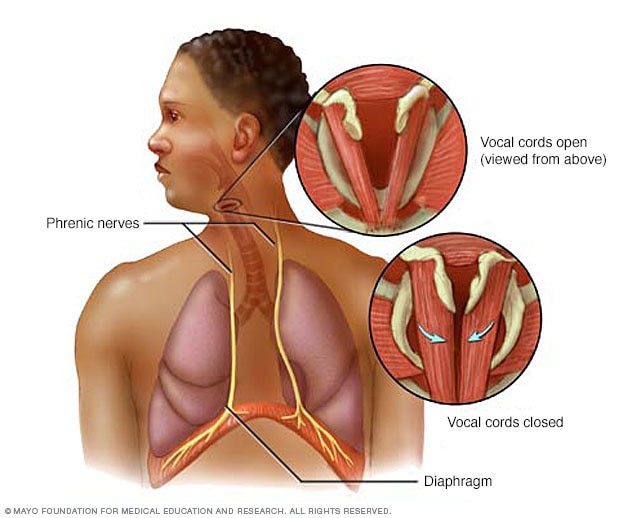
Hiccups: What causes them
Spasms of your diaphragm that you can't control cause hiccups. The diaphragm is the muscle that separates your chest from your stomach area and plays an important role in breathing. This spasm causes your vocal cords to close briefly, producing a "hic" sound.
Symptoms
Symptoms include uncontrolled spasms in your diaphragm and a "hic" sound. Sometimes you may feel a slight tightening sensation in your chest, stomach area or throat.
When to see a doctor
Make an appointment to see your health care provider if your hiccups last more than 48 hours or if they're so severe that they cause issues with eating, sleeping or breathing.
Causes
The most common triggers for hiccups that last less than 48 hours include:
- Drinking carbonated beverages.
- Drinking too much alcohol.
- Eating too much.
- Being excited or under emotional stress.
- Experiencing sudden temperature changes.
- Swallowing air, such as when chewing gum or smoking.
Issues that may cause hiccups to last more than 48 hours include nerve damage or irritation, central nervous system disorders, metabolic issues, and certain drug and alcohol problems.
Nerve damage or irritation
A cause of long-term hiccups is damage to, or irritation of, the vagus nerves or phrenic nerves. These nerves supply the diaphragm muscle.
Factors that may damage or irritate these nerves include:
- A hair or something else in your ear touching your eardrum.
- A tumor, cyst or growth on the thyroid gland in your neck.
- Stomach acid that backs up into your esophagus, the muscular tube that delivers food from your mouth to your stomach.
- Sore throat or laryngitis.
Central nervous system disorders
A tumor or infection in your central nervous system or damage to your central nervous system due to an injury can disrupt your body's normal control of the hiccup reflex.
Examples include:
- Inflammation of the brain, which also is known as encephalitis.
- Inflammation of the membranes that surround the brain and spinal cord, which also is known as meningitis.
- Multiple sclerosis, which is the hardening of tissue in the brain or spinal cord that can result in paralysis or tremors.
- Stroke.
- Serious brain injury.
- Tumors.
Metabolic issues
Long-term hiccups may result when your body's metabolism doesn't work properly.
Examples of metabolic issues include:
- Diabetes.
- Electrolyte imbalance, which is when your levels of potassium, sodium and other electrolytes are too high or too low.
- Kidney disease.
Certain drugs and alcohol issues
Use of certain drugs or problems with alcohol may cause long-term hiccups.
Examples include:
- Medicines that cause you to feel relaxed and sleepy, such as sedatives or other drugs used for anesthesia.
- A steroid called dexamethasone, which is used to relieve inflammation in conditions such as arthritis, asthma and kidney problems.
- Other steroids.
- Alcohol use disorder.
Risk factors
Males are much more likely to develop long-term hiccups than females. Other factors that may increase your risk of hiccups include:
- Mental or emotional issues. Anxiety, stress and excitement have been linked with some cases of hiccups.
- Surgery. Some people develop hiccups after general anesthesia or procedures that involve organs in the stomach area.
Complications
Ongoing hiccups may interfere with eating, drinking, sleeping and speaking. Hiccups also can worsen pain.