
Overview
Gilbert syndrome is a harmless liver condition in which the liver doesn't properly process bilirubin. Bilirubin is a substance produced by the breakdown of red blood cells.
Gilbert (zheel-BAYR) syndrome is a genetic condition passed down from your parents. You might not know you have Gilbert syndrome until it's discovered by accident, such as when a blood test shows raised bilirubin levels.
Gilbert syndrome needs no treatment.
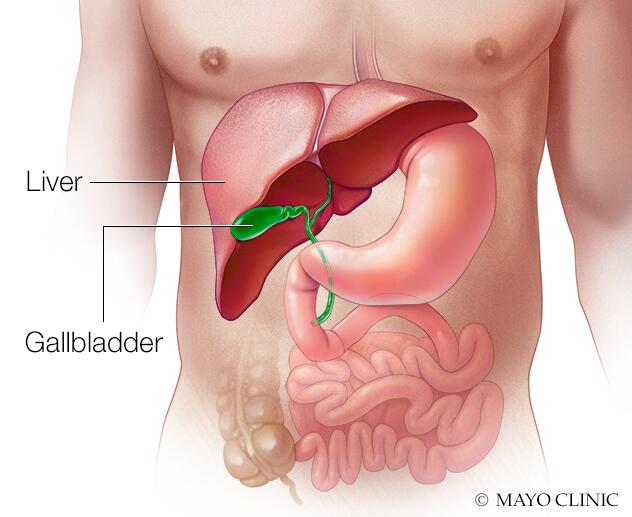
The liver
The liver is your largest internal organ. About the size of a football, it's located mainly in the upper right portion of your abdomen — beneath the diaphragm and above your stomach. A small portion extends into the upper left quadrant.
Symptoms
The most common sign of Gilbert syndrome is an occasional yellowish tinge of the skin and the whites of the eyes, called jaundice. Jaundice is a result of slightly higher levels of bilirubin in the blood.
In people with Gilbert syndrome, bilirubin levels may increase due to:
- Illness, such as a cold or the flu.
- Fasting or eating a very low-calorie diet.
- Dehydration.
- Menstruation.
- Strenuous exercise.
- Stress.
When to see a doctor
Make an appointment with a healthcare professional if you have jaundice, which has many possible causes.
Causes
Gilbert syndrome is caused by a modified gene someone inherits from their parents. This gene usually controls an enzyme that helps break down bilirubin in the liver. When someone has this ineffective gene, their blood contains too much bilirubin. This is because the body isn't producing enough of the enzyme.
How the body processes bilirubin
Bilirubin is a yellowish pigment made when the body breaks down old red blood cells. Bilirubin travels through the bloodstream to the liver, where the enzyme breaks down the pigment and removes it from the bloodstream.
The bilirubin passes from the liver into the intestines with bile. It's then excreted in stool. A small amount of bilirubin remains in the blood.
How the modified gene is passed through families
The modified gene that causes Gilbert syndrome is common. Many people carry one copy of this gene. In most cases, two modified copies are needed to cause Gilbert syndrome.
Risk factors
Although it's present from birth, Gilbert syndrome usually isn't noticed until puberty or later. This is because bilirubin production increases during puberty. Risk factors for Gilbert syndrome include:
- Both parents carry the modified gene that causes the disorder.
- Being male.
Complications
The low level of the bilirubin-processing enzyme that causes Gilbert syndrome also may increase the side effects of certain medicines, since this enzyme plays a role in helping clear these medicines from the body.
These medicines include:
- Irinotecan (Camptosar), a cancer chemotherapy drug.
- Some protease inhibitors used to treat HIV.
If you have Gilbert syndrome, talk to a healthcare professional before taking new medicines. Also, having any other condition that affects the destruction of red blood cells may increase the risk of developing gallstones.