
Overview
Eosinophilic esophagitis (e-o-sin-o-FILL-ik uh-sof-uh-JIE-tis) is a chronic immune system disease. With this disease, a type of white blood cell, called an eosinophil, builds up in the lining of the tube that connects your mouth to your stomach. This tube is also called the esophagus. This buildup, which is a reaction to foods, allergens or acid reflux, can inflame or injure the esophageal tissue. Damaged esophageal tissue can lead to difficulty swallowing or cause food to get stuck when you swallow.
Eosinophilic esophagitis has been identified only since the early '90s, but is now considered a major cause of digestive system illness. Research is ongoing and will likely lead to revisions in the diagnosis and treatment of eosinophilic esophagitis.
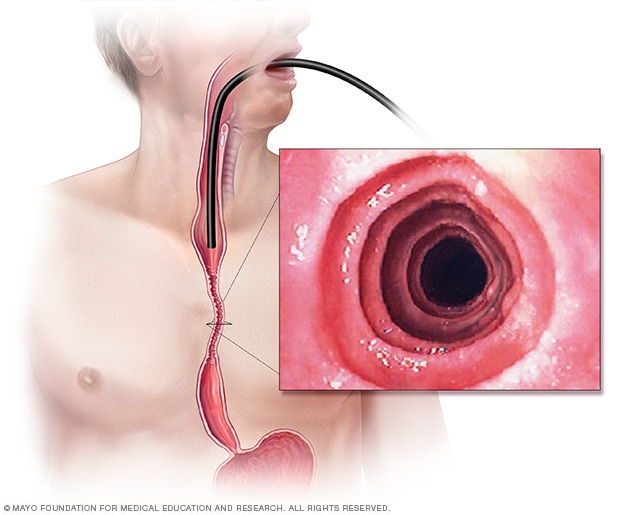
Eosinophilic esophagitis
Esophagitis is swelling and irritation, called inflammation, of the tissues that line the esophagus. A long, flexible tube that’s tipped with a camera, called an endoscope, can be used to see inside the esophagus. This endoscopic image of eosinophilic esophagitis shows irritated rings of irregular tissue that stem from ongoing inflammation. These are known as esophageal rings.
Symptoms
Signs and symptoms include:
Adults:
- Difficulty swallowing, also called dysphagia
- Food getting stuck in the esophagus after swallowing, also known as impaction
- Chest pain that is often centrally located and does not respond to antacids
- Backflow of undigested food, known as regurgitation
Children:
- Difficulty feeding, in infants
- Difficulty eating, in children
- Vomiting
- Abdominal pain
- Difficulty swallowing, also called dysphagia
- Food getting stuck in the esophagus after swallowing, also known as impaction
- No response to GERD medication
- Failure to thrive, including poor growth, malnutrition and weight loss
When to see a doctor
Seek immediate medical attention if you experience chest pain, especially if you also have shortness of breath or jaw or arm pain. These may be symptoms of a heart attack.
Make an appointment with your health care provider if you experience severe or frequent eosinophilic esophagitis symptoms. If you take nonprescription medicines for heartburn more than twice a week, see your health care provider.
Causes
Eosinophils are a typical type of white blood cells present in your digestive tract. However, in eosinophilic esophagitis, you have an allergic reaction to an outside substance. The reaction may occur as follows:
- Reaction of the esophagus. The lining of your esophagus reacts to allergens, such as food or pollen.
- Multiplication of eosinophils. The eosinophils multiply in your esophagus and produce a protein that causes inflammation.
- Damage to the esophagus. Inflammation can lead to scarring, narrowing and formation of excessive fibrous tissue in the lining of your esophagus.
- Dysphagia and impaction. You may have difficulty swallowing, called dysphagia. Or food may become stuck when you swallow. This is known as impaction.
- Additional symptoms. You may have other symptoms, such as chest pain or stomach pain.
There has been a significant increase in numbers of people diagnosed with eosinophilic esophagitis in the past decade. At first, researchers thought this was due to an increase in awareness among health care providers and greater availability of tests. However, studies now suggest that the disease is becoming increasingly common, parallel to the increase in asthma and allergies.
Risk factors
The following risk factors are associated with eosinophilic esophagitis:
- Climate. People who live in a cold or dry climate are more likely than those in other climates to be diagnosed with eosinophilic esophagitis.
- Season. You're more likely to be diagnosed between the spring and fall, probably because levels of pollen and other allergens are higher and people are more likely to be outdoors.
- Sex. Eosinophilic esophagitis is more common in males than in females.
- Family history. Researchers think that eosinophilic esophagitis may have a genetic component because the condition sometimes runs in families. If your family members have eosinophilic esophagitis, you have a greater chance of being diagnosed.
- Allergies and asthma. If you have food or environmental allergies, asthma, atopic dermatitis, or a chronic respiratory disease, you're more likely to be diagnosed with eosinophilic esophagitis.
- Age. Originally, eosinophilic esophagitis was thought to be a childhood disease, but now it is known to be common in adults as well. The symptoms differ somewhat between children and adults.
Complications
In some people, eosinophilic esophagitis can lead to the following:
- Scarring and narrowing of the esophagus. This makes it difficult to swallow and more likely that you will have food get stuck.
- Damage to the esophagus. Because of inflammation of the esophagus, endoscopy can cause perforation or tears in the tissue that lines the esophagus. Tearing also can occur in connection with retching that some people experience when they get food stuck in the esophagus.