
Overview
Diarrhea — loose, watery and possibly more-frequent bowel movements — is a common problem. Sometimes, it's the only symptom. At other times, it may be associated with other symptoms, such as nausea, vomiting, abdominal pain or weight loss.
Luckily, diarrhea is usually short-lived, lasting no more than a few days. But when diarrhea lasts beyond a few days into weeks, it usually means that there's another problem — such as irritable bowel syndrome (IBS) or a more serious disorder, including ongoing infection, celiac disease or inflammatory bowel disease (IBD).
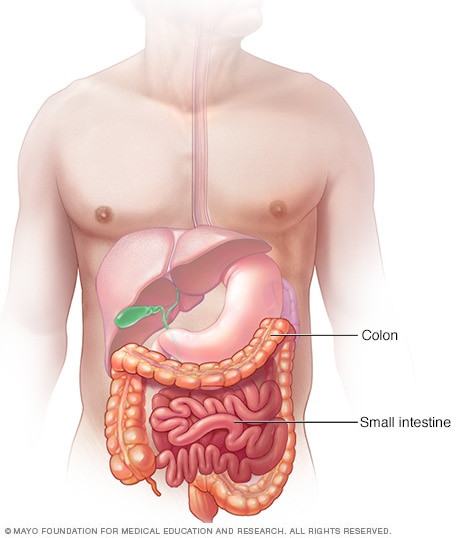
Colon and small intestine
The small intestine and colon are components of your digestive tract, which processes the foods you eat. The intestines extract nutrients from the foods. What isn't absorbed by the intestines continues along the digestive tract and is expelled as stool during a bowel movement. Diarrhea can be present due to irregularities in the small intestine or the large intestine.
Symptoms
Symptoms associated with diarrhea (loose, watery stools) may include:
- Belly cramps or pain.
- Bloating.
- Nausea.
- Vomiting.
- Fever.
- Blood in the stool.
- Mucus in the stool.
- Urgent need to have a bowel movement.
When to see a doctor
If you're an adult, see your doctor if:
- Your diarrhea persists beyond two days with no improvement.
- You become dehydrated.
- You have severe abdominal or rectal pain.
- You have bloody or black stools.
- You have a fever above 102 F (39 C).
In children, particularly young children, diarrhea can quickly lead to dehydration. Call your doctor if your child's diarrhea doesn't improve within 24 hours or if your child:
- Becomes dehydrated.
- Has a fever above 102 F (39 C).
- Has bloody or black stools.
Causes
A number of diseases and conditions can cause diarrhea, including:
- Viruses. Viruses that can cause diarrhea include Norwalk virus (also known as norovirus), enteric adenoviruses, astrovirus, cytomegalovirus and viral hepatitis. Rotavirus is a common cause of acute childhood diarrhea. The virus that causes coronavirus disease 2019 (COVID-19) also has been associated with gastrointestinal symptoms, including nausea, vomiting and diarrhea.
- Bacteria and parasites. Exposure to certain bacteria, such as E. coli or parasites through contaminated food or water, leads to diarrhea. A parasite called cyclospora can cause an intestinal illness called cyclosporiasis. In the United States, outbreaks of cyclosporiasis have been linked to fresh produce. Reports of illness often rise in the spring and summer. When traveling in developing countries, diarrhea caused by bacteria and parasites is often called traveler's diarrhea. Clostridioides difficile (also known as C. diff) is another type of bacterium that causes diarrhea, and it can occur after a course of antibiotics or during a hospitalization.
- Medicines. Many medicines, such as antibiotics, can cause diarrhea. Antibiotics get rid of infections by killing bad bacteria, but they also kill good bacteria. This disturbs the natural balance of bacteria in your intestines, leading to diarrhea or an infection such as C. diff. Other drugs that cause diarrhea are anti-cancer drugs and antacids with magnesium.
- Lactose intolerance. Lactose is a sugar found in milk and other dairy products. People who have trouble digesting lactose have diarrhea after eating dairy products. Lactose intolerance can increase with age because levels of the enzyme that helps digest lactose drop as you get older.
- Fructose. Fructose is a sugar found naturally in fruits and honey. It's sometimes added as a sweetener to certain beverages. Fructose can lead to diarrhea in people who have trouble digesting it.
- Artificial sweeteners. Sorbitol, erythritol and mannitol — artificial sweeteners are nonabsorbable sugars found in chewing gum and other sugar-free products — can cause diarrhea in some otherwise healthy people.
- Surgery. Partial intestine or gallbladder removal surgeries can sometimes cause diarrhea.
- Other digestive disorders. Chronic diarrhea has a number of other causes, such as IBS, Crohn's disease, ulcerative colitis, celiac disease, microscopic colitis and small intestinal bacterial overgrowth (SIBO).
Complications
Diarrhea can cause dehydration, which can be life-threatening if untreated. Dehydration is particularly dangerous in children, older adults and those with weakened immune systems.
If you have signs of serious dehydration, seek medical help.
Indications of dehydration in adults
These include:
- Excessive thirst.
- Dry mouth or skin.
- Little or no urination.
- Weakness, dizziness or lightheadedness.
- Fatigue.
- Dark-colored urine.
Indications of dehydration in infants and young children
These include:
- Not having a wet diaper in three or more hours.
- Dry mouth and tongue.
- Fever above 102 F (39 C).
- Crying without tears.
- Drowsiness, unresponsiveness or irritability.
- Sunken appearance to the belly, eyes or cheeks.
Prevention
Preventing infectious diarrhea
Wash your hands to prevent the spread of infectious diarrhea. To ensure adequate hand-washing:
- Wash frequently. Wash your hands before and after preparing food. Wash your hands after handling uncooked meat, using the toilet, changing diapers, sneezing, coughing and blowing your nose.
- Lather with soap for at least 20 seconds. After putting soap on your hands, rub your hands together for at least 20 seconds. This is about as long as it takes to sing "Happy Birthday" twice through.
- Use hand sanitizer when washing isn't possible. Use an alcohol-based hand sanitizer when you can't get to a sink. Apply the hand sanitizer as you would hand lotion, making sure to cover the fronts and backs of both hands. Use a product that contains at least 60% alcohol.
- Handle fresh produce safely. Some parasites, such as cyclospora, can spread through fresh fruits and vegetables that have been contaminated. Wash fruits and vegetables under running water before eating, cutting or cooking them. Use a clean produce brush to scrub firm produce, such as melons and cucumbers. Cut away bruised or damaged areas. Refrigerate cut, peeled or cooked fruits and vegetables within two hours.
Vaccination
You can help protect your infant from rotavirus, the most common cause of viral diarrhea in children, with one of two approved vaccines. Ask your baby's doctor about having your baby vaccinated.
Preventing traveler's diarrhea
Diarrhea commonly affects people who travel to countries where there's inadequate sanitation and contaminated food. To reduce your risk:
- Watch what you eat. Eat hot, well-cooked foods. Don't eat raw fruits and vegetables unless you can peel them yourself. Don't eat raw or undercooked meats and dairy foods.
-
Watch what you drink. Drink bottled water, soda, beer or wine served in its original container. Don't drink tap water or use ice cubes. Use bottled water even for brushing your teeth. Keep your mouth closed while you shower.
Beverages made with boiled water, such as coffee and tea, are probably safe. Remember that alcohol and caffeine can aggravate diarrhea and worsen dehydration.
- Ask your health care team about antibiotics. If you're traveling to a developing country for an extended time, ask a member of your health care team about antibiotics before you go, especially if you have a weakened immune system.
- Check for travel warnings. The Centers for Disease Control and Prevention maintains a travelers' health website where disease warnings are posted for various countries. If you're planning to travel outside of the United States, check there for warnings and tips for reducing your risk.