
Overview
Chronic sinusitis causes the spaces inside the nose and head, called sinuses, to become inflamed and swollen. The condition lasts 12 weeks or longer, even with treatment.
This common condition keeps mucus from draining. It makes the nose stuffy. Breathing through the nose might be hard. The area around the eyes might feel swollen or tender.
Infection, growths in the sinuses, called nasal polyps, and swelling of the lining of the sinuses might all be part of chronic sinusitis. Chronic sinusitis is also called chronic rhinosinusitis. The condition affects adults and children.
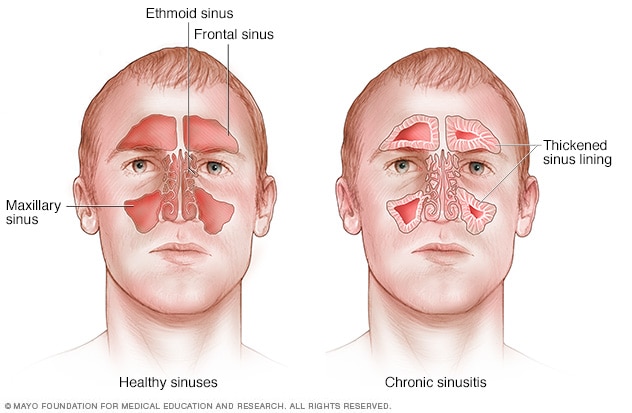
Chronic sinusitis
An infection, growths in the sinuses, called nasal polyps, or swelling of the lining of the sinuses can cause chronic sinusitis. Symptoms might include a blocked or stuffy nose that makes it hard to breathe through the nose and pain and swelling around the eyes, cheeks, nose or forehead.
Symptoms
Common symptoms of chronic sinusitis include:
- Thick, discolored mucus from the nose, known as a runny nose.
- Mucus down the back of the throat, known as postnasal drip.
- Blocked or stuffy nose, known as congestion. This makes it hard to breathe through the nose.
- Pain, tenderness and swelling around the eyes, cheeks, nose or forehead.
- Reduced sense of smell and taste.
Other symptoms can include:
- Ear pain.
- Headache.
- Aching in the teeth.
- Cough.
- Sore throat.
- Bad breath.
- Tiredness.
Chronic sinusitis and acute sinusitis have similar symptoms. But acute sinusitis is a short-lived infection of the sinuses often linked to a cold.
The symptoms of chronic sinusitis last at least 12 weeks. There might be many bouts of acute sinusitis before it becomes chronic sinusitis. Fever isn't common with chronic sinusitis. But fever might be part of acute sinusitis.
When to see a doctor
Schedule an appointment with your health care provider for:
- Repeated sinusitis, and if the condition doesn't get better with treatment.
- Sinusitis symptoms that last more than 10 days.
See a health care provider right away if you have symptoms that could mean a serious infection:
- Fever.
- Swelling or redness around the eyes.
- Bad headache.
- Forehead swelling.
- Confusion.
- Double vision or other vision changes.
- Stiff neck.
Causes
The cause of chronic sinusitis usually is not known. Some medical conditions, including cystic fibrosis, can cause chronic sinusitis in children and teens.
Some conditions can make chronic sinusitis worse. These include:
- A common cold or other infection that affects the sinuses. Viruses or bacteria can cause these infections.
- A problem inside the nose, such as a deviated nasal septum, nasal polyps or tumors.
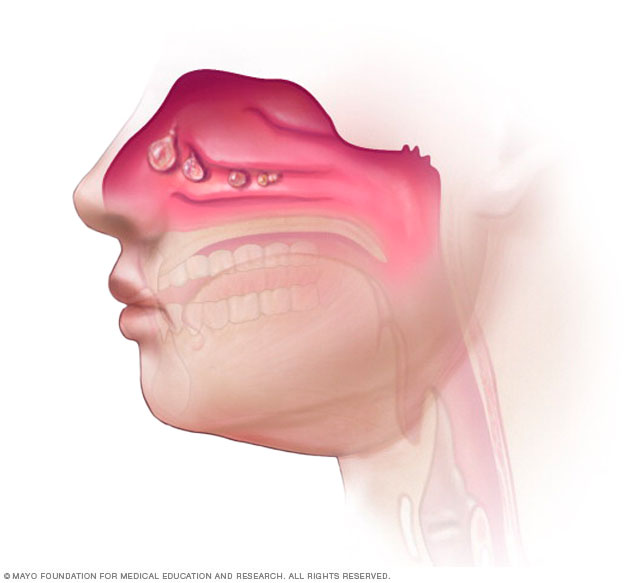
Nasal polyps
Nasal polyps are soft growths on the lining of the nose or the spaces inside the nose, known as sinuses. Nasal polyps aren't cancer. Nasal polyps often occur in groups, like grapes on a stem.
Risk factors
The following factors raise the risk of getting chronic sinusitis:
- A dental infection.
- A fungal infection.
- Regularly being around cigarette smoke or other pollutants.
Complications
Serious complications of chronic sinusitis are rare. They can include:
- Vision problems. If a sinus infection spreads to an eye socket, it can reduce vision or possibly cause blindness.
- Infections. It's not common. But a serious sinus infection can spread to the membranes and fluid around the brain and spinal cord. The infection is called meningitis. Other serious infections can spread to the bones, called osteomyelitis, or to skin, called cellulitis.
Prevention
Take these steps to lower the risk of getting chronic sinusitis:
- Protect your health. Try to stay away from people who have colds or other infections. Wash your hands often with soap and water, especially before meals.
- Manage allergies. Work with your health care provider to keep symptoms under control. Stay away from things you're allergic to when possible.
- Avoid cigarette smoke and polluted air. Tobacco smoke and other pollutants can irritate the lungs and inside the nose, called the nasal passages.
- Use a humidifier. If the air in your home is dry, adding moisture to the air with a humidifier may help prevent sinusitis. Be sure the humidifier stays clean and free of mold with regular, complete cleaning.