
Overview
Chronic kidney disease happens when the kidneys are damaged for more than a few months. The kidneys clean the blood by removing waste and extra fluid, which leaves the body as urine. They help control blood pressure and balance salt and minerals. The kidneys also help the body make red blood cells and keep bones strong.
In the early stages of chronic kidney disease, you might not feel sick or have any symptoms. You might not know that you have kidney disease until the condition is advanced.
Healthcare professionals can find kidney disease through blood and urine tests. These tests look for high levels of waste in the blood or unusual things in the urine, such as protein or tiny amounts of blood. They also might use tests such as ultrasound or CT scans to look at the kidneys.
Treatment for chronic kidney disease aims to slow down damage to the kidneys. This often is done by managing the cause of the damage. But, even after a cause has been found and treated, kidney damage could still get worse. Chronic kidney disease can progress to end-stage kidney failure. This is fatal unless a person gets a kidney transplant or starts dialysis, a treatment that does the job of the kidneys.
Symptoms
Chronic kidney disease symptoms tend to develop slowly over time.
Loss of kidney function can cause a buildup of fluid or waste in the body. It also can cause acids, potassium and phosphate to build up in the blood.
Symptoms of kidney disease often are vague. Most people with kidney disease have no symptoms until the very last stages of kidney disease. This is known as advanced kidney disease.
When chronic kidney disease becomes advanced, loss of kidney function can cause:
- Nausea.
- Vomiting.
- Loss of appetite.
- Fatigue and weakness.
- Sleep problems.
- Decreased mental sharpness.
- High blood pressure that's hard to manage.
- Shortness of breath, if fluid builds up in the lungs.
Stages of kidney disease
There are five stages of kidney disease. To learn what stage you have, your healthcare team performs a blood test to check how well the kidneys are working. This blood test is called the estimated glomerular filtration rate (eGFR). The eGFR measures how much blood the kidneys filter each minute, recorded as milliliters per minute (mL/min). A low eGFR number means the kidneys are working less well.
When the kidneys no longer work at the level needed to keep a person alive, it's called end-stage kidney disease. This happens when you have an eGFR under 15.
As a part of kidney disease staging, your healthcare professional also might test whether you have protein in your urine.
| Kidney disease stage | eGFR, mL/min | Kidney function |
|---|---|---|
| Stage 1 | 90 or above | Healthy kidney function |
| Stage 2 | 60 to 89 | Mild loss of kidney function |
| Stage 3a | 45 to 59 | Mild to moderate loss of kidney function |
| Stage 3b | 30 to 44 | Moderate to severe loss of kidney function |
| Stage 4 | 15 to 29 | Severe loss of kidney function |
| Stage 5 | Less than 15 | Kidney failure |
| Source: National Kidney Foundation |
When to see a doctor
If you have an ongoing health condition that raises your risk of kidney disease, your main healthcare professional may want to monitor the health of your kidneys. Having long-standing high blood pressure, diabetes or an autoimmune disease such as lupus can cause damage to the kidneys.
Regular checkups to monitor how well the kidneys are working may include blood tests and tests to check for protein in the urine. You may see your main healthcare professional every 6 to 12 months for these tests. If test results show possible kidney problems, you may be referred to a doctor who specializes in kidney diseases. This type of doctor is called a nephrologist.
Causes
Chronic kidney disease happens when a disease or condition hurts kidney function. Often, chronic kidney disease has more than one cause.
Causes of chronic kidney disease include:
- Type 1 or type 2 diabetes.
- High blood pressure.
- Some autoimmune diseases, such as lupus, sarcoidosis and Sjogren syndrome.
- Polycystic kidney disease or other inherited kidney diseases.
- Prolonged obstruction of the urinary tract, from conditions such as enlarged prostate or urinary tract tumors.
- Vesicoureteral (ves-ih-koe-yoo-REE-tur-ul) reflux, a condition that causes urine to back up into the kidneys.
- Certain medicines, such as lithium, large doses of ibuprofen or other nonsteroidal anti-inflammatory drugs, and drugs that suppress the immune system.
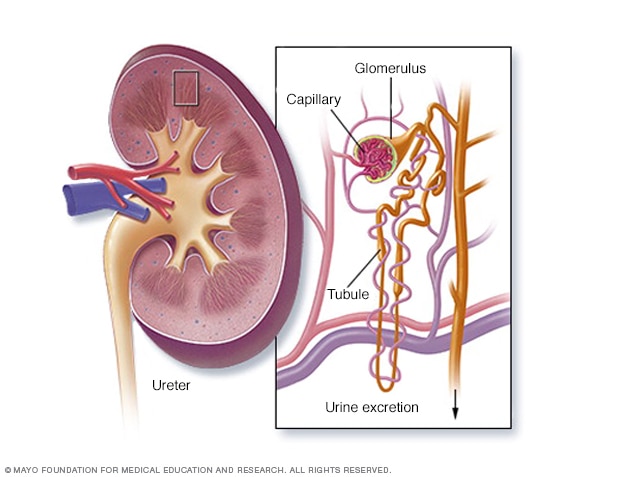
Kidney cross section
The kidneys remove waste and extra fluid from the blood through filtering units called nephrons. Each nephron contains a filter, called a glomerulus. Each filter has tiny blood vessels called capillaries. When blood flows into a glomerulus, bits — called molecules — of water, minerals, nutrients, and waste pass through the capillary walls. Large molecules, such as proteins and red blood cells, stay in the blood. The filtered molecules then pass into another part of the nephron called the tubule. The water, nutrients and minerals the body needs are sent back to the bloodstream. The extra water and waste become urine that flows to the bladder and is passed out of the body.
Risk factors
Factors that can raise your risk of chronic kidney disease include:
- Diabetes.
- High blood pressure.
- Heart disease.
- Smoking.
- Being overweight.
- Being Black, Native American or Asian American.
- Family history of kidney disease.
- Changes or problems in the shape or size of the kidneys.
- Older age.
- Frequent use of medicines that can damage the kidneys.
Complications
Chronic kidney disease can affect almost every part of the body. Complications can include:
- High blood pressure. Since the kidneys don't work as well to remove extra salt and water from the body, blood pressure starts to rise. High blood pressure can lead to more kidney damage, which in turn raises blood pressure even more.
- Acid buildup. Also called acidosis, acid buildup happens when the kidney can't remove extra acids the body makes or you take in with the foods you eat. This can lead to issues with bone health and protein breakdown.
- Fluid retention. This could lead to leg swelling, high blood pressure or fluid in the lungs, also called pulmonary edema, which causes shortness of breath. Fluid retention usually happens in later stages of kidney disease. A sudden increase in body weight might be a sign of fluid retention.
- High blood potassium levels. Also called hyperkalemia, this condition may happen suddenly. It usually happens in the later stages of kidney disease and may damage the heart and be life-threatening.
- Anemia. This happens when there aren't enough healthy red blood cells to carry oxygen to the body's tissues.
- Heart disease. With advanced kidney disease, blood vessels called arteries can become stiff and get clogged. This makes blood pressure go up and could lead to heart disease.
- Weak bones. Weak bones and a higher risk of bone fractures can happen.
- Sexual health concerns. Lower sex drive, erectile dysfunction or reduced fertility can happen.
- Damage to the central nervous system. This could lead to trouble concentrating or personality changes. This complication usually happens in the very last stages of kidney disease.
- Immune system changes. You may have a lowered immune response, which puts you at risk of infection.
- Pericarditis. This inflammation of the saclike membrane that covers the heart can happen in people with advanced kidney disease.
- Pregnancy complications. The mother and the unborn baby may be at risk.
- Lasting damage to the kidneys. Dialysis or a kidney transplant may be needed to survive.
Prevention
To lower the risk of developing kidney disease:
- Follow instructions on medicines that you buy off the shelf. If you use an off-the-shelf pain reliever, such as ibuprofen (Advil, Motrin IB, others), it's important to follow the instructions on the package. Taking too many pain relievers for a long time could lead to kidney damage.
- Keep a healthy weight. If you're at a healthy weight, being physically active most days of the week can help keep it that way. If you need to lose weight, talk with your healthcare team about a weight-loss plan.
- Don't smoke. Cigarette smoking can hurt the kidneys and make existing kidney damage worse. If you smoke, talk to your healthcare team about ways to quit. Support groups, counseling and medicines can help you to stop.
- Manage medical conditions with the help of your healthcare team. If you have diseases or conditions that raise your risk of kidney disease, work with your healthcare team to manage them. Ask about tests to look for signs of kidney damage. If you have high blood pressure, follow a low-sodium diet, check your blood pressure regularly at home and take any medicines you've been prescribed to lower your blood pressure. This can help protect your kidneys.