
Overview
A broken arm happens when one or more of the three arm bones break. The arm bones include the ulna, radius and humerus. A break also is called a fracture.
Falling onto an outstretched hand is one of the most common causes of a broken arm. If you think you or your child may have a broken arm, seek medical care right away. It's important to treat a fracture as soon as possible for proper healing.
Treatment depends on the location and severity of the break. For a simple fracture, a healthcare professional may recommend a sling, ice and rest to allow healing. In many people, especially children, broken arms heal well in a cast. But sometimes the bone may need to be realigned in the emergency room. Realigning the bone is called a reduction.
For a more serious fracture, surgery may be needed to realign the bone. The bone may be secured with wires, plates, screws or nails to keep it stable while it heals.
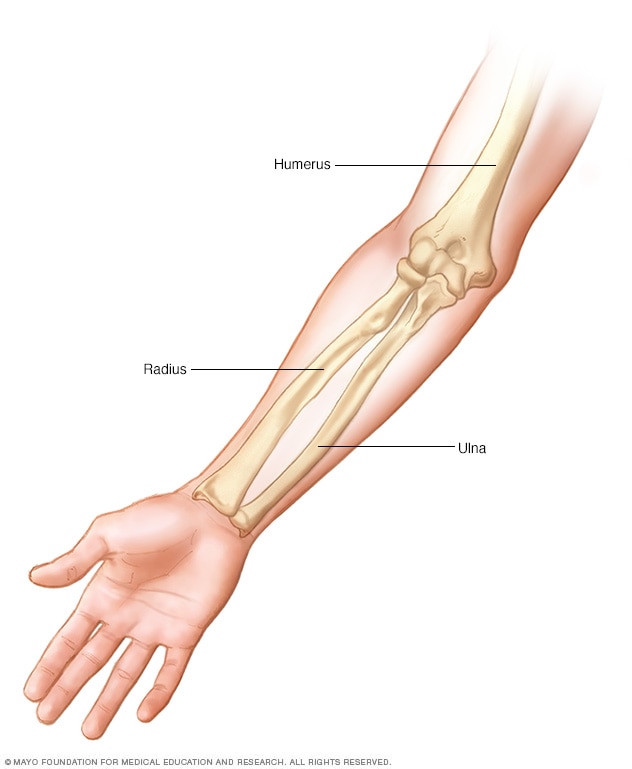
Arm bones
The arm is made up of three bones: the upper arm bone, called the humerus, and two forearm bones, called the ulna and the radius. The term "broken arm" may refer to a fracture in any of these bones.
Symptoms
Sometimes it's easy to tell that an arm is broken, such as when it looks crooked. Other times, it can be harder to tell. Common symptoms include:
- Intense pain that worsens with movement.
- Swelling around the injured area.
- Bruising.
- Difficulty bending the elbow.
- Difficulty raising the arm.
- Difficulty rotating the forearm, making it hard to turn the palm up or down.
- Visible change in the arm, such as a bent or twisted arm or wrist.
When to see a doctor
If your arm hurts so much that you can't use it as you typically do, see a healthcare professional right away. Get emergency medical care right away if you notice any numbness, weakness or changes in skin color of your hand. Seek emergency medical care if there is bleeding or a break in the skin. The same goes for your child. Getting prompt medical care is important, especially for children. Children heal faster than adults. Waiting to get treatment can lead to poor healing.
Causes
Common causes of a broken arm include:
- Falls. Falling onto an outstretched hand or elbow is the most common cause of a broken arm.
- Sports injuries. A direct hit or impact while playing sports can cause various types of arm fractures.
- Serious accidents. Car crashes, bike accidents and other major impacts can break any of the arm bones.
- Child abuse. Sometimes, a broken arm in children may be a sign of child abuse.
Risk factors
Some medical conditions and activities increase the risk of a broken arm.
Sports and physical activities
Playing sports with physical contact or a high risk of falling increases the chance of breaking an arm. Examples include football, soccer, gymnastics, skiing and skateboarding.
Weak bones
Conditions that weaken bones, such as osteoporosis and bone tumors, increase your risk of a broken arm. A break caused by an underlying condition is called a pathological fracture.
Complications
With early treatment, most broken arms heal well. But complications can happen, including:
- Uneven bone growth. In children, a fracture near a growth plate can affect bone development, leading to uneven growth. Growth plates are found at the end of a long bone where growth occurs.
- Osteoarthritis. If a fracture extends into a joint, it can increase the risk of arthritis in that joint later in life.
- Stiffness. When a fracture in the upper arm bone requires a splint, sling, brace or cast, it may lead to stiffness and limited movement in the wrist, elbow or shoulder.
- Bone infection. If a broken bone pierces the skin, bacteria can enter and cause an infection. Immediate medical care is needed to prevent serious complications.
- Nerve or blood vessel injury. A severe fracture of the humerus can have sharp, jagged edges. The broken bone may damage nearby nerves and blood vessels. If you have numbness or swelling in your injured arm, seek emergency care right away.
- Compartment syndrome. Swelling in the injured arm can cut off blood supply, leading to pain, burning, tingling and numbness. Typically this happens within 24 to 48 hours after the injury. Casts that are too tight or that become too tight due to swelling can cause compartment syndrome. Compartment syndrome is a medical emergency that requires surgery.
Prevention
While accidents can't always be prevented, these steps may help protect your bones:
- Eat for strong bones. Include calcium-rich foods, such as milk, yogurt and cheese, along with vitamin D. Vitamin D helps your body absorb calcium. Good sources of vitamin D include fatty fish, such as salmon, and fortified foods, such as milk and orange juice. And sunlight helps your body produce vitamin D.
- Stay active. Weight-bearing exercises and activities that improve balance and posture can strengthen bones and reduce the risk of fractures. The more active and fit you are as you age, the less likely you are to fall and break a bone.
- Prevent falls. Wear supportive shoes and remove tripping hazards from your home, such as loose rugs. Keep your home well lit and install grab bars or handrails where needed, such as in bathrooms and stairways.
- Use protective gear. Wear wrist guards and other safety equipment during high-risk activities, such as inline skating, snowboarding, rugby and football.
- Don't smoke. Smoking weakens bones, increasing the risk of fractures. And smoking slows the healing process if a break occurs.