
Overview
Breast cysts are fluid-filled sacs inside the breast. They are usually noncancerous (benign). You may have a single breast cyst or more than one breast cyst. You could have breast cysts in one or both breasts. A breast cyst often feels like a grape or a water-filled balloon, but sometimes it feels firm. The cyst may move slightly when you press it. Cysts may sometimes cause the breasts to be tender.
You don't need treatment for breast cysts unless a cyst is large and painful or uncomfortable. Hormone changes just before a monthly menstrual period may cause cysts to be larger and more painful. Sometimes draining fluid from a breast cyst may be enough to ease symptoms.
Although breast cysts may happen at any age, they typically happen before age 50 and during menopause. But they also can happen after menopause in people who take hormone therapy.
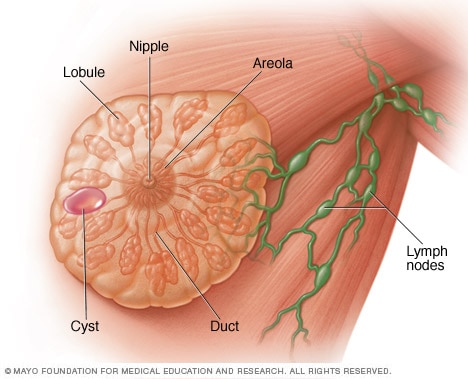
Breast cyst
A breast cyst is an oval or round fluid-filled sac. It may move slightly when you press on it.
Symptoms
Signs and symptoms of a breast cyst include:
- A smooth, easily movable round or oval lump that may have smooth edges. Lumps like this typically are not cancer.
- Nipple discharge that may be clear, yellow, straw colored or dark brown.
- Breast pain or tenderness in the area of the breast lump.
- Breast lump gets bigger, and breasts feel more tender just before a period.
- Breast lump gets smaller, and other symptoms go away after a period.
Having breast cysts doesn't increase your risk of breast cancer. But having cysts may make it harder to find new breast lumps or other changes in your breasts. Your breasts may feel lumpy and painful when you have your period, so it's important to be familiar with how your breasts feel throughout your menstrual cycle. That way, you'll know if something changes that needs to be checked by your healthcare professional.
When to see a doctor
Breast tissue often feels lumpy. But if you feel a new breast lump that doesn't go away, gets bigger, feels different or stays after one or two menstrual cycles, see your healthcare professional right away. Also see your healthcare professional if you have new skin changes on one or both breasts.
Causes
The exact cause of breast cysts is unknown. Most experts agree that cysts may happen because of hormone changes during menstrual cycles.
Breast cysts happen when fluid builds up inside breast glands. Each of your breasts has lobes of glandular tissue. Glandular tissue is made of cells that form glands. In the breasts, these lobes are arranged like the petals of a daisy. Lobes are divided into smaller lobules that produce milk during pregnancy and breastfeeding. Cysts can happen when milk ducts or other glands are blocked or stretched.
Breast cysts come in different sizes. How large they become depends on how much fluid is inside them.
- Microcysts are too small to feel but may be seen during imaging tests, such as mammography or ultrasound.
- Macrocysts are large enough to feel and can grow to about 1 to 2 inches (2.5 to 5 centimeters) across.
Risk factors
Factors that may increase the risk of breast cysts include:
- Hormonal imbalance. An imbalance between the hormones estrogen and progesterone may play a role in breast cysts, especially if there is too much estrogen.
- Hormone changes during the menstrual cycle. Cysts can get bigger or hurt more because of the changes in hormones that happen every month.
- Being in your 30s or 40s. Cysts are more likely to happen in people ages 35 to 50. It is less common for cysts to happen before age 20 or after menopause.
- Taking hormone therapy for menopause. Using hormone medicine to help with menopause symptoms might raise the chance of getting breast cysts. This can happen whether someone is still going through menopause or has already finished it.
- Ovarian disease. People with polycystic ovary syndrome, also called PCOS, have a higher risk of breast cysts.
- Not giving birth. People who have not given birth or who wait until they are older to have a child may be at higher risk. This may be due to a longer period of monthly increases in estrogen and progesterone from menstruation.
Pregnancy itself doesn't increase the chances of cysts, but the hormone changes the happen during pregnancy may make smaller cysts in the breasts larger and easier to feel.