
Overview
Bladder stones are hard lumps of minerals that form in the bladder. They're made when the minerals in urine form crystals. This often happens when the bladder does not empty all the way.
Small bladder stones might pass without treatment. But some bladder stones need medicines or surgery. Left untreated, bladder stones can lead to infections and other problems.
Symptoms
Sometimes bladder stones cause no problems. But if a stone irritates the bladder wall or blocks the flow of urine, symptoms might include:
- Lower belly pain.
- Pain when passing urine.
- Urinating more often.
- Difficulty urinating or having a urine flow that stops.
- Blood in the urine.
- Cloudy urine or darker urine than usual.
Causes
Bladder stones can develop when the bladder doesn't empty all the way. When this happens, there are more minerals than fluid in the urine, making it concentrated. Concentrated urine can turn into crystals that form stones.
Some infections can lead to bladder stones. Sometimes a condition that affects the bladder's ability to hold or get rid of urine can result in bladder stones. Anything in the bladder that shouldn't be there, called a foreign object, also can cause a bladder stone to grow on top of it.
Most often, the following conditions cause bladder stones:
- Prostate gland enlargement. An enlarged prostate, also called benign prostatic hyperplasia (BPH), can cause bladder stones. The prostate gland makes fluid that leaves the body with sperm. An enlarged prostate can block the flow of urine, keeping the bladder from emptying all the way.
- Damaged nerves. Nerves carry messages from the brain to the bladder muscles. They tell the bladder when to tighten or release. If these nerves are damaged, from a stroke, a spinal cord injury or another health problem, the bladder might not empty all the way. This is called neurogenic bladder.
Other possible causes of bladder stones include:
- Swelling and irritation, called inflammation. Bladder inflammation, sometimes caused by urinary tract infections or radiation therapy to the pelvis, can lead to bladder stones.
- Medical devices. Slender tubes put into the bladder to help urine drain, called bladder catheters, can cause bladder stones. So can objects that get into to the bladder by accident, such as a urinary stent. Mineral crystals, which later become stones, tend to form on top of these devices.
- Kidney stones. Stones that form in the kidneys aren't the same as bladder stones. They grow in different ways. But small kidney stones can break off and pass through the ureter to get into the bladder. If they stay in the bladder, they can grow into bladder stones.
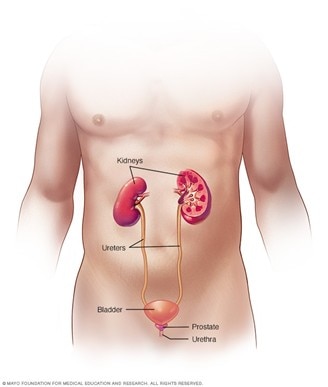
Male urinary system
The urinary system includes the kidneys, ureters, bladder and urethra. The urinary system removes waste from the body through urine. The kidneys sit toward the back of the upper abdomen. They filter waste and fluid from the blood and make urine. Urine moves from the kidneys to the bladder through narrow tubes called the ureters. The bladder stores urine until it's time to urinate. Urine leaves the body through a small tube called the urethra.

Female urinary system
Your urinary system includes the kidneys, ureters, bladder and urethra. The urinary system removes waste from the body through urine. The kidneys are located toward the back of the upper abdomen. They filter waste and fluid from the blood and produce urine. Urine moves from the kidneys through narrow tubes to the bladder. These tubes are called the ureters. The bladder stores urine until it's time to urinate. Urine leaves the body through another small tube called the urethra.
Risk factors
Men, especially those over 50, are more likely to have bladder stones. But women and children also can get them.
Conditions that can raise the risk of bladder stones include:
- A blockage. Any condition that blocks the flow of urine from the bladder to the tube that carries urine out of the body, called the urethra, can lead to bladder stones forming. There are several causes. The most common is an enlarged prostate.
- Nerve damage. Stroke, spinal cord injuries, Parkinson's disease, diabetes, a herniated disk and a number of other problems can damage nerves that control how the bladder works.
Complications
Bladder stones that don't pass, even if they don't cause symptoms, can lead to problems, such as:
- Ongoing, called chronic, bladder problems. Untreated bladder stones can cause long-term urinary problems, such as pain or peeing, also called urinating, often. Bladder stones also can get stuck in the opening where urine leaves the bladder to enter the urethra. This can block the flow of urine.
- Urinary tract infections. Bladder stones can cause repeated infections caused by germs in the urinary tract.
Prevention
You may not be able to prevent a condition that causes bladder stones. But you may be able to lower the chances of getting bladder stones. Follow these tips:
- Make a medical appointment soon after urinary symptoms start. Early diagnosis and treatment of an enlarged prostate, a urinary tract infection or another condition might lower the risk of getting bladder stones.
- Drink a lot of fluids. Drinking more fluids, especially water, may help prevent bladder stones. Fluids water down the concentration of minerals in the bladder. How much water to drink depends on age, size, health and level of activity. Ask a member of your healthcare team how much fluid to drink.