
Overview
Amenorrhea (uh-men-o-REE-uh) is the lack of a menstrual period, either by never menstruating or missing three or more periods or menstrual cycles.
Primary amenorrhea means no first period by age 15 if other puberty changes are present, or by age 13 if they're not. The most common causes of primary amenorrhea relate to hormone levels, although having reproductive anatomy that isn't typical also can cause amenorrhea.
Secondary amenorrhea occurs when you miss three or more periods in a row when you had periods in the past. It also happens if you had cycles that weren't regular and haven't had a period for more than six months. Pregnancy is the most common cause of secondary amenorrhea, although issues with hormones also can cause secondary amenorrhea.
Treatment of amenorrhea depends on the cause.
Symptoms
Depending on the cause of amenorrhea, you might have other signs or symptoms along with the absence of periods, such as:
- Milky nipple discharge.
- Hot flashes.
- Vaginal dryness.
- Hair loss.
- Headache.
- Vision changes.
- Excess facial hair.
- Pelvic pain.
- Acne.
When to see a doctor
Consult your doctor or other healthcare professional if you've missed at least three menstrual periods in a row; if you've never had a menstrual period and you're 15 years old or older; or if you reach age 13 and don't have other puberty changes.
Causes
Amenorrhea can occur for a variety of reasons. Sometimes the condition is expected, such as if you are pregnant. But other times, the condition may be a side effect of medicines or a sign of a medical condition.
Natural amenorrhea
During your lifetime, you may have amenorrhea for expected reasons, such as:
- Pregnancy.
- Breastfeeding.
- Menopause.
Contraceptives
Hormonal birth control methods such as implants, some pills and levonorgestrel intrauterine devices (IUDs), and shots, also called injections, can cause amenorrhea. Copper IUDs typically do not. Periods may take time to return after stopping hormonal birth control. It may take longer for your periods to return after stopping injections. Talk with your healthcare professional about how long it may take your period to come back after you stop hormonal birth control.
Medicines
Certain medicines can cause menstrual periods to stop, including some types of:
- Antipsychotics.
- Cancer chemotherapy.
- Blood pressure medicines.
- Opioids.
Lifestyle factors
Sometimes lifestyle factors contribute to amenorrhea, for instance:
- Stress. Mental stress can, for a limited time, alter the work of the hypothalamus, which is an area of the brain that controls the hormones that direct the menstrual cycle. Ovulation and menstruation may stop as a result. Regular menstrual periods usually start again if stress levels get lower.
- Not eating enough. Eating too few calories can suppress the hypothalamus and cause amenorrhea.
- Rigorous exercise. If you participate in activities that require lots of training, such as ballet or long-distance running, you may have amenorrhea. Several factors can play a part in the loss of periods in athletes, including low body fat, stress and needing a lot of calories for physical activity.
Hormonal imbalance
Many types of medical conditions can happen when hormones are not in balance, also called hormonal imbalance. These conditions include:
- Polycystic ovary syndrome (PCOS). PCOS causes hormone levels to stay mostly the same, rather than going up and down as they do in the typical menstrual cycle.
- Thyroid conditions. Having an overactive thyroid gland, called hyperthyroidism, or an underactive thyroid gland, called hypothyroidism, can cause changes in the menstrual cycle, including amenorrhea.
- Pituitary tumor. A noncancerous, also called benign, tumor in the pituitary gland can change the effects of hormones on menstruation.
- Primary ovarian insufficiency. This condition occurs before age 40 and can result in periods that don't happen often or are absent.
Structural conditions
Conditions related to the reproductive organs themselves also can cause amenorrhea. Examples include:
- Uterine scarring. Asherman syndrome, a condition in which scar tissue builds up in the lining of the uterus, can sometimes occur after a procedure called dilation and curettage (D&C), after a cesarean section, or after treatment for uterine fibroids. Uterine scarring prevents the typical buildup and shedding of the uterine lining.
- Lack of reproductive organs. Sometimes, health conditions that happen when an unborn baby, also called a fetus, is developing can lead to missing parts of the reproductive system, such as the uterus, cervix or vagina. If the reproductive system doesn't develop fully, menstrual cycles may not be possible later in life.
- Structural changes in the vagina. An obstruction of the vagina may prevent visible menstrual bleeding. A membrane or wall may be present in the vagina that keeps blood from leaving the uterus or cervix.
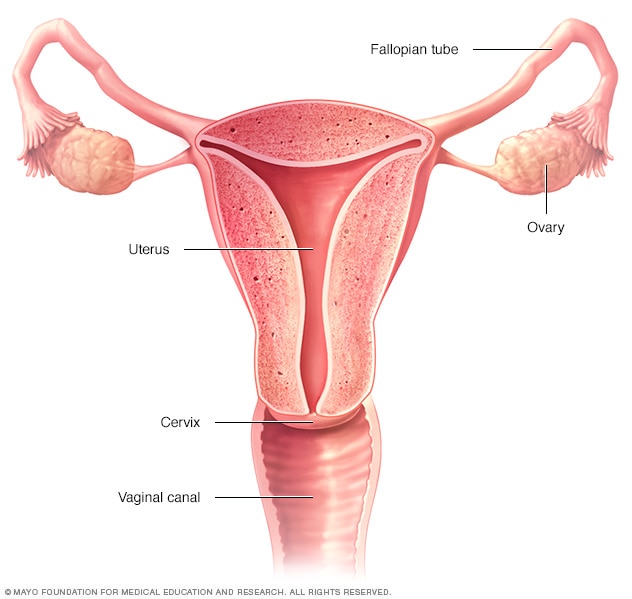
Female reproductive system
The ovaries, fallopian tubes, uterus, cervix and vagina, also called the vaginal canal, make up the female reproductive system.
Risk factors
Factors that may increase your risk of amenorrhea include:
- Family history. If a first-degree relative, such as a mother or sister, has a history of amenorrhea, you may be more likely to have the condition.
- Eating disorders. People with eating disorders, such as anorexia or bulimia, have a higher risk of amenorrhea.
- Severe, long-lasting anxiety. Severe anxiety or other mental health conditions can sometimes cause periods to stop or happen less often. This happens because stress can affect the part of the brain that controls periods.
- Athletic training. Rigorous athletic training can raise your risk of amenorrhea.
- History of certain gynecological procedures. If you've had uterine surgery, such as a D&C, your risk of developing amenorrhea is higher.
Complications
The causes of amenorrhea can cause other health conditions too. These include:
- Infertility. If you don't ovulate, you can't become pregnant without treatment. However, some people who do ovulate may not have a period. This can lead to unplanned pregnancy. A healthcare professional can do tests to help you know whether you ovulate.
- Psychological stress. Not having periods when other people your age are having them can be stressful, especially if you're a young person moving into adulthood.
- Osteoporosis. Osteoporosis is a weakening of the bones that low estrogen levels can cause.
- Pelvic pain. You might have pain in the pelvic area if amenorrhea happens because of a difference in the position or shape of your reproductive organs.