
Overview
An anterior cruciate ligament (ACL) injury is a tear or sprain of one of the main ligaments in your knee. Ligaments are strong bands of tissue that connect one bone to another. The ACL is one of two ligaments that cross in the middle of the knee. It connects your thigh bone to your shinbone and helps keep the knee joint stable.
ACL injuries often happen during sports or activities that involve sudden stops, jumps, pivots or changes in direction. Examples include soccer, basketball, football and downhill skiing. Many people hear or feel a pop in the knee when an ACL injury happens. The knee may swell, feel unstable and become too painful to put weight on it.
Treatment depends on how serious your ACL injury is. Treatment may include rest and rehab exercises to help you regain strength and stability. Or it may include surgery to replace the torn ligament followed by rehab. A proper training program may help reduce the risk of an ACL injury.
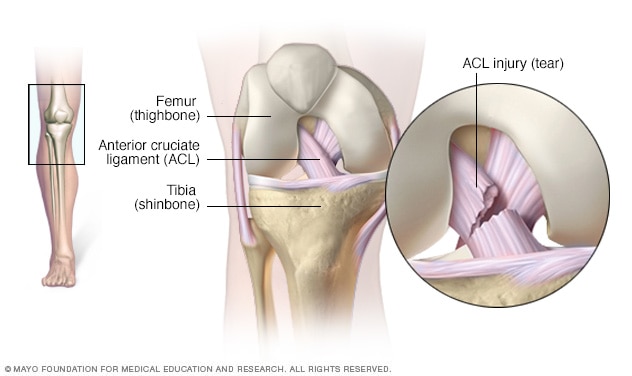
ACL injury
The anterior cruciate ligament (ACL) is one of the key ligaments that help stabilize the knee joint. The ACL connects the thigh bone, called a femur, to the shinbone, called a tibia. ACL tears happen most commonly during sports or activities that involve sudden stops, jumps, pivots or changes in direction.
Symptoms
An ACL injury can happen suddenly. Common symptoms of an ACL injury may include:
- A loud pop or a popping feeling in the knee.
- Serious pain.
- Rapid swelling.
- Loss of range of motion.
- Knee instability or the feeling that the knee "gives out."
When to see a doctor
Seek care right away if any injury to your knee causes symptoms of an ACL injury. The knee joint is a complex structure of bones, ligaments, tendons and other tissues that work together. Often, other parts of the knee such as the cartilage, meniscus or other ligaments are injured along with the ACL. It is important to get a prompt and accurate diagnosis to determine how serious the injury is and get proper treatment.
Causes
ACL injuries can happen in both contact and noncontact sports or activities. ACL injuries often happen during movements that can put stress on the knee, including:
- Suddenly slowing down and changing direction.
- Pivoting with your foot firmly planted.
- Landing awkwardly from a jump.
- Stopping suddenly.
- Receiving a direct blow to the knee or having a collision, such as a football tackle.
When the ligament is damaged, there is usually a partial or complete tear of the tissue. A mild injury may stretch the ligament but leave it intact.
Risk factors
Certain factors can increase your risk of an ACL injury, including:
- Being female. Women and girls are at higher risk of ACL injury than males, possibly due to differences in body structure, muscle strength and hormones.
- Playing certain sports. Sports such as soccer, basketball, football, volleyball, gymnastics and downhill skiing have a higher risk of ACL injury.
- Poor conditioning or fatigue.
- Incorrect technique or muscle imbalances when jumping or landing.
- Playing on artificial turf.
- Using footwear that does not fit properly.
- Using poorly maintained sports equipment, such as ski bindings that are not adjusted properly.
- Having a previous ACL injury. If you have hurt your ACL before, you are more likely to injure it again.
Complications
People who have an ACL injury are more likely to develop osteoarthritis in the knee. Arthritis may happen even if you have surgery to reconstruct the ligament. The risk of arthritis depends on many factors, including how serious the original injury was, other related injuries in the knee, and how active you are after treatment.
Prevention
You can lower your risk of ACL injury with proper training and exercise. A sports medicine physician, physical therapist, athletic trainer or other specialist in sports medicine can assess how you move and offer instruction and feedback that can help you reduce your risk of a knee injury.
Programs to reduce ACL injury include:
- Core exercises. Strengthening the hips, pelvis and lower abdomen to avoid moving the knee inward during a squat.
- Leg exercises. Strengthening leg muscles, especially the hamstrings, to keep muscle strength balanced.
- Jumping and landing training. Learning the right way to jump and land to protect the knees.
- Pivoting and cutting training. Improving technique when making pivoting and cutting movements.
Training to strengthen muscles and to improve jumping and landing techniques may help to reduce the higher ACL injury risk in female athletes.
Gear
Wear the right shoes and padding for your sport to help prevent injury. If you downhill ski, make sure a trained professional adjusts your ski bindings so that your skis release properly if you fall.
Wearing a knee brace may not prevent ACL injury or reduce the risk of getting hurt again after surgery.