Breast lumps
Definition
A breast lump is a growth that forms within the breast. Different types of breast lumps can vary in the way they look and feel.
You might notice:
- A distinct lump with clear-cut edges.
- A firm or hard area within the breast.
- A thicker, slightly raised area in the breast that's different from the tissue around it.
You also might see these changes along with a lump:
- An area of skin that has changed in color or turned red or pink.
- Dimpling of the skin.
- Pitting of the skin, which may look like an orange peel in texture.
- A change in the size of one breast that makes it larger than the other breast.
- Nipple changes, such as a nipple that turns inward or releases fluid.
- Lasting breast pain or tenderness, which is in one area or may go on after your period.
A breast lump can be a sign of breast cancer. That's why you should get it checked by your health care provider as soon as you can. It's even more important to get a breast lump checked after menopause. The upside is that most breast lumps are benign. That means they are not caused by cancer.
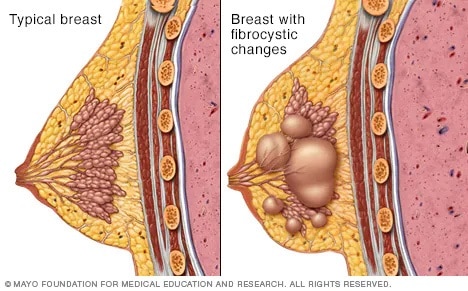
Fibrocystic breast changes
Fibrocystic breast changes lead to the development of fluid-filled round or oval sacs, called cysts. The cysts can make breasts feel tender, lumpy or ropy. They feel distinct from other breast tissue.
Causes
Breast lumps can be caused by:
- Breast cancer
- Breast cysts (which are fluid-filled sacs in breast tissue that are not cancer. The fluid in a cyst looks like water. An imaging test called ultrasound is used to find out if a breast lump is a cyst.)
- Fibroadenoma (a solid, benign growth within the breast glands. It is a common type of breast lump.)
- Fibrocystic breasts
- Intraductal papilloma.
- Lipoma (a slow-growing lump involving fatty breast tissue. It can feel doughy, and it is often harmless.)
- Trauma to the breast from a bump, breast surgery or other reasons.
Breast lumps also can be caused by health problems that can happen during breastfeeding, such as:
- Mastitis (an infection in breast tissue)
- A milk-filled cyst that's usually harmless.

Causes shown here are commonly associated with this symptom. Work with your doctor or other health care professional for an accurate diagnosis.
When to see a doctor
Make an appointment to have a breast lump checked, especially if:
- The lump is new and feels firm or fixed.
- The lump doesn't go away after 4 to 6 weeks. Or it has changed in size or in how it feels.
- You notice skin changes on your breast such as crusting, dimpling, puckering, or a change in color, including red and pink.
- Fluid comes out of the nipple. It might be bloody.
- The nipple recently turned inward.
- There is a new lump in the armpit, or a lump in the armpit seems to be getting bigger.
Get the latest breast cancer information from Mayo Clinic delivered to your inbox.
Sign up for free and receive the latest on breast cancer treatment, care and management.
SYM-20050619
Mayo Clinic does not endorse companies or products. Advertising revenue supports our not-for-profit mission.
Advertising & Sponsorship
Mayo Clinic Press
Check out these best-sellers and special offers on books and newsletters from Mayo Clinic Press.
