Non-Hodgkin lymphoma Symptoms and causes
Overview
Non-Hodgkin lymphoma is a type of lymphoma. Lymphoma is cancer that affects the lymphatic system. The lymphatic system is made up of organs, glands, tubelike vessels and clusters of cells called lymph nodes. It's part of the body's germ-fighting immune system. The lymphatic system also includes the spleen, thymus, tonsils, adenoids and bone marrow. Non-Hodgkin lymphoma can affect all these areas and other organs in the body.
There are many types of lymphoma. Lymphoma types are often divided into two categories: Hodgkin lymphoma and non-Hodgkin lymphoma. Non-Hodgkin lymphoma is much more common than Hodgkin lymphoma. Non-Hodgkin lymphoma has many types that often begin in B cells or T cells.
- B cells. B cells are lymphocytes that fight infection. B cells make antibodies against foreign invaders of the body. Most non-Hodgkin lymphoma arises from B cells. Subtypes of non-Hodgkin lymphoma that involve B cells include diffuse large B-cell lymphoma, follicular lymphoma, mantle cell lymphoma and Burkitt lymphoma.
- T cells. T cells are lymphocytes that kill foreign invaders directly. Non-Hodgkin lymphoma happens much less often in T cells. Subtypes of non-Hodgkin lymphoma that involve T cells include peripheral T-cell lymphoma and cutaneous T-cell lymphoma.
Treatment depends on whether non-Hodgkin lymphoma arises from B cells or T cells. Treatments for non-Hodgkin lymphoma may include a "watch and wait" approach, chemotherapy, immunotherapy, and targeted therapy. Other treatments may include chimeric antigen receptor (CAR)-T cell therapy, bone marrow transplant, also called bone marrow stem cell transplant, and radiation therapy.
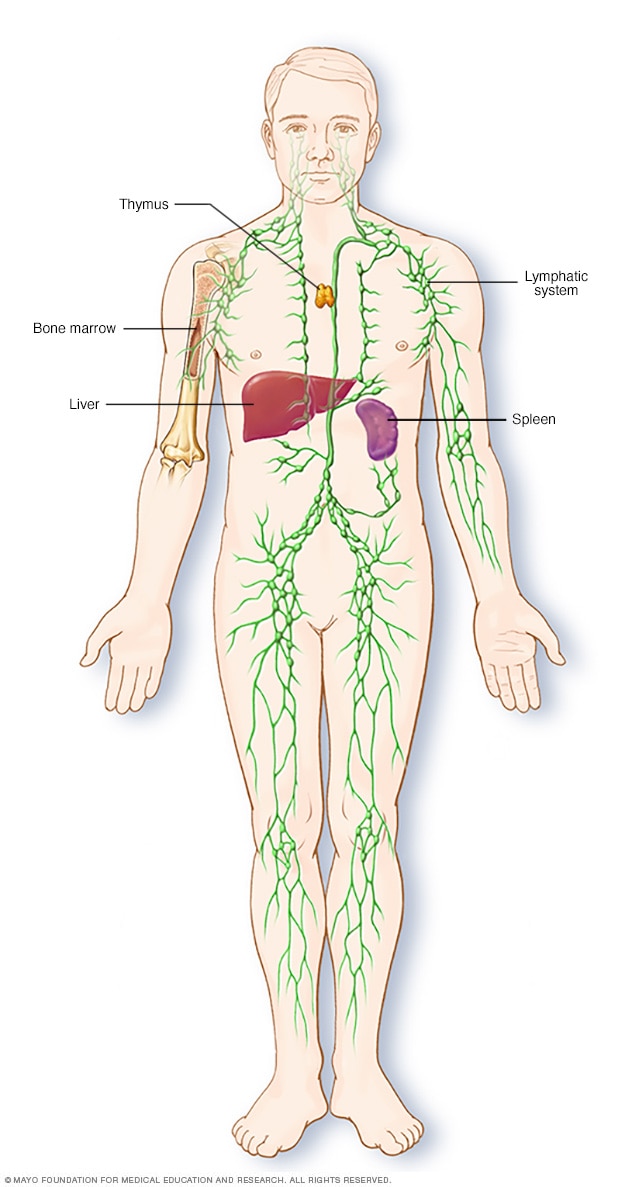
Parts of the immune system
The lymphatic system is part of the body's immune system, which protects against infection and disease. The lymphatic system includes the spleen, thymus, lymph nodes and lymph channels, as well as the tonsils and adenoids.
Types
Waldenstrom macroglobulinemia
Symptoms
Signs and symptoms of non-Hodgkin lymphoma may include:
- Swollen lymph nodes, which might feel like a lump under the skin. They happen most often in the neck, armpits and groin.
- Belly pain or swelling.
- Chest pain, coughing or trouble breathing.
- Fever.
- Fatigue.
- Drenching night sweats.
- Weight loss that happens without trying.
- Itchy skin.
- Skin rash.
When to see a doctor
Make an appointment with a healthcare professional if you have any symptoms that worry you.
Schedule your lymphoma appointment
We are accepting new patients. Our team of experts is standing by to schedule your non-Hodgkin's lymphoma appointment now.
Call your preferred Mayo Clinic location:
Causes
It's not clear what causes non-Hodgkin lymphoma. Cancer happens when cells develop changes in their DNA. A cell's DNA holds the instructions that tell the cell what to do. In healthy cells, the DNA gives instructions to grow and multiply at a set rate. The instructions tell the cells to die at a set time. In cancer cells, the DNA changes give different instructions. The changes tell the cancer cells to make many more cells quickly. Cancer cells can keep living when healthy cells would die. This causes too many cells. In non-Hodgkin lymphoma, the cancer cells often build up in the lymph nodes. They also can build up in other parts of the lymphatic system.
Non-Hodgkin lymphoma can affect the:
- Lymph nodes.
- Lymph vessels.
- Adenoids.
- Tonsils.
- Spleen.
- Thymus.
- Bone marrow.
- Rarely, parts of the body that aren't part of the lymphatic system.
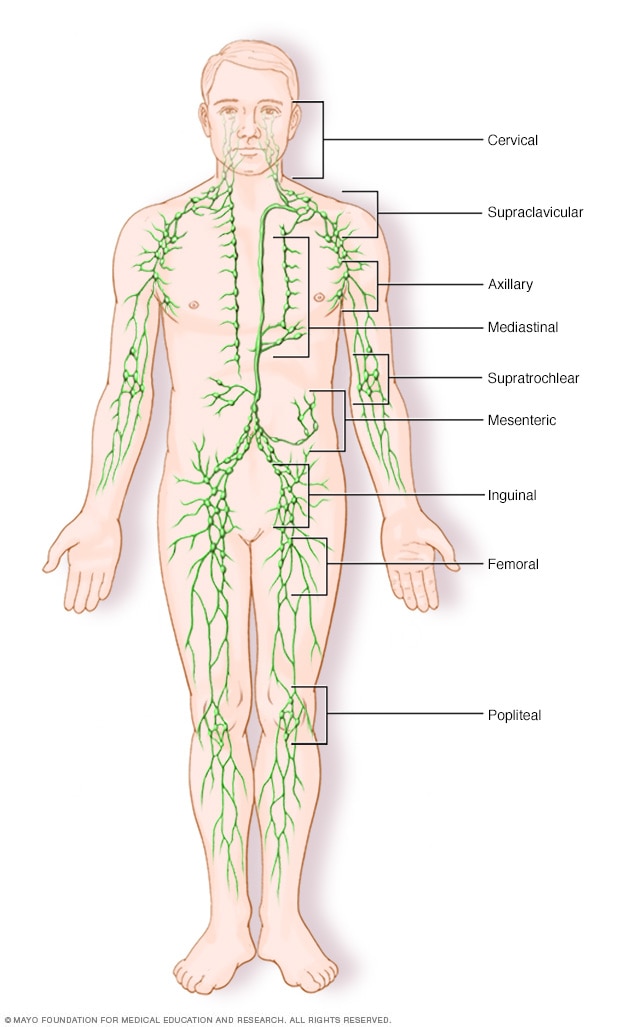
Lymph node clusters
Lymph nodes are bean-sized groups of white blood cells. Hundreds of these nodes cluster all through the lymphatic system. For instance, they're near the knees, groin, neck and armpits. A network of lymphatic vessels connects these nodes.
Risk factors
Factors that may raise the risk of non-Hodgkin lymphoma include:
- Older age. Non-Hodgkin lymphoma can happen at any age. But it's most common in people 60 or older.
- A family history of lymphoma. Having a blood relative, such as a parent or sibling, with lymphoma may increase your risk of non-Hodgkin lymphoma.
- Some infections. Certain infections have been linked to non-Hodgkin lymphoma. These infections include human immunodeficiency virus (HIV), Epstein-Barr virus, human T-lymphotropic virus 1 (HTLV-1), Helicobacter pylori (H. pylori) and others.
- A weakened immune system or an autoimmune condition. Having a condition that affects the immune system can increase the risk of non-Hodgkin lymphoma. Conditions may include rheumatoid arthritis, psoriasis and Sjogren syndrome. The immune system also may be weakened after organ transplant.
There's no way to prevent non-Hodgkin lymphoma.
Get Mayo Clinic cancer expertise delivered to your inbox.
Schedule your lymphoma appointment
We are accepting new patients. Our team of experts is standing by to schedule your non-Hodgkin's lymphoma appointment now.
Call your preferred Mayo Clinic location:
Top ranked in the U.S.
Mayo Clinic in Rochester, Minnesota, Mayo Clinic in Jacksonville, Florida, and Mayo Clinic in Phoenix/Scottsdale, Arizona, have been recognized among the top Cancer hospitals in the nation by U.S. News & World Report.
CON-20375662
Mayo Clinic does not endorse companies or products. Advertising revenue supports our not-for-profit mission.
Advertising & Sponsorship
Mayo Clinic Press
Check out these best-sellers and special offers on books and newsletters from Mayo Clinic Press.
