Meningioma Symptoms and causes
Overview
A meningioma is a tumor that starts in the meninges. These are the thin layers that cover the brain and spinal cord. Although a meningioma does not start in brain tissue, it is classified as a primary brain tumor when it forms near the brain and as a spinal cord tumor when it forms near the spinal cord. This classification is based on its location within the central nervous system. Meningiomas make up about one-third of all primary brain tumors.
Most meningiomas grow slowly. Some cause no symptoms for many years. When they get bigger or sit near important areas, they can lead to serious health conditions.
Meningiomas happen more often in women and are found more often in older adults, but they can happen at any age.
Because many meningiomas grow slowly and cause few or no symptoms, treatment is not always needed right away. In some cases, careful monitoring with regular imaging is the best first step.
About 80% to 85% of meningiomas are benign. That means they are not cancerous. Many people do very well after diagnosis, especially when the tumor grows slowly and is monitored with regular scans.
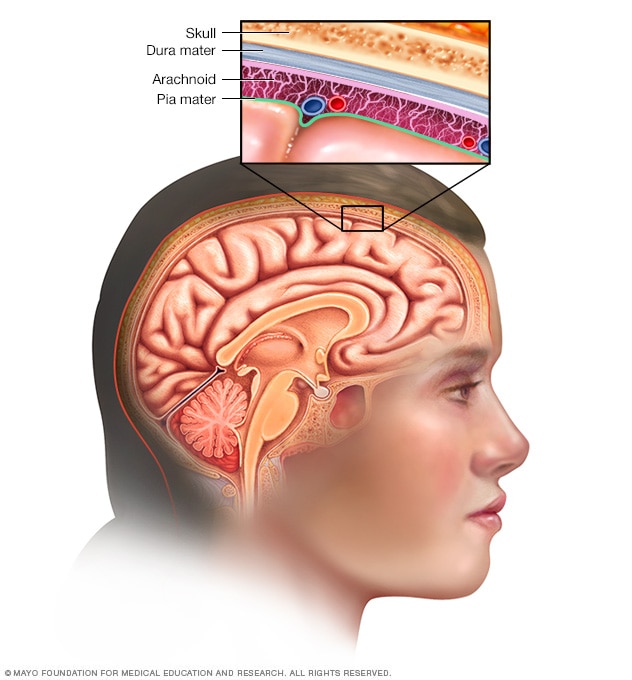
Meninges
Three layers of membranes known as meninges protect the brain and spinal cord. The delicate inner layer is the pia mater. The middle layer is the arachnoid, a web-like structure filled with fluid that cushions the brain. The tough outer layer is called the dura mater.
Symptoms
Meningioma symptoms may not be noticeable. They're similar to other brain tumor symptoms and depend on where the tumor is located. When a meningioma grows in the brain, it can press on nearby tissue and cause certain symptoms.
Common symptoms may include:
- Changes in vision, such as blurriness or double vision.
- Numbness, tingling, pain or weakness on one side of the face.
- Headaches that are worse in the morning or change over time.
- Hearing loss or ringing in one ear.
- Loss of smell.
- Seizures.
- Weakness or numbness in the arms or legs on one side of the body.
Thinking and mood symptoms may include:
- Trouble with memory or confusion.
- Trouble speaking or understanding words.
- Personality or mood changes.
Rarely, a meningioma forms in the spine. Symptoms of meningiomas in the spine may include:
- Numbness or tingling in the legs.
- Weakness or trouble walking.
- Trouble with bladder or bowel control.
What this means for you: Symptoms can be slow to start and vary based on where the tumor sits. Some people have few or no symptoms for a long time. If symptoms change or keep getting worse, your healthcare team can help figure out what's going on.
When to see a doctor
Most symptoms of a meningioma develop slowly, but sometimes the tumor needs care right away.
Often, meningiomas don't cause any symptoms that you notice and are found only on imaging scans done for other reasons.
Seek emergency care if you have:
- A sudden seizure.
- The most severe headache you've ever had.
- Sudden changes in vision, speech or memory.
- New weakness or numbness in the arms or legs.
Make an appointment with your healthcare professional if you have lasting symptoms that worry you, such as headaches that get worse over time. Even mild or vague symptoms should be checked early to rule out other causes and begin care if needed.
Causes
It isn't clear what causes a meningioma. Most people with meningioma don't have a clear cause or inherited condition. Experts know that something changes some cells in the meninges, making them multiply out of control and form a tumor.
What this means for you: Most of the time, there's no clear reason why the tumor started to grow. There isn't a single known cause.
Risk factors
Risk factors for a meningioma include:
- Age. The risk rises with age and is highest in adults over 60.
- Radiation exposure. Radiation therapy to the head, especially in childhood, increases risk.
- Hormones. Meningiomas are more common in women, suggesting hormones such as estrogen and progesterone may play a role. Some studies link hormone replacement therapy, birth control pills and breast cancer with higher risk, but results vary.
- Genetic conditions. A rare inherited disorder, neurofibromatosis type 2 (NF2), LINK raises the risk of developing multiple meningiomas and other nervous-system tumors.
- Obesity. People with a high body mass index (BMI) may have a slightly higher risk, though the reason isn't clear.
Though some reports have suggested a possible link, current research has not found a clear or consistent connection between cellphone use and meningioma.
What this means for you: Most people with meningioma do not have a clear cause. Tell your care team if you had radiation to the head, take hormone-related medicines, or have a family history of NF2 so they can guide testing and follow-up.
Get the latest brain tumor advice from Mayo Clinic delivered in your inbox.
Sign up for free and receive the latest on brain tumor treatment, diagnosis and surgery.
Complications
A meningioma and its treatment can cause long-term complications. Treatment most often involves surgery and radiation therapy. Possible complications include:
- Trouble focusing or paying attention.
- Memory loss or slower thinking.
- Personality or mood changes.
- Seizures.
- Weakness or trouble with balance.
- Changes in vision, hearing or smell.
- Trouble speaking or understanding language.
- Fatigue or low energy.
- Emotional changes, such as anxiety or depression.
Your care team can treat many of these issues or connect you with rehabilitation specialists, such as physical, occupational or speech therapists, to help improve recovery and quality of life.
Your healthcare professional can treat some complications and refer you to specialists to help you cope with other complications.
What this means for you: Many effects improve over time with rehabilitation, so ask about therapy options. Keep your MRI and follow-up visits, and don't stop medicines without medical advice. Consider safe supportive options such as meditation or gentle massage to help with stress and fatigue.

CON-20251937
Mayo Clinic does not endorse companies or products. Advertising revenue supports our not-for-profit mission.
Advertising & Sponsorship
Mayo Clinic Press
Check out these best-sellers and special offers on books and newsletters from Mayo Clinic Press.
