Liver disease Diagnosis and treatment
Diagnosis
Finding the cause of liver damage and how bad it is help guide treatment. Your healthcare professional starts with a health history and complete physical exam.
Your healthcare professional may then suggest:
- Blood tests. A group of blood tests called liver function tests can diagnose liver disease. Other blood tests can be done to look for certain liver problems or conditions caused by gene changes.
- Imaging tests. An ultrasound, CT scan and MRI can show liver damage.
- Checking a tissue sample. Removing a tissue sample, called a biopsy, from the liver may help diagnose liver disease. A liver biopsy is most often done using a long needle put through the skin to get a tissue sample. The sample is then sent to a lab for testing.
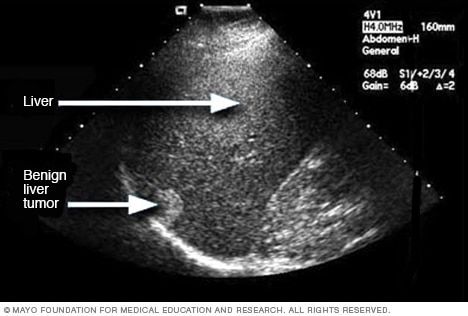
Ultrasound of liver tumor
An ultrasound uses sound waves to create an image. This ultrasound shows a noncancerous liver tumor.
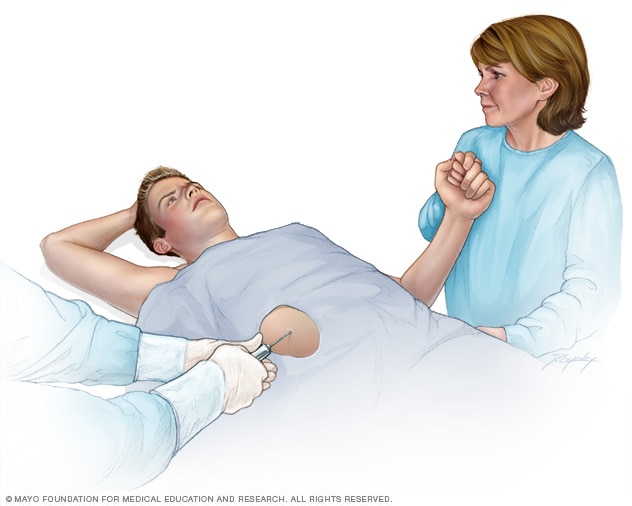
Liver biopsy
A liver biopsy removes a small sample of liver tissue for lab testing. A liver biopsy most often is done by putting a thin needle through the skin and into the liver.
Treatment
Treatment for liver disease depends on the diagnosis. Some liver problems can be treated with lifestyle changes. These might include losing weight or not drinking alcohol. These changes often are part of a medical program that includes watching liver function.
Other liver problems may be treated with medicines or surgery.
Liver disease that causes liver failure may need a liver transplant.
Clinical trials
Explore Mayo Clinic studies testing new treatments, interventions and tests as a means to prevent, detect, treat or manage this condition.
Alternative medicine
No alternative medicine therapies have been proved to treat liver disease. Some studies show possible benefits. But more research is needed.
Some dietary and herbal supplements can harm the liver. More than 1,000 medicines and herbal products have been linked to liver damage. They include:
- Vitamin A.
- Ma-huang.
- Germander.
- Valerian.
- Mistletoe.
- Skullcap.
- Chaparral.
- Comfrey.
- Kava.
- Pennyroyal oil.
To protect your liver, it's important to talk with your healthcare professional about the risks before you take any alternative medicines.
Self-care
Changing some lifestyle habits often can help improve liver health. If you've been diagnosed with liver disease, your healthcare professional might suggest that you:
- Drink little alcohol, if any.
- Eat a healthy diet. Eat fruits, vegetables and whole grains. Don't eat foods with a lot of sugar or fructose.
- Limit the fat you eat. Eat healthier fats, such as those in fish, olive oil and walnuts. Limit red meat.
- Try to stay at a healthy weight. Lose weight slowly if you're overweight.
From Mayo Clinic to your inbox
Sign up for free and stay up to date on research advancements, health tips, current health topics, and expertise on managing health. Click here for an email preview.
Preparing for your appointment
You may be sent to a doctor who specializes in the liver, called a hepatologist.
What you can do
When you make the appointment, ask about anything you need to do, such as not eating before your appointment. Ask a relative or friend to go with you, if possible, to help you remember the information you get.
Make a list of:
- Your symptoms and when they began.
- All your medicines, vitamins and supplements, including doses.
- Your key medical information, including other conditions you have and family history of liver disease.
- Key personal information, including any recent changes or stressors in your life.
- Questions to ask your healthcare professional.
Questions to ask include:
- What's the most likely cause of my symptoms?
- What tests do I need? Do I need to prepare for any of the tests?
- Are my liver problems likely to go away or to last?
- What treatments are there?
- Should I stop taking certain medicines or supplements?
- Do I need to stop drinking alcohol?
- I have other health conditions. How can I best manage these conditions together?
- Are my children at risk of liver disease?
Be sure to ask all the questions you have.
What to expect from your doctor
Your healthcare professional is likely to ask you questions, such as:
- How bad are your symptoms? Are they constant, or do they come and go?
- Does anything seem to improve your symptoms, or make them worse?
- Have you ever had your skin or eyes turn yellow?
- How much alcohol do you drink a week?
- Do you have tattoos?
- Does your job put you in contact with chemicals, blood or body fluids?
- Have you ever had a blood transfusion?
- Have you been told that you have had liver problems?





CON-20374479
Mayo Clinic does not endorse companies or products. Advertising revenue supports our not-for-profit mission.
Advertising & Sponsorship
Mayo Clinic Press
Check out these best-sellers and special offers on books and newsletters from Mayo Clinic Press.
