Sun allergy Symptoms and causes
Overview
Sun allergy is a broad term. It describes several conditions that cause an itchy rash to form on the skin after being in sunlight or other sources of ultraviolet (UV) radiation. Polymorphous light eruption is the most common form of sun allergy.
Some people have a hereditary type of sun allergy. Others develop symptoms only when triggered by another factor — such as taking medication or touching certain plants. Other types of sun-related reactions occur for reasons that are unclear.
Mild sun allergy may clear up without treatment. Severe rashes may be treated with steroid creams or pills. If you have severe sun allergy, you may need to take preventive steps. For example, wear clothing that shields you from the sun.
Symptoms
How skin with sun allergy looks varies widely depending on the color of your skin and what's causing the symptoms. Signs and symptoms may include:
- Itchiness (pruritus)
- Stinging
- Tiny bumps that may merge into raised patches
- A flushing of the exposed area
- Blisters or hives
Symptoms usually occur only on skin that has been exposed to the sun or other source of UV light. Symptoms show up within minutes to hours after sun exposure.
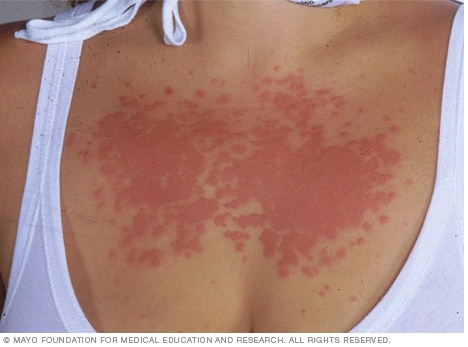
Polymorphous light eruption on the chest
Polymorphous light eruption is a rash that affects parts of the body that are exposed to more sunlight as daylight hours get longer, such as the front of the neck and chest. Polymorphous means that the rash can have many forms, such as tiny bumps, raised areas or blisters.
When to see a doctor
See a health care provider if you have unusual, bothersome skin reactions after being in the sun. For severe or persistent symptoms, you may need to see someone who specializes in diagnosing and treating skin disorders (dermatologist).
Causes
Causes of sun allergy include immune system reactions to sunlight, certain medications and chemicals that make the skin more sensitive to the sun. It isn't clear why some people have a sun allergy and others don't. Inherited traits may play a role.
Risk factors
Risk factors for having an allergic reaction to sunlight include:
- Contact with certain substances. Some sun allergy symptoms are triggered when your skin is exposed to a substance and then to sunlight. Common substances responsible for this type of reaction include fragrances, disinfectants and chemicals used in some sunscreens.
- Taking certain medications. A number of medications can make the skin sunburn more quickly — including tetracycline antibiotics, sulfa-based drugs and pain relievers, such as ketoprofen.
- Having another skin condition. Having dermatitis increases your risk of having a sun allergy.
- Having a blood relative with a sun allergy. You're more likely to have a sun allergy if you have a sibling or parent with a sun allergy.
Prevention
If you have a sun allergy or an increased sensitivity to the sun, you can help prevent a reaction by taking these steps:
- Avoid sun exposure between 10 a.m. and 4 p.m. The sun's rays are strongest during these hours. Try to schedule outdoor activities for other times. If you can't do that, limit the time you're in the sun. Seek shade when possible.
- Avoid sudden exposure to lots of sunlight. Many people have sun allergy symptoms seasonally. Symptoms occur when daylight hours get longer and people are exposed to more sunlight. At these times, gradually increase the amount of time you spend outdoors so that your skin has time to adapt to increased sunlight.
- Wear sunglasses and protective clothing. Long-sleeved shirts and wide-brimmed hats can help protect your skin from sun exposure. Avoid fabrics that are thin or have a loose weave — UV rays can pass through them.
-
Apply sunscreen. Use a water-resistant, broad-spectrum sunscreen with an SPF of at least 30, even on cloudy days. Apply sunscreen generously, and reapply every two hours — or more often if you're swimming or perspiring.
If you're using a product that contains physical blockers (titanium dioxide, zinc oxide), apply it over any other products you're wearing — except insect repellent. Insect repellent goes on last. Physical blockers provide the most effective protection for sensitive skin.
The Food and Drug Administration (FDA) requires all sunscreen to retain its original strength for at least three years. Check sunscreen labels for directions on storing and expiration dates. Throw away sunscreen if it's expired or more than 3 years old.
- Avoid known triggers. If you know that a certain substance causes your skin reaction, such as a medication or contact with wild parsnip or limes, avoid that trigger.
- Apply UV-blocking window film. Put a UV-blocking film on the windows of your home and car.
CON-20378061
Mayo Clinic does not endorse companies or products. Advertising revenue supports our not-for-profit mission.
Advertising & Sponsorship
Mayo Clinic Press
Check out these best-sellers and special offers on books and newsletters from Mayo Clinic Press.
