Plantar fasciitis Symptoms and causes
Overview
Plantar fasciitis (PLAN-tur fas-e-I-tis) is one of the most common causes of heel pain. It happens when the thick band of tissue on the bottom of your foot becomes irritated or inflamed. This band of tissue is called the plantar fascia. It connects your heel bone to your toes.
Plantar fasciitis typically causes a sharp, stabbing pain in the heel, especially with the first steps in the morning. The pain usually gets better as you move around but may come back after standing for a long time or when you get up from sitting.
The exact cause of plantar fasciitis is different for each person. Many things can contribute, such as the shape of your feet, how active you are and the type of shoes you wear. It's more common in runners, people who are overweight and those who spend long hours walking or standing on hard surfaces.
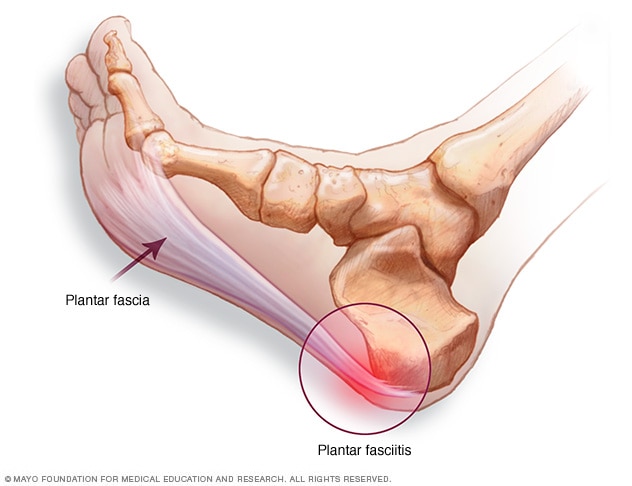
Plantar fasciitis
Plantar fasciitis involves inflammation of the fibrous tissue, called the plantar fascia, along the bottom of your foot that connects your heel bone to your toes. Plantar fasciitis can cause intense heel pain.
Symptoms
Plantar fasciitis typically causes a sharp, stabbing pain in the bottom of your foot near the heel. The pain often is the worst with your first few steps in the morning, although it also can be triggered by long periods of standing or when you get up from sitting.
Causes
The plantar fascia is a thick band of tissue that connects your heel bone to the base of your toes. It helps support the arch of the foot and absorbs shock when you walk.
Too much tension or stress on the fascia can cause tiny tears in the tissue. Repeated stretching and tearing may lead to irritation or inflammation.
Risk factors
Plantar fasciitis can sometimes happen for no clear reason, but certain factors can increase the likelihood of developing this condition.
- Age. It's most common between the ages of 40 and 60.
- Exercise. Activities that put stress on the heels and arches, such as running, ballet and high-intensity workouts such as CrossFit or boot camps can increase your risk. So can basketball, tennis, golf or other sports that involve jumping or quick movements.
- Foot shape. Having flat feet, high arches or an unusual walking pattern can change how weight is distributed and put extra strain on the plantar fascia.
- Shoes. Old or worn-out shoes lose support and stability, which can increase the risk of plantar fasciitis. It's also important to wear the right shoes for your activity. For example, don't wear running shoes for court sports such as basketball or tennis.
- Weight. Being overweight adds extra pressure on the heel and foot.
- Jobs that require standing or prolonged sitting. Teachers, factory workers, healthcare workers and others who spend long hours standing or walking on hard surfaces are at higher risk. And sitting at a desk for long periods of time increases the risk of plantar fasciitis.
From Mayo Clinic to your inbox
Sign up for free and stay up to date on research advancements, health tips, current health topics, and expertise on managing health. Click here for an email preview.
Complications
If left untreated, plantar fasciitis can lead to chronic heel pain that makes daily activities difficult. You may change the way you walk to avoid pain, which can cause problems in your feet, knees, hips, or back.

CON-20209457
Mayo Clinic does not endorse companies or products. Advertising revenue supports our not-for-profit mission.
Advertising & Sponsorship
Mayo Clinic Press
Check out these best-sellers and special offers on books and newsletters from Mayo Clinic Press.
