
Overview
Dry mouth, also called xerostomia (zeer-o-STOE-me-uh), is when the salivary glands in the mouth don't make enough saliva to keep the mouth wet. Dry mouth often is due to aging, the side effects of certain medicines or radiation therapy for cancer. Less often, a condition directly affecting the salivary glands can cause dry mouth. You also may experience dry mouth temporarily if you are thirsty or feel anxious about something.
For some people, dry mouth is only annoying. For others, dry mouth can greatly affect general health and the health of teeth and gums. Also, it can affect how much people eat and how much they enjoy what they eat.
Treatment for dry mouth depends on the cause.
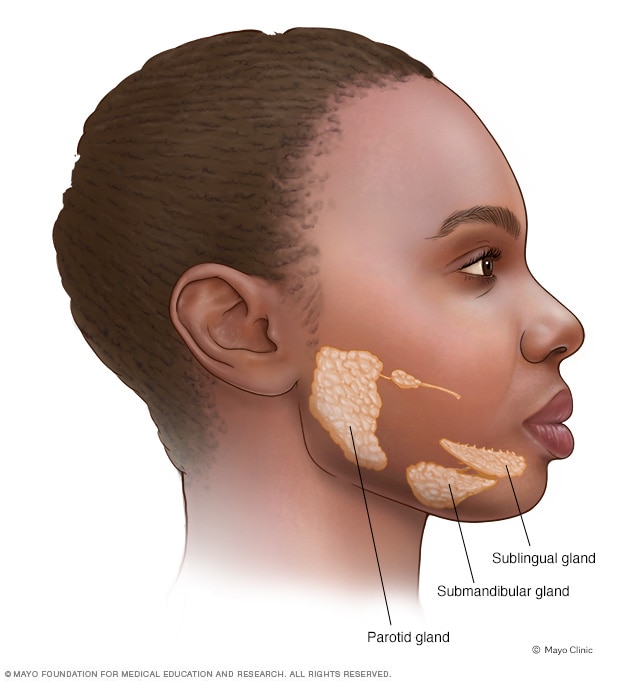
Salivary glands
There are three pairs of major salivary glands. These glands are the parotid, sublingual and submandibular glands. Each gland has its own tube, called a duct, leading from the gland to the mouth.
Symptoms
If you're not producing enough saliva, you may notice these symptoms all or most of the time:
- Dryness or a feeling of stickiness in your mouth.
- Saliva that seems thick and stringy.
- Bad breath.
- Having a hard time chewing, speaking and swallowing.
- Dry or sore throat and hoarseness.
- Dry or grooved tongue.
- A changed sense of taste.
- Problems wearing dentures.
- Lipstick stuck to teeth.
Saliva helps prevent tooth decay by washing away sugar and food particles and making bacteria neutral and less harmful. When you don't have enough saliva, you may find it harder to taste, chew and swallow. You also may have a hard time digesting food.
When to see a doctor
If you have dry mouth symptoms that don't go away, make an appointment with your healthcare professional.
Causes
Dry mouth is caused when the salivary glands in the mouth don't make enough saliva to keep the mouth wet. Sometimes these glands may not work properly due to:
- Medicines. Hundreds of medicines, including many medicines available without a prescription, can cause dry mouth. Among the medicines more likely to cause problems are those for depression, high blood pressure and anxiety, as well as some antihistamines, decongestants, muscle relaxants and pain relievers.
- Aging. Many older people have symptoms of dry mouth as they age. Certain changes in how the body processes medicine, poor nutrition and long-term health problems can cause dry mouth.
- Cancer therapy. Medicine to treat cancer, called chemotherapy, can change the nature of saliva and the amount produced. This may be for a limited time, with typical salivary flow returning after treatment ends. Radiation treatments to the head and neck can damage salivary glands, greatly lowering saliva production. This may be for a limited time, or it could be lasting, depending on the radiation dose and area treated.
- Nerve damage. An injury or surgery that causes nerve damage to the head and neck area can be due to dry mouth.
- Other health conditions. Dry mouth can be due to certain health conditions, such as diabetes, stroke, a yeast infection in the mouth or Alzheimer's disease. Or dry mouth could be due to autoimmune diseases, such as Sjogren syndrome or HIV/AIDS.
- Snoring and mouth breathing. Snoring and breathing with the mouth open can lead to dry mouth.
- Tobacco and alcohol use. Drinking alcohol and smoking or chewing tobacco can lead to more dry mouth symptoms.
- Use of legal or illegal drugs that may be sold on the streets. Methamphetamine use can cause serious dry mouth, and it can damage teeth. Marijuana use also can cause dry mouth.
Risk factors
Risk of dry mouth is higher in people who:
- Take medicines that have dry mouth listed as a possible side effect.
- Are being treated for cancer.
- Have nerve damage in the head and neck area.
- Have other health conditions, such as diabetes, stroke, Alzheimer's disease, Sjogren syndrome or HIV/AIDS.
- Use tobacco products.
- Drink alcohol.
- Use street drugs.
- Eat sugary or acidic foods or candies.
Complications
Not having enough saliva and getting dry mouth can lead to:
- Increased plaque, tooth decay and gum disease.
- Mouth sores.
- A yeast infection in the mouth, also known as thrush.
- Sores or split skin at the corners of the mouth, or cracked lips.
- Poor nutrition from having problems with chewing and swallowing.