Diabetes insipidus Symptoms and causes
Overview
Diabetes insipidus (die-uh-BEE-teze in-SIP-uh-dus) is a condition that causes the fluids in the body to get out of balance. Then the body makes and passes large amounts of urine. The condition also causes great thirst even after drinking something.
Depending on the cause, diabetes insipidus also is called arginine vasopressin (AVP) deficiency or resistance.
Diabetes insipidus is not linked to diabetes mellitus, also called type 1 and type 2 diabetes. Diabetes mellitus involves high blood sugar levels, which may cause the body to make too much urine. Diabetes insipidus is not common. Diabetes mellitus is common and often simply called diabetes.
There's no cure for diabetes insipidus. But treatment can ease its symptoms. Easing symptoms includes relieving thirst, lessening the amount of urine the body makes and preventing loss of too much body fluid, called dehydration.
Symptoms
Symptoms of diabetes insipidus, also called arginine vasopressin (AVP) deficiency or resistance, in adults include:
- Being very thirsty and drinking a lot of fluids.
- Making large amounts of pale urine.
- Getting up often to urinate and drink water during the night.
Most adults urinate an average of 1 to 3 quarts (about 1 to 3 liters) a day. People who have diabetes insipidus and who drink a lot of fluids may make as much as 20 quarts (about 19 liters) of urine a day.
A baby or young child who has diabetes insipidus may have these symptoms:
- Large amounts of pale urine that cause heavy, wet diapers and bed-wetting.
- Being very thirsty.
- Slow growth and poor weight gain.
- Vomiting.
- Being cranky.
- Fever.
- Having trouble passing stool, called constipation.
- Headache.
- Vision issues.
When to see a doctor
See your healthcare professional right away if you or your child urinates often and is very thirsty.
Causes
In diabetes insipidus, the body can't balance fluid levels. The cause depends on the type of diabetes insipidus, also called arginine vasopressin (AVP) deficiency or resistance.
How the kidneys work
The kidneys filter fluid in the blood to remove waste. The kidneys return most of that fluid to the bloodstream. The waste and a small amount of fluid leave the kidneys as urine. Urine leaves the body after it's briefly stored in the bladder.
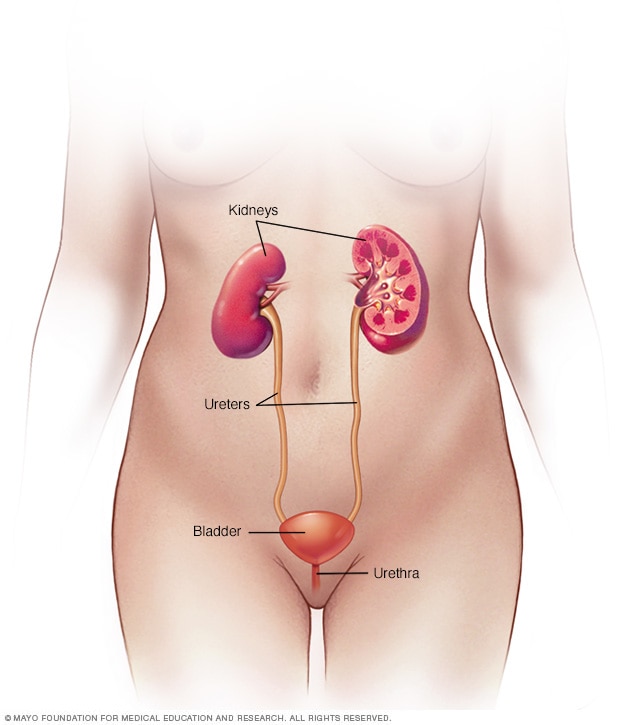
Female urinary system
The urinary system includes the kidneys, ureters, bladder and urethra. The urinary system removes waste from the body through urine. The kidneys sit toward the back of the upper belly. They filter waste and fluid from the blood and make urine. Urine moves from the kidneys to the bladder through narrow tubes called the ureters. The bladder stores urine until it's time to urinate. Urine leaves the body through a small tube called the urethra.
The kidneys need a hormone called antidiuretic hormone (ADH) to put the filtered fluid back into the bloodstream. The hormone also is called arginine vasopressin (AVP).
ADH comes from a part of the brain called the hypothalamus. The pituitary gland, a small gland at the base of the brain, stores the ADH and lets it out when needed. ADH travels to the kidneys to help the kidneys keep more fluid in the blood and put less fluid in the urine.
Conditions that cause the brain to make too little ADH or that block the effect of ADH cause the body to make too much urine. Kidney conditions that change how the kidney responds to ADH also can cause too much urine.
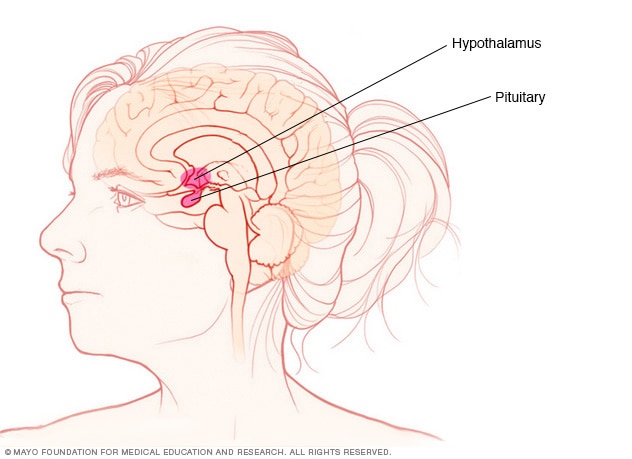
Pituitary gland and hypothalamus
The pituitary gland and the hypothalamus are in the brain. They make hormones that manage many needed works of the body.
Types of diabetes insipidus
Types of diabetes insipidus include:
-
Central diabetes insipidus. Damage to the pituitary gland or hypothalamus from surgery, a tumor, a head injury or an illness can cause central diabetes insipidus. That damage affects the making, storage and release of ADH. Central diabetes insipidus also is called arginine vasopressin (AVP) deficiency.
A condition passed down in families, called inherited, may cause central diabetes insipidus too. So can an autoimmune reaction that causes the body's immune system to damage by mistake the cells that make ADH.
- Nephrogenic diabetes insipidus. Also called arginine vasopressin (AVP) resistance, this happens when the kidneys can't respond to ADH. That issue may be due to a condition passed down in families, called inherited. Certain medicines, including lithium and antiviral medicines such as foscarnet (Foscavir), also can cause the condition. Low levels of potassium in the blood, called hypokalemia, also cause it. It can also be caused by high levels of calcium in the blood, called hypercalcemia. It can also be due to a blocked urinary tract or a urinary tract infection.
- Gestational diabetes insipidus. This rare form of diabetes insipidus happens only during pregnancy. It happens when the placenta makes an enzyme that destroys ADH. The placenta is the organ that grows during pregnancy to give oxygen and nutrients to an unborn baby, also called a fetus.
Sometimes, healthcare professionals can't find a clear cause of diabetes insipidus. Repeated testing over time may help find a cause.
Risk factors
Anyone can get diabetes insipidus, also called arginine vasopressin (AVP) deficiency or resistance. But those at higher risk include people who:
- Have a family history of the condition.
- Take certain medicines that could lead to kidney issues. Examples include water pills, also called diuretics.
- Have high levels of calcium or low levels of potassium in their blood.
- Have had a serious head injury, brain surgery or a brain tumor.
From Mayo Clinic to your inbox
Sign up for free and stay up to date on research advancements, health tips, current health topics, and expertise on managing health. Click here for an email preview.
Complications
Dehydration
Diabetes insipidus, also called arginine vasopressin (AVP) deficiency or resistance, may lead to dehydration. That happens when the body loses too much fluid. Dehydration can cause:
- Dry mouth.
- Thirst.
- Extreme tiredness.
- Dizziness.
- Lightheadedness.
- Fainting.
- Upset stomach.
Electrolyte imbalance
Diabetes insipidus can change the levels of minerals in the blood that keep the body's fluids balanced. Those minerals, called electrolytes, include sodium and potassium. Symptoms of an electrolyte imbalance may include:
- Weakness.
- Upset stomach.
- Vomiting.
- Loss of appetite.
- Not thinking clearly.
CON-20155795
Mayo Clinic does not endorse companies or products. Advertising revenue supports our not-for-profit mission.
Advertising & Sponsorship
Mayo Clinic Press
Check out these best-sellers and special offers on books and newsletters from Mayo Clinic Press.
