Corns and calluses Symptoms and causes
Overview
Corns and calluses are thick, hardened layers of skin that develop when the skin tries to protect itself against friction or pressure. They often form on feet and toes or hands and fingers.
If you're healthy, you don't need treatment for corns and calluses unless they cause pain or you don't like how they look. For most people, simply removing the source of the friction or pressure makes corns and calluses disappear.
Symptoms
Signs and symptoms of corns and calluses include:
- A thick, rough area of skin
- A hardened, raised bump
- Tenderness or pain under the skin
- Flaky, dry or waxy skin
Corns and calluses are not the same thing.
- Corns are smaller and deeper than calluses and have a hard center surrounded by swollen skin. They can be painful when pressed. Hard corns often form on the top of the toes or the outer edge of the small toe. Soft corns tend to form between the toes.
- Calluses are rarely painful and tend to develop on pressure spots, such as the heels, the balls of the feet, the palms and the knees. They may vary in size and shape and are often larger than corns.
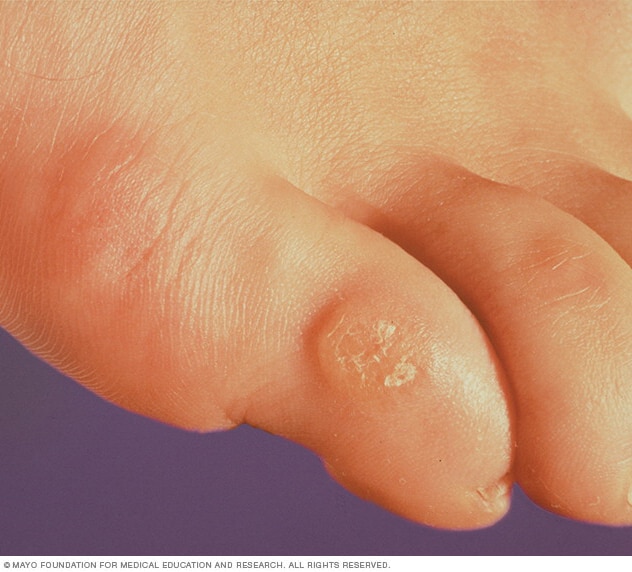
Corn
Corns have a hard center and tend to develop on the tops and sides of your toes. They can be painful.
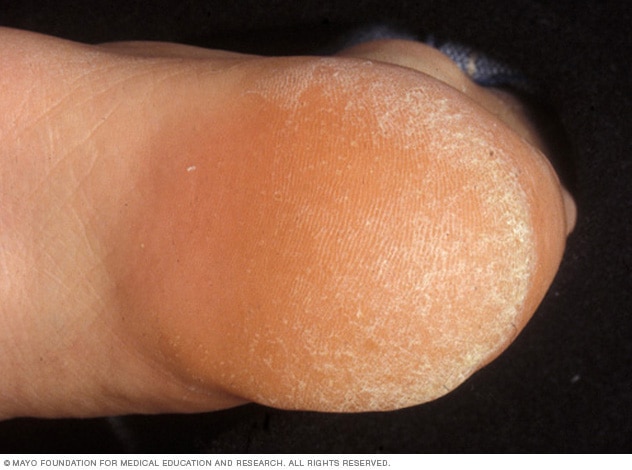
Callus
Calluses usually develop on the soles of the feet and palms of the hands. They can vary in size and shape and are rarely painful.
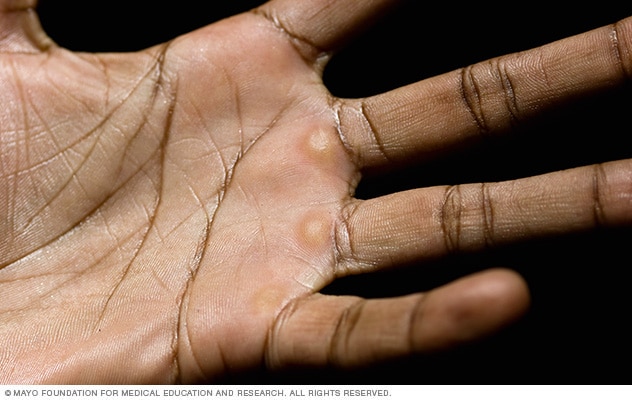
Calluses
Calluses often develop on the palms of the hands. They can vary in size and shape and are rarely painful. Playing instruments or using hand tools can cause calluses on the hands.
When to see a doctor
If a corn or callus becomes very painful or inflamed, see your health care provider. If you have diabetes or poor blood flow, seek medical care before self-treating a corn or callus. This is important because even a minor injury to your foot can lead to an infected open sore (ulcer).
Causes
Corns and calluses are caused by friction and pressure from repeated actions. Some sources of this friction and pressure include:
- Wearing ill-fitting shoes and socks. Tight shoes and high heels can squeeze areas of the feet. If your shoes are loose, your foot may repeatedly slide and rub against the shoe. Your foot may also rub against a seam or stitch inside the shoe. Socks that don't fit right can also be a problem.
- Skipping socks. Wearing shoes and sandals without socks can cause friction on your feet.
- Playing instruments or using hand tools. Calluses on the hands may result from the repeated pressure of activities such as playing instruments and using hand tools or even a pen.
- Inheriting a tendency to develop corns. The type of corn that forms on non-weight-bearing areas, such as the soles and palms (keratosis punctata), might be caused by genetics.
Risk factors
Risk factors for corns and calluses include:
- Wearing shoes that increase the pressure or friction on your feet.
- Having a condition that increases the pressure or friction on your feet. Examples are hammertoe and hallux valgus, which causes a bunion-like bulge at the base of the big toe.
- Inheriting a tendency to develop corns. The type of corn that forms on non-weight-bearing areas, such as the soles and palms (keratosis punctata), might be caused by genetics.
From Mayo Clinic to your inbox
Sign up for free and stay up to date on research advancements, health tips, current health topics, and expertise on managing health. Click here for an email preview.
Complications
If you have diabetes or another condition that causes poor blood flow to your feet, you're at greater risk of complications from corns and calluses.
Prevention
These approaches may help you prevent corns and calluses:
- Wear shoes that give your toes plenty of room. If you can't wiggle your toes, your shoes are too tight. Have a shoe shop stretch your shoes at any point that rubs or pinches. Shop for shoes when your feet are most swollen, usually at the end of the day. If you use orthotics and inserts, be sure to have them on while fitting your shoes at the store.
- Use protective coverings. Wear felt pads, nonmedicated corn pads or bandages over areas that rub against your footwear. You can also try toe separators or some lamb's wool between your toes.
- Wear padded gloves when using hand tools. Or try padding your tool handles with cloth tape or covers.
CON-20257416
Mayo Clinic does not endorse companies or products. Advertising revenue supports our not-for-profit mission.
Advertising & Sponsorship
Mayo Clinic Press
Check out these best-sellers and special offers on books and newsletters from Mayo Clinic Press.
