Chronic sinusitis Diagnosis and treatment
Diagnosis
A health care provider might ask about symptoms and do an exam. The exam might include feeling for tenderness in the nose and face and looking inside the nose.
Other ways to diagnose chronic sinusitis and rule out other conditions include:
- Nasal endoscopy. A health care provider inserts a thin, flexible tube, known as an endoscope, into the nose. A light on the tube allows a care provider to see inside the sinuses.
- Imaging tests. CT or MRI scans can show details of the sinuses and nasal area. These images might pinpoint the cause of chronic sinusitis.
- Nasal and sinus samples. Lab tests aren't often used to diagnose chronic sinusitis. But, if the condition doesn't get better with treatment or gets worse, tissue samples from the nose or sinuses might help find the cause.
- An allergy test. If allergies might be causing chronic sinusitis, an allergy skin test might show the cause.
Treatment
Treatments for chronic sinusitis include:
- Nasal corticosteroids. These nasal sprays help prevent and treat swelling. Some are available without a prescription. Examples include fluticasone (Flonase Allergy Relief, Xhance), budesonide (Rhinocort Allergy), mometasone (Nasonex 24HR Allergy) and beclomethasone (Beconase AQ, Qnasl, others).
- Saline nasal rinses. Use a specially designed squeeze bottle (NeilMed Sinus Rinse, others) or neti pot. This home remedy, called nasal lavage, can help clear sinuses. Saline nasal sprays also are available.
- Corticosteroids shots or pills. These medicines ease severe sinusitis, especially for those who have nasal polyps. The shots and pills can cause serious side effects when used long term. So they're used only to treat severe symptoms.
- Allergy medicines. Using allergy medicines might lessen allergy symptoms of sinusitis caused by allergies.
- Aspirin desensitization treatment. This is for people who react to aspirin and the reaction causes sinusitis and nasal polyps. Under medical supervision, people receive larger and larger doses of aspirin to increase their ability to take it.
- Medicine to treat nasal polyps and chronic sinusitis. If you have nasal polyps and chronic sinusitis, a shot of dupilumab (Dupixent), omalizumab (Xolair) or mepolizumab (Nucala) might reduce the size of the nasal polyps and lessen stuffiness.
Antibiotics
Antibiotics are sometimes needed to treat sinusitis caused by bacteria. A possible bacterial infection might need to be treated with an antibiotic and sometimes with other medicines.
Immunotherapy
For sinusitis caused or made worse by allergies, allergy shots might help. This is known as immunotherapy.
Surgery
For chronic sinusitis that doesn't clear up with treatment, endoscopic sinus surgery might be an option. In this procedure, a health care provider uses a thin, flexible tube with an attached light, called an endoscope, and tiny cutting tools to remove the tissue that's causing the problem.
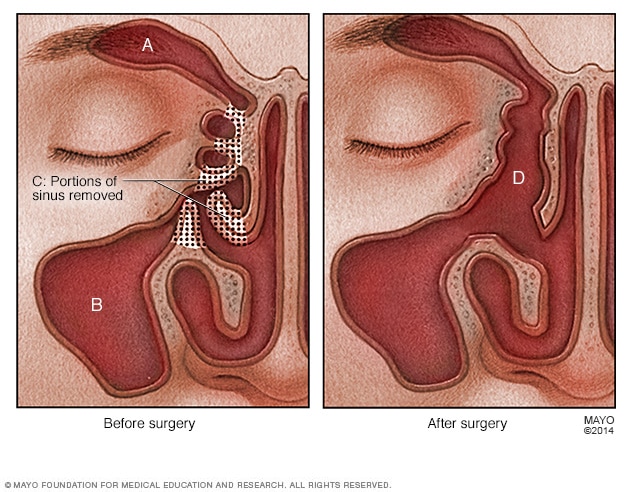
Endoscopic sinus surgery
The left picture shows the frontal (A) and maxillary (B) sinuses. It also shows the channel between the sinuses, also known as the ostiomeatal complex (C). The right picture shows the results of endoscopic sinus surgery. A surgeon uses a lighted tube and tiny cutting tools to open the blocked passage and let the sinuses drain. (D).
Clinical trials
Explore Mayo Clinic studies testing new treatments, interventions and tests as a means to prevent, detect, treat or manage this condition.
Self-care
These self-help steps can help ease sinusitis symptoms:
- Rest. Rest helps the body fight infection and speed recovery.
- Drink fluids. Keep drinking plenty of fluids.
- Use a warm compress. A warm compress on the nose and forehead might help ease pressure in the sinuses.
- Keep sinuses moist. Put a towel over your head while breathing in the vapor from a bowl of hot water. Or take a hot shower, breathing in the warm, moist air. This will help ease pain and help mucus drain.

Neti pot
A neti pot is a container designed to rinse the nasal cavity.
From Mayo Clinic to your inbox
Sign up for free and stay up to date on research advancements, health tips, current health topics, and expertise on managing health. Click here for an email preview.
Preparing for your appointment
You'll likely see your primary care provider for symptoms of sinusitis. If you've had many bouts of acute sinusitis or you have symptoms of chronic sinusitis, your provider might refer you to an allergist or an ear, nose and throat specialist.
Here's information to help you get ready for your appointment.
What you can do
Make a list of:
- Your symptoms, including any that seem unrelated to the reason for your appointment, and when they began.
- Key personal information, including whether you have allergies or asthma, and family medical history.
- All medicines, vitamins or other supplements you take, including doses.
- Questions to ask your health care provider.
For chronic sinusitis, questions to ask your provider include:
- What's the most likely cause of my symptoms?
- What tests do I need?
- Is my condition likely to go away or be long lasting?
- What treatments do you suggest for me?
- I have these other health conditions. How can I best manage these conditions together?
- Should I see a specialist?
- Are there brochures or other printed material I can have? What websites do you suggest?
Be sure to ask all the questions you have.
What to expect from your doctor
Your care provider is likely to ask you questions, such as:
- Do you have symptoms all the time or sometimes?
- How bad are your symptoms?
- What, if anything, seems to make your symptoms better?
- What, if anything, appears to make your symptoms worse?
- Do you smoke or are you around smoke or other pollutants?
CON-20164005
Mayo Clinic does not endorse companies or products. Advertising revenue supports our not-for-profit mission.
Advertising & Sponsorship
Mayo Clinic Press
Check out these best-sellers and special offers on books and newsletters from Mayo Clinic Press.
