Cervicitis Symptoms and causes
Overview
Cervicitis is irritation and swelling, called inflammation, of the cervix. The cervix is the lower, narrow end of the uterus that opens into the vagina.
Symptoms of cervicitis may include bleeding between menstrual periods, pain during sex or during a pelvic exam, and atypical vaginal discharge. But some people have no symptoms with cervicitis.
Sometimes, a sexually transmitted infection (STI) such as chlamydia or gonorrhea causes cervicitis. Cervicitis caused by an STI needs treatment. Other causes of cervicitis may not need treatment.
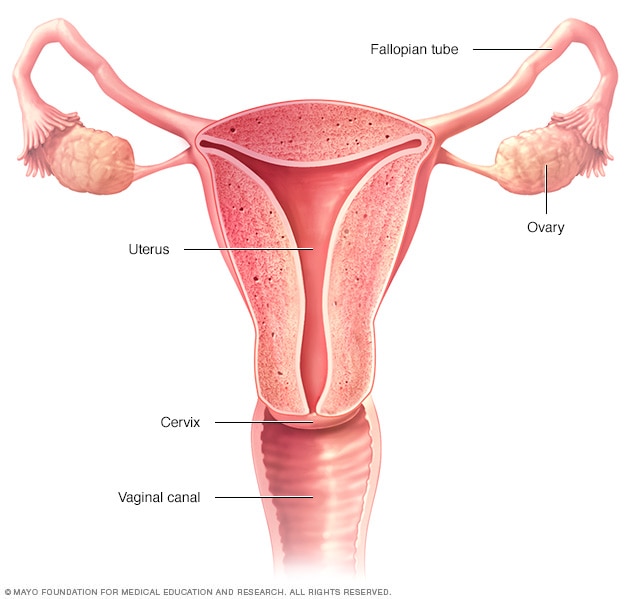
Female reproductive system
The ovaries, fallopian tubes, uterus, cervix and vagina, also called the vaginal canal, make up the female reproductive system.
Symptoms
Most often, cervicitis causes no symptoms. You may learn you have the condition after you have a pelvic exam for another reason. If you do have symptoms, they may include:
- Fluid from the vagina that's not typical, called discharge. Not all vaginal discharge means you have a condition. Some vaginal discharge is expected.
- Urinating often and with pain.
- Pain during sex.
- Bleeding between menstrual periods.
- Bleeding from the vagina after sex, not linked to aa menstrual period.
When to see a doctor
See your healthcare professional if you have:
- Fluid from the vagina that isn't typical.
- Bleeding from the vagina that isn't a period.
- Pain during sex.
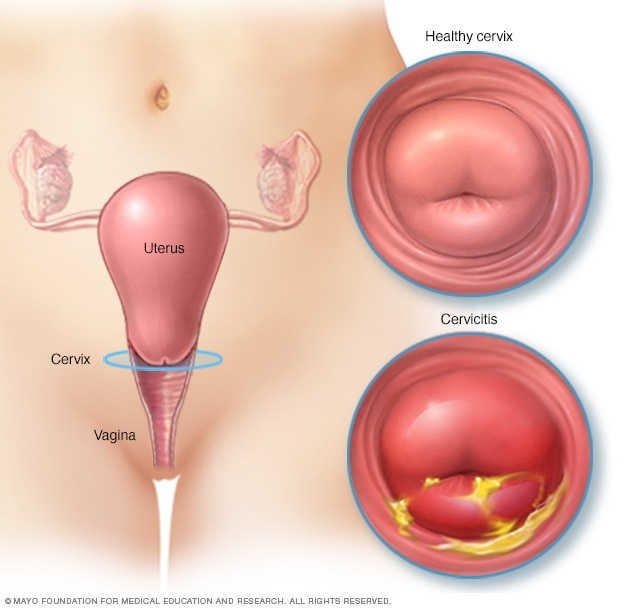
Cervicitis
With cervicitis, the cervix looks red and irritated. It may have a discharge that looks like pus.
Causes
Possible causes of cervicitis include
- Sexually transmitted infections (STIs). Sexual contact spreads infections that can cause cervicitis. Common STIs that cause cervicitis include gonorrhea, chlamydia, trichomoniasis and genital herpes.
- Reactions and allergies. A reaction to chemicals, such as those in some birth control methods, or an allergy to latex in condoms may lead to cervicitis. A reaction to feminine hygiene products, such as douches or feminine deodorants, also can cause cervicitis.
- Bacterial overgrowth. An overgrowth of some of the bacteria that are already in the vagina can lead to cervicitis. This overgrowth is called bacterial vaginosis.
Risk factors
You're at greater risk of cervicitis if you:
- Have high-risk sex. This may include having sex without protection, having sex with a partner who's at high risk or having more than one partner.
- Began having sex at an early age.
- Have a history of STIs.
Women’s health topics – straight to your inbox
Complications
Complications of cervicitis may include the infection spreading into the uterus.
If gonorrhea or chlamydia cause cervicitis, the infection may spread to the uterine lining and the fallopian tubes. This is called pelvic inflammatory disease (PID). If not treated, PID can cause problems having a baby.
Cervicitis also can raise the risk of getting HIV from a sex partner who has HIV.
Prevention
To reduce your risk of cervicitis from sexually transmitted infections, use condoms every time you have sex. Condoms help prevent the spread of STIs, such as gonorrhea and chlamydia, which can lead to cervicitis. Being in a long-term relationship in which both you and your partner don't have sex with anyone else can lower your risk of an STI.
CON-20370797
Mayo Clinic does not endorse companies or products. Advertising revenue supports our not-for-profit mission.
Advertising & Sponsorship
Mayo Clinic Press
Check out these best-sellers and special offers on books and newsletters from Mayo Clinic Press.
