Blood in urine (hematuria) Diagnosis and treatment
Diagnosis
These tests and exams play a key role in finding a cause for blood in the urine:
- Physical exam. This includes a talk with a healthcare professional about your health history.
- Urine tests. These can be used to diagnose blood in the urine. They also can be used weeks or months later to see if the urine still has blood in it. Urine tests also can check for a urinary tract infection or for minerals that cause kidney stones.
- Imaging tests. An imaging test is often needed to find the cause of blood in the urine. You might need a CT or MRI scan, or an ultrasound exam.
- Cystoscopy. A healthcare professional threads a narrow tube fitted with a tiny camera into your bladder to check for signs of disease.
Sometimes the cause of blood in the urine can't be found. In that case, you might need regular follow-up tests, mainly if you have risk factors for bladder cancer. These risk factors include smoking, radiation therapy to the pelvis or exposure to certain chemicals.
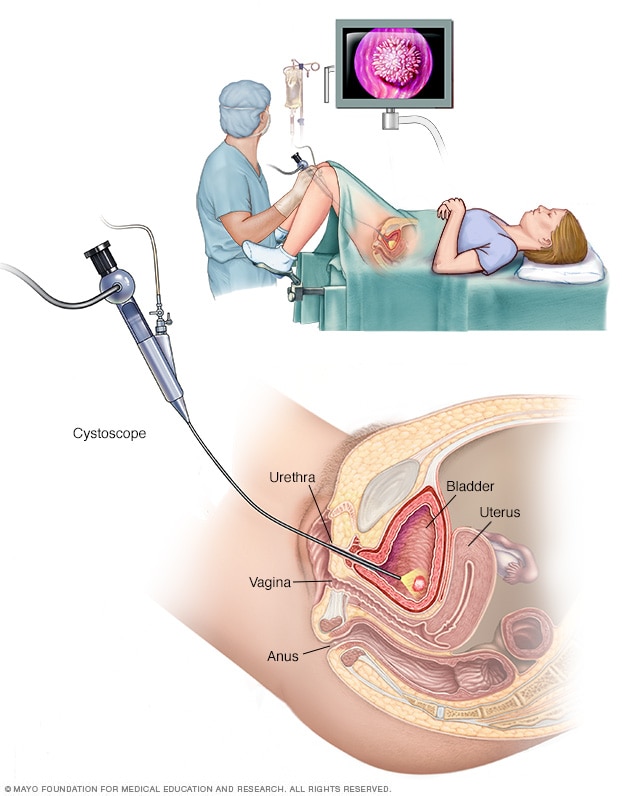
Female cystoscopy
Cystoscopy allows a healthcare professional to view the lower urinary tract to look for problems, such as a bladder stone. Surgical tools can be passed through the cystoscope to treat certain urinary tract conditions.
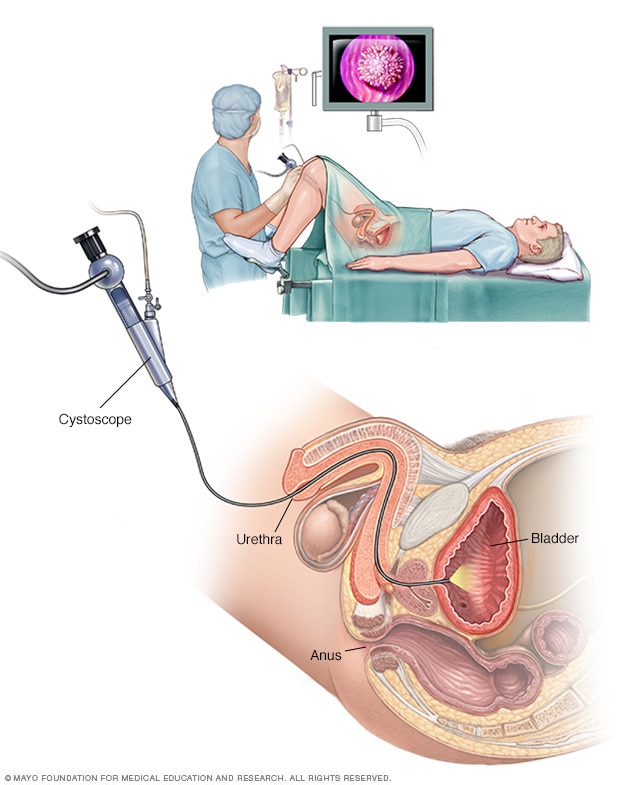
Male cystoscopy
Cystoscopy allows a healthcare professional to view the lower urinary tract to look for problems in the urethra and bladder. Surgical tools can be passed through the cystoscope to treat certain urinary tract conditions.
Treatment
The treatment for blood in the urine depends on the cause. Treatment might involve:
- Taking antibiotic medicines to clear a urinary tract infection.
- Trying a prescription medicine to shrink an enlarged prostate.
- Having a treatment that uses sound waves to break up bladder or kidney stones.
In some cases, no treatment is needed.
If you get treatment, see your healthcare professional afterward to make sure there's no more blood in your urine.
From Mayo Clinic to your inbox
Sign up for free and stay up to date on research advancements, health tips, current health topics, and expertise on managing health. Click here for an email preview.
Preparing for your appointment
You can start by making an appointment with your regular healthcare professional. Or you might be referred to a professional who specializes in urinary tract disorders, called a urologist.
Here's some information to help you prepare for your appointment.
What you can do
Make a list of:
- Your symptoms. Include any symptoms, even ones that may not seem to be related to the reason for your checkup. Note when your symptoms began too.
- Key medical information. This includes other conditions for which you're being treated. Note whether bladder or kidney diseases run in your family too.
- All medicines, vitamins or other supplements you take. Include the doses for each. The dose is how much you take.
- Questions to ask your healthcare professional.
Some questions to ask about blood in the urine include:
- What might be causing my symptoms?
- What tests do I need?
- How long might this condition last?
- What are my treatment choices?
- I have other health issues. How can I best manage them together?
- Are there brochures or other printed material that I can have? What websites do you suggest?
Ask any other questions too.
What to expect from your doctor
Your healthcare professional is likely to ask you questions, such as:
- Do you have pain when you pee?
- Do you see blood in your urine only sometimes or all the time?
- When do you see blood in your urine — when you start peeing, toward the end of your urine stream or the entire time you're peeing?
- Are you also passing blood clots when you pee? What size and shape are they?
- Do you smoke?
- Are you exposed to chemicals on the job? What kinds?
- Have you had radiation therapy?
CON-20314574
Mayo Clinic does not endorse companies or products. Advertising revenue supports our not-for-profit mission.
Advertising & Sponsorship
Mayo Clinic Press
Check out these best-sellers and special offers on books and newsletters from Mayo Clinic Press.
