Atrial flutter Symptoms and causes
Overview
Atrial flutter is a type of heart rhythm disorder, called an arrhythmia. It is similar to atrial fibrillation (AFib). But in atrial flutter the heart rhythm is more organized and less chaotic than in AFib. A person can have both atrial flutter and AFib.
Atrial flutter may not cause symptoms. But some people may have a pounding, fast heartbeat and chest pain. Fainting or almost fainting also may happen. Treatment for atrial flutter may include medicines and a heart procedure.
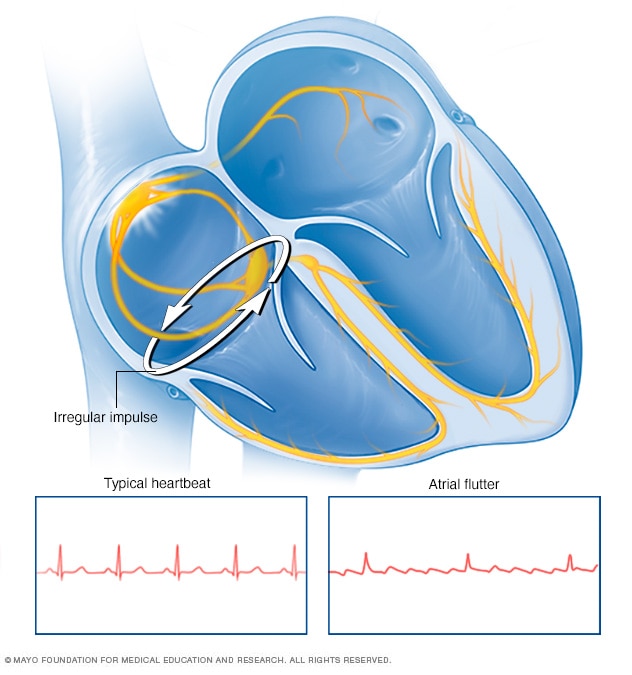
Atrial flutter
Atrial flutter is a type of heart rhythm disorder. The heart's upper chambers, called the atria, beat too quickly.
Symptoms
People with atrial flutter may not have symptoms. The irregular heartbeat may be found during a health checkup for another reason.
If atrial flutter symptoms happen, they may include:
- A pounding or racing feeling in the chest.
- Chest pain.
- Fainting or almost fainting.
- Shortness of breath.
- Feeling very tired.
When to see a doctor
If you feel like your heart is pounding, fluttering, skipping a beat or beating too fast, make an appointment for a health checkup. You may be told to see a doctor trained in heart diseases, called a cardiologist.
Get emergency medical care if you have these symptoms:
- Chest pain.
- Shortness of breath.
- Fainting.
Always call 911 or your local emergency number if you think you might be having a heart attack.
Causes
Changes in the heart's electrical system cause atrial flutter. The heart's electrical system controls the heartbeat. Some health conditions or heart surgery can change how electrical signals move through the heart and cause atrial flutter.
The movement of the heart's signals make the heart squeeze and pump blood. Usually, this process goes smoothly. The typical resting heart rate is about 60 to 100 beats a minute. But in atrial flutter, the heart's upper chambers beat too quickly. This causes the heart to beat in a fast, but usually organized, way.
Risk factors
Some health conditions raise the risk of atrial flutter. They include:
- Heart failure.
- Chronic obstructive pulmonary disease, also called COPD.
- Blood clot in the lungs, called a pulmonary embolism.
- Heart condition present at birth, called a congenital heart defect.
Other risk factors for atrial flutter are:
- Getting older.
- Recent heart surgery.
Complications
A complication of atrial flutter is atrial fibrillation (AFib). AFib increases the risk of blood clots and strokes.
Other complications of atrial flutter are:
- Heart failure.
- Stroke.
- Heart attack.
Prevention
Lifestyle changes help keep the heart healthy. Try these tips:
- Don't smoke or use tobacco.
- Eat healthy foods such as fruits, vegetables and whole grains. Eat less salt and saturated and trans fats.
- Stay active and exercise at least 30 minutes a day on most days of the week.
- Keep a healthy weight.
- Lower and manage stress.
- Control high blood pressure, high cholesterol and diabetes.
- Get good sleep. Adults should try to get 7 to 9 hours daily.
Your healthcare professional also may tell you to limit or not drink alcohol. Too much alcohol can cause some types of irregular heartbeats. Ask your healthcare team how much alcohol, if any, is OK for you.

Top ranked in the U.S.
Mayo Clinic in Rochester, Minnesota, has been recognized as one of the top Cardiology & Heart Surgery hospitals in the nation by U.S. News & World Report.
CON-20303975
Mayo Clinic does not endorse companies or products. Advertising revenue supports our not-for-profit mission.
Advertising & Sponsorship
Mayo Clinic Press
Check out these best-sellers and special offers on books and newsletters from Mayo Clinic Press.
