
Overview
Seborrheic (seb-o-REE-ik) dermatitis is a common skin condition that mainly affects your scalp. It causes scaly patches, inflamed skin and stubborn dandruff. It usually affects oily areas of the body, such as the face, sides of the nose, eyebrows, ears, eyelids and chest. This condition can be irritating but it's not contagious, and it doesn't cause permanent hair loss.
Seborrheic dermatitis may go away without treatment. Or you may need to use medicated shampoo or other products long term to clear up symptoms and prevent flare-ups.
Seborrheic dermatitis is also called dandruff, seborrheic eczema and seborrheic psoriasis. When it occurs in infants, it's called cradle cap.
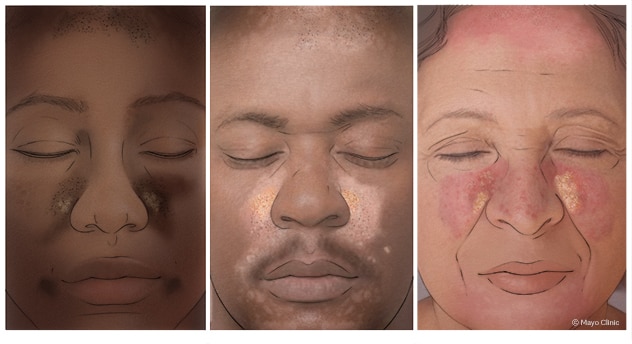
Seborrheic dermatitis on the face
Seborrheic dermatitis causes a rash of oily patches with yellow or white scales. The rash may look darker or lighter in people with brown or Black skin and redder in those with white skin.
Symptoms
Seborrheic dermatitis signs and symptoms may include:
- Flaking skin (dandruff) on your scalp, hair, eyebrows, beard or mustache
- Patches of greasy skin covered with flaky white or yellow scales or crust on the scalp, face, sides of the nose, eyebrows, ears, eyelids, chest, armpits, groin area or under the breasts
- Rash that may look darker or lighter in people with brown or Black skin and redder in those with white skin
- Ring-shaped (annular) rash, for a type called petaloid seborrheic dermatitis
- Itchiness (pruritus)
The signs and symptoms of seborrheic dermatitis tend to flare with stress, fatigue or a change of season.
When to see a doctor
See your health care provider if:
- You're so uncomfortable that you're losing sleep or are distracted from your daily routines.
- Your condition makes you feel embarrassed or anxious.
- You think your skin is infected.
- You've tried self-care steps, but your symptoms persist.
Causes
The exact cause of seborrheic dermatitis isn't clear. It may be due to the yeast Malassezia, excess oil in the skin or a problem in the immune system.
Risk factors
Risk factors for seborrheic dermatitis include:
- Stress
- Fatigue
- A change of season
- Nervous system conditions, such as Parkinson's disease
- Having a mental health condition, such as depression
- Immune system disorders, such as HIV infection
- Recovery from stressful medical conditions, such as a heart attack