
Overview
A hiatal hernia happens when the upper part of the stomach bulges through the large muscle that separates the abdomen and the chest. The muscle is called the diaphragm.
The diaphragm has a small opening called a hiatus. The tube used for swallowing food, called the esophagus, passes through the hiatus before connecting to the stomach. In a hiatal hernia, the stomach pushes up through that opening and into the chest.
A small hiatal hernia usually doesn't cause problems. You may never know you have one unless your healthcare team discovers it when checking for another condition.
But a large hiatal hernia can allow food and acid to back up into your esophagus. This can cause heartburn. Self-care measures or medicines can usually relieve these symptoms. A very large hiatal hernia might need surgery.
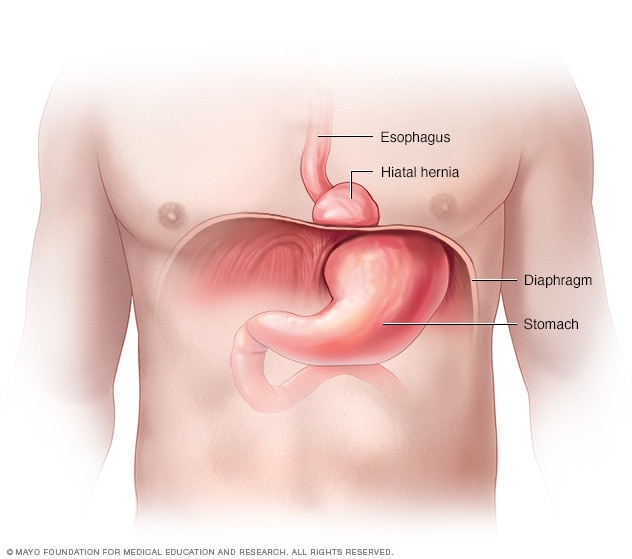
Hiatal hernia
A hiatal hernia occurs when the upper part of the stomach bulges through the diaphragm into the chest cavity.
Symptoms
Most small hiatal hernias cause no symptoms. But larger hiatal hernias can cause:
- Heartburn.
- Backward flow of swallowed food or liquids into the mouth, called regurgitation.
- Backflow of stomach acid into the esophagus, called acid reflux.
- Trouble swallowing.
- Chest or abdominal pain.
- Feeling full soon after you eat.
- Shortness of breath.
- Vomiting of blood or passing of black stools, which could mean bleeding in the digestive tract.
When to see a doctor
Make an appointment with your doctor or other healthcare professional if you have any lasting symptoms that worry you.
Causes
A hiatal hernia occurs when weakened muscle tissue allows your stomach to bulge up through your diaphragm. It's not always clear why this happens. But a hiatal hernia might be caused by:
- Age-related changes in your diaphragm.
- Injury to the area, for example, after trauma or certain types of surgery.
- Being born with a very large hiatus.
- Constant and intense pressure on the surrounding muscles. This can happen while coughing, vomiting, straining during a bowel movement, exercising or lifting heavy objects.
Risk factors
Hiatal hernias are most common in people who are:
- Age 50 or older.
- Obese.