
Overview
Gastroesophageal reflux disease happens when stomach acid flows back up into the esophagus and causes heartburn. It's often called GERD for short. This backwash is known as acid reflux, and it can irritate the lining of the esophagus.
Many people experience acid reflux now and then. However, when acid reflux happens repeatedly over time, it can cause GERD.
Most people can manage the discomfort of GERD with lifestyle changes and medicines. And though it's uncommon, some may need surgery to help with symptoms.
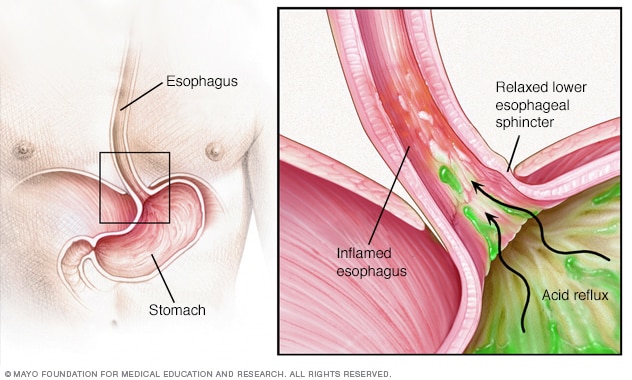
How heartburn and GERD occur
Acid reflux happens when the sphincter muscle at the lower end of the esophagus relaxes at the wrong time, allowing stomach acid to back up into the esophagus. This can cause heartburn and other symptoms. Frequent or constant reflux can lead to GERD.
Symptoms
Common symptoms of GERD include:
- A burning sensation in the chest, often called heartburn. Heartburn usually happens after eating and might be worse at night or while lying down.
- Backwash of food or sour liquid in the throat.
- Upper belly or chest pain.
- Trouble swallowing, called dysphagia.
- Sensation of a lump in the throat.
If you have nighttime acid reflux, you also might experience:
- An ongoing cough.
- Inflammation of the vocal cords, known as laryngitis.
- New or worsening asthma.
When to see a doctor
Seek medical help right away if you have chest pain, especially if you also have shortness of breath, or jaw or arm pain. These may be symptoms of a heart attack.
Make an appointment with a healthcare professional if you:
- Have severe or frequent GERD symptoms.
- Take nonprescription medicines for heartburn more than twice a week.
Causes
GERD is caused by frequent acid reflux or reflux of nonacidic content from the stomach.
When you swallow, a circular band of muscle around the bottom of the esophagus, called the lower esophageal sphincter, relaxes to allow food and liquid to flow into the stomach. Then the sphincter closes again.
If the sphincter does not relax as is typical or it weakens, stomach acid can flow back into the esophagus. This constant backwash of acid irritates the lining of the esophagus, often causing it to become inflamed.
Risk factors
Conditions that can increase the risk of GERD include:
- Obesity.
- Bulging of the top of the stomach up above the diaphragm, known as a hiatal hernia.
- Pregnancy.
- Connective tissue disorders, such as scleroderma.
- Delayed stomach emptying.
Factors that can aggravate acid reflux include:
- Smoking.
- Eating large meals or eating late at night.
- Eating certain foods, such as fatty or fried foods.
- Drinking certain beverages, such as alcohol or coffee.
- Taking certain medicines, such as aspirin.
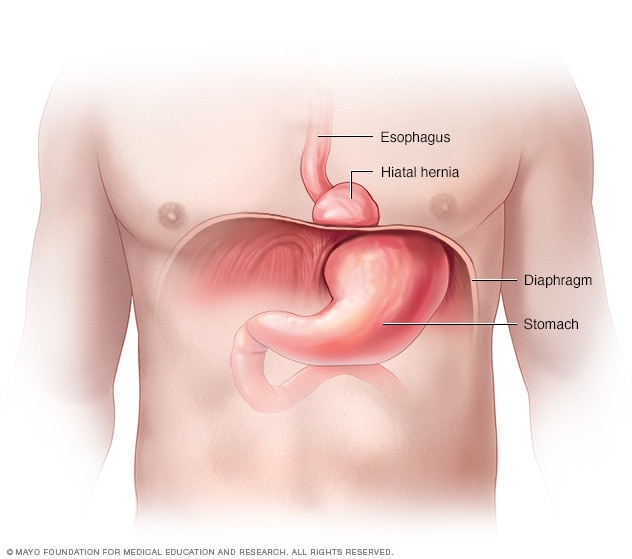
Hiatal hernia
A hiatal hernia occurs when the upper part of the stomach bulges through the diaphragm into the chest cavity.
Complications
Over time, long-lasting inflammation in the esophagus can cause:
- Inflammation of the tissue in the esophagus, known as esophagitis. Stomach acid can break down tissue in the esophagus. This can cause inflammation, bleeding and sometimes an open sore, called an ulcer. Esophagitis can cause pain and make swallowing difficult.
- Narrowing of the esophagus, called an esophageal stricture. Damage to the lower esophagus from stomach acid causes scar tissue to form. The scar tissue narrows the food pathway, leading to problems with swallowing.
- Precancerous changes to the esophagus, known as Barrett esophagus. Damage from acid can cause changes in the tissue lining the lower esophagus. These changes are associated with an increased risk of esophageal cancer.