
Overview
Acute sinusitis causes the spaces inside the nose, known as sinuses, to become inflamed and swollen. Acute sinusitis makes it hard for the sinuses to drain. Mucus builds up.
Acute sinusitis can make it hard to breathe through the nose. The area around the eyes and the face might feel swollen. There might be throbbing face pain or a headache.
The common cold is the usual cause of acute sinusitis. Most often, the condition clears up within a week to 10 days unless there's also an infection caused by bacteria, called a bacterial infection. Home remedies might be all that's needed to treat acute sinusitis. Sinusitis that lasts more than 12 weeks even with medical treatment is called chronic sinusitis.
Symptoms
Acute sinusitis symptoms often include:
- Thick, yellow or greenish mucus from the nose, known as a runny nose, or down the back of the throat, known as postnasal drip.
- Blocked or stuffy nose, known as congestion. This makes it hard to breathe through the nose.
- Pain, tenderness, swelling and pressure around the eyes, cheeks, nose or forehead that gets worse when bending over.
Other signs and symptoms include:
- Ear pressure.
- Headache.
- Aching in the teeth.
- Changed sense of smell.
- Cough.
- Bad breath.
- Tiredness.
- Fever.
When to see a doctor
Most people with acute sinusitis don't need to see a health care provider.
Contact your health care provider if you have any of the following:
- Symptoms that last more than a week.
- Symptoms that get worse after seeming to get better.
- A fever that lasts.
- A history of repeated or chronic sinusitis.
See a health care provider immediately if you have symptoms that might mean a serious infection:
- Pain, swelling or redness around the eyes.
- High fever.
- Confusion.
- Double vision or other vision changes.
- Stiff neck.
Causes
Acute sinusitis is an infection caused by a virus. The common cold is most often the cause. Sometimes, sinuses that are blocked for a time might get a bacterial infection.
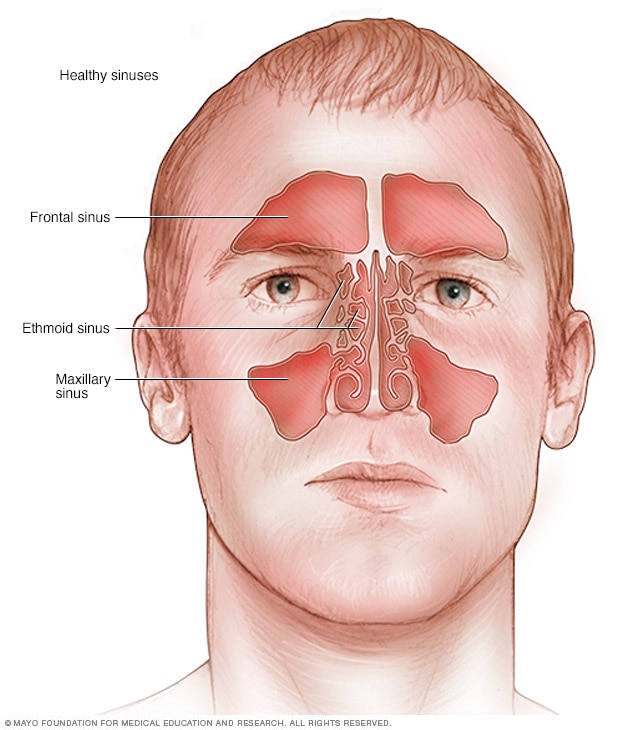
Healthy sinuses
Sinuses are cavities around nasal passages. If the sinuses become inflamed and swollen, a person may develop sinusitis.
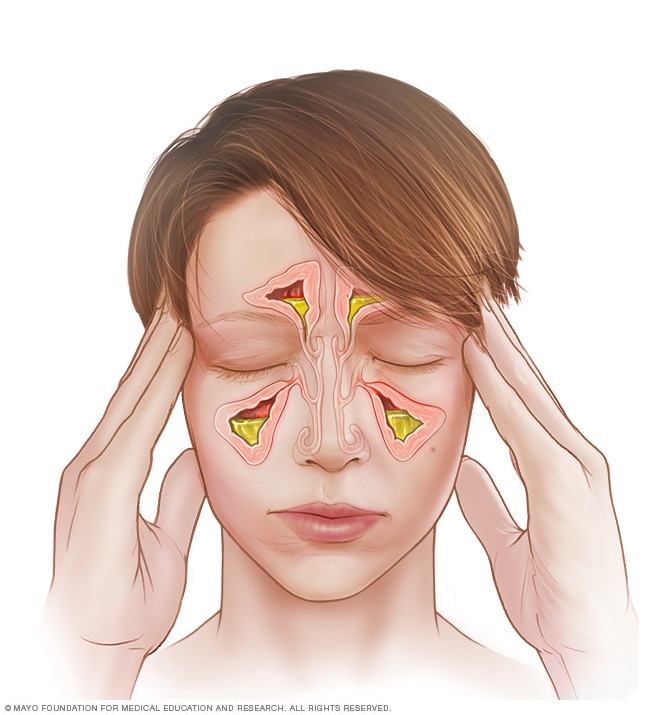
Acute sinusitis
Acute sinusitis is most often caused by the common cold. Signs and symptoms may include a blocked and stuffy (congested) nose, which may block your sinuses and prevent drainage of mucus.
Risk factors
The following can raise the risk of getting sinusitis:
- Hay fever or another allergy that affects the sinuses.
- A common cold that affects the sinuses.
- A problem inside the nose, such as a deviated nasal septum, nasal polyps or tumors.
- A medical condition such as cystic fibrosis or an immune system disorder such as HIV/AIDS.
- Being around smoke, either from smoking or being around others who smoke, known as secondhand smoke.
Complications
Acute sinusitis doesn't often cause complications. Complications that might happen include:
- Chronic sinusitis. Acute sinusitis can be a flare-up of a long-term problem known as chronic sinusitis. Chronic sinusitis lasts longer than 12 weeks.
- Meningitis. This infection affects the membranes and fluid around the brain and spinal cord.
- Other infections. It's not common. But an infection can spread to the bones, known as osteomyelitis, or to skin, known as cellulitis.
- Vision problems. If the infection spreads to the eye socket, it can reduce vision or cause blindness.
Prevention
Take these steps to help lower your risk of getting acute sinusitis:
- Stay well. Try to stay away from people who have colds or other infections. Wash your hands often with soap and water, such as before meals.
- Manage allergies. Work with your health care provider to keep symptoms under control.
- Avoid cigarette smoke and polluted air. Tobacco smoke and other pollutants can irritate lungs and inside the nose, known as nasal passages.
- Use a machine that adds moisture to the air, known as a humidifier. If the air in your home is dry, adding moisture to the air may help prevent sinusitis. Be sure the humidifier stays clean and free of mold with regular, complete cleaning.