Ureteral cancer Symptoms and causes
Overview
Ureteral cancer is a growth of cells that starts in the ureters. The ureters are tubes that connect the kidneys to the bladder. The ureters are part of the urinary tract. They carry urine produced by the kidneys to the bladder.
Ureteral cancer is not common. When it happens, it occurs most often in older adults and in people who have had bladder cancer.
Ureteral cancer is closely related to bladder cancer. The cells that line the ureters are the same type of cells that line the inside of the bladder. People diagnosed with ureteral cancer have an increased risk of bladder cancer. So people with ureteral cancer are usually tested for signs of bladder cancer.
Treatment for ureteral cancer typically involves surgery. In certain situations, chemotherapy, immunotherapy or targeted therapy may be recommended.
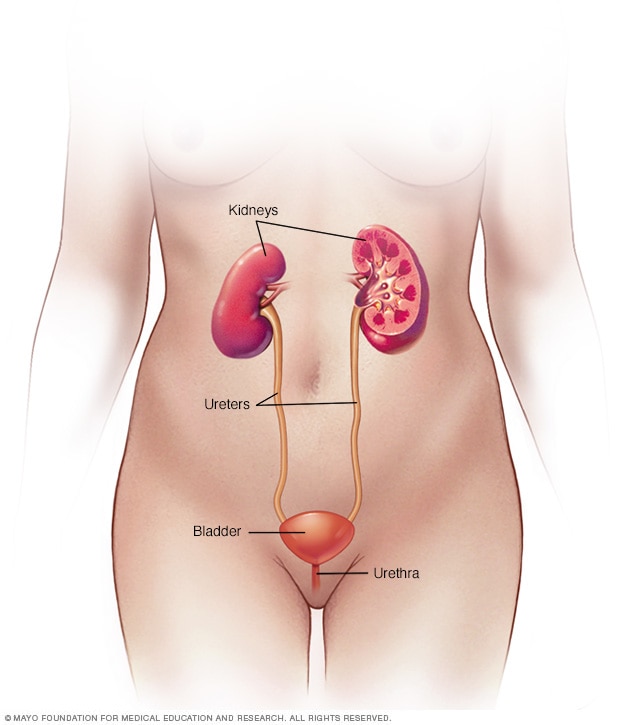
Female urinary system
The urinary system includes the kidneys, ureters, bladder and urethra. The urinary system removes waste from the body through urine. The kidneys sit toward the back of the upper belly. They filter waste and fluid from the blood and make urine. Urine moves from the kidneys to the bladder through narrow tubes called the ureters. The bladder stores urine until it's time to urinate. Urine leaves the body through a small tube called the urethra.
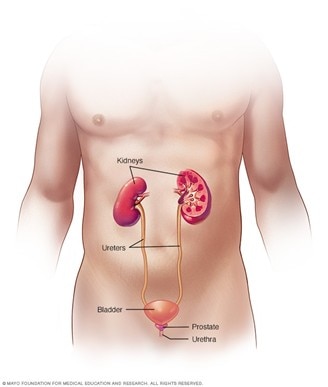
Male urinary system
Your urinary system includes the kidneys, ureters, bladder and urethra. The urinary system removes waste from the body through urine. The kidneys are located toward the back of the upper abdomen. They filter waste and fluid from the blood and produce urine. Urine moves from the kidneys through narrow tubes to the bladder. These tubes are called the ureters. The bladder stores urine until it's time to urinate. Urine leaves the body through another small tube called the urethra.
Symptoms
Signs and symptoms of ureteral cancer include:
- Blood in the urine, which may make the urine look red, pink or cola colored.
- Back pain.
- Pain when urinating.
- Losing weight without trying.
- Feeling very tired.
When to see a doctor
Make an appointment with a doctor or other healthcare professional if you have any persistent symptoms that worry you.
Causes
It's not clear what causes ureteral cancer. Ureteral cancer starts as a growth of cells in a ureter. The ureters are tubes that connect the kidneys to the bladder.
Ureteral cancer happens when cells in a ureter develop changes in their DNA. A cell's DNA holds the instructions that tell the cell what to do. In healthy cells, the DNA tells the cells to grow and multiply at a set rate. The DNA also tells the cells to die at a set time.
In cancer cells, the DNA changes give other instructions. The changes tell the cancer cells to grow and multiply quickly. Cancer cells can keep living when healthy cells would die. This causes too many cells.
The cancer cells might form a mass called a tumor. The tumor can grow to invade and destroy healthy body tissue. In time, cancer cells can break away and spread to other parts of the body. When cancer spreads, it's called metastatic cancer.
Risk factors
Factors that can increase the risk of ureteral cancer include:
- Increasing age. The risk of ureteral cancer goes up with age. Most people diagnosed with this cancer are in their 70s and 80s.
- Previous bladder or kidney cancer. People who have been diagnosed with bladder cancer or kidney cancer have a higher risk of ureteral cancer.
- Smoking tobacco. Smoking tobacco raises the risk of ureteral cancer. It also raises the risk of other urinary tract cancers, including kidney cancer and bladder cancer.
- Exposure to certain chemicals. Working with certain chemicals is linked to an increased risk of ureteral cancer.
- Family history of cancer. If you have a strong family history of cancer, discuss it with your healthcare professional. Together you may decide whether to consider genetic testing for inherited cancer syndromes such as Lynch syndrome. Lynch syndrome raises the risk of colon cancer and other cancers, including ureteral cancer.
Prevention
Although there's no sure way to prevent ureteral cancer, you can take steps to help reduce your risk. For instance:
Don't smoke
If you don't smoke, don't start. If you smoke, talk with your healthcare professional about a plan to help you stop. Support groups, medicines and other methods may help you quit.
Take caution around chemicals
If you work with chemicals, follow all safety instructions to avoid harmful exposure.
Choose a variety of fruits and vegetables
Eat many different kinds of colorful fruits and vegetables. The antioxidants in fruits and vegetables may help reduce the risk of certain cancers.
CON-20314003
Mayo Clinic does not endorse companies or products. Advertising revenue supports our not-for-profit mission.
Advertising & Sponsorship
Mayo Clinic Press
Check out these best-sellers and special offers on books and newsletters from Mayo Clinic Press.
